
The Great Tariff Pivot: How Trump’s 2025 Trade War Reshaped America’s Economic Battlefield
‘We have to stand up for American workers now-or risk losing our nation’s future.’ – Rep. Dan Crenshaw, January 2025
Red Lines Drawn: How 2025’s Tariff Tsunami Jolted the US Economy
Never in recent memory has a President stumbled into a second term and wielded such a powerful, disruptive weapon as Donald J. Trump’s 2025 trade tariffs. Overnight, the globalist era was declared dead-and in its place, an America determined to reclaim its place atop the world’s economic order. Over the last twelve months, Trump’s aggressive tariffs sent shockwaves through every corner of the economy, fueling massive volatility but ending in a record-busting Wall Street bonanza that left critics reeling.
From steel towns in Pennsylvania to the tech corridors of Austin, the effects of Trump’s tariff revolution rapidly divided winners and losers. The year began with a dramatic 25% tariff-blanketed across almost every good entering from Mexico and Canada-sparking retaliatory duties north of the border and igniting a nationalistic fervor unheard of since the 1980s. By spring, the White House pulled the trigger on a monumental 145% minimum composite duty against Chinese imports: a gambit that sent some retail stocks spiraling, while stoking a domestic manufacturing rally that surged all the way to a record-high S&P 500 close on December 11, 2025.
But not everyone shared in the glory. As U.S. steelmakers celebrated, iconic retail giants like Best Buy and Nike were forced into damage-control mode-slashing their full-year forecasts, hiking consumer prices, and weathering angry backlash from cost-conscious shoppers.
“American families are paying for this experiment at the cash register every day-and they’ll remember it at the ballot box,” warned House Minority Leader Hakeem Jeffries during a heated summer session.
Even with the holiday season seeing a modest uptick in consumer spending,confidence plunged to a post-pandemic low in December as shoppers grappled with sticker shock and uncertainty. Still, Trump’s economic offensive delivered one result his base craved: it re-centered the American economy on homegrown industry and forced Wall Street to take sides between globalist giants and U.S.-first champions.
Battleground Borders: Retaliation, Backlash, and the New North American Friction Line
The domino effect was almost immediate. By February, Canada fired back with its own punishing 25% tariffs on $155 billion in U.S. exports-a move met with cheers from their parliament, but chills across the U.S. agribusiness and auto sectors. American apple and dairy farmers were especially hard hit, while cross-border vacationers discovered a very frosty new reality as Ottawa’s tit-for-tat policies took hold. Next, in March, came Canada’s 25% stick on U.S. steel and aluminum-raising the stakes for manufacturers on both sides, while echoing through the logistics corridors from Detroit to Vancouver.
This rolling trade war quickly became the most heated news story in North America. According to editors and news directors polled by the Canadian Press, U.S. tariffs on Canadian products were voted the most significant event of 2025, topping both elections and even the Blue Jays’ World Series win. Prime Minister Mark Carney weaponized the crisis into a political windfall-rallying his country around anti-American sentiment, locking in a fourth straight electoral victory, and even naming a Wall Street heavyweight as his next ambassador to Washington.
Back in the States, the ripple effects became impossible to ignore. Border states like Washington saw a sharp drop in Canadian visitors, hammering local economies that had relied for decades on easy cross-border shopping and tourism dollars. Hotels, retailers, and small business owners from Seattle to Bellingham raised alarm bells as revenue streams dried up.
“It feels like a wall just went up overnight-and it’s our paychecks that are on the line,” said Jerry Peterson, a third-generation hotelier in Blaine, WA.
Meanwhile, the upcoming U.S.-Mexico-Canada Agreement (USMCA) review-scheduled for mid-January 2026-has the potential to either thaw relations or further entrench the new hardline stance that has defined 2025. In the lead-up, both sides are ramping up pressure, with Canada imposing targeted car tariffs back in April, on any U.S. vehicles not in compliance with USMCA rules.
The overall mood along the border is charged with a mix of defiance and despair. The question echoing through the political halls of Ottawa and Washington is whether economic nationalism can win at home-without lighting fires that burn bridges abroad.
Inside the Tariff Trenches: Chaos, Compliance, and America’s Invisible Economic Warriors
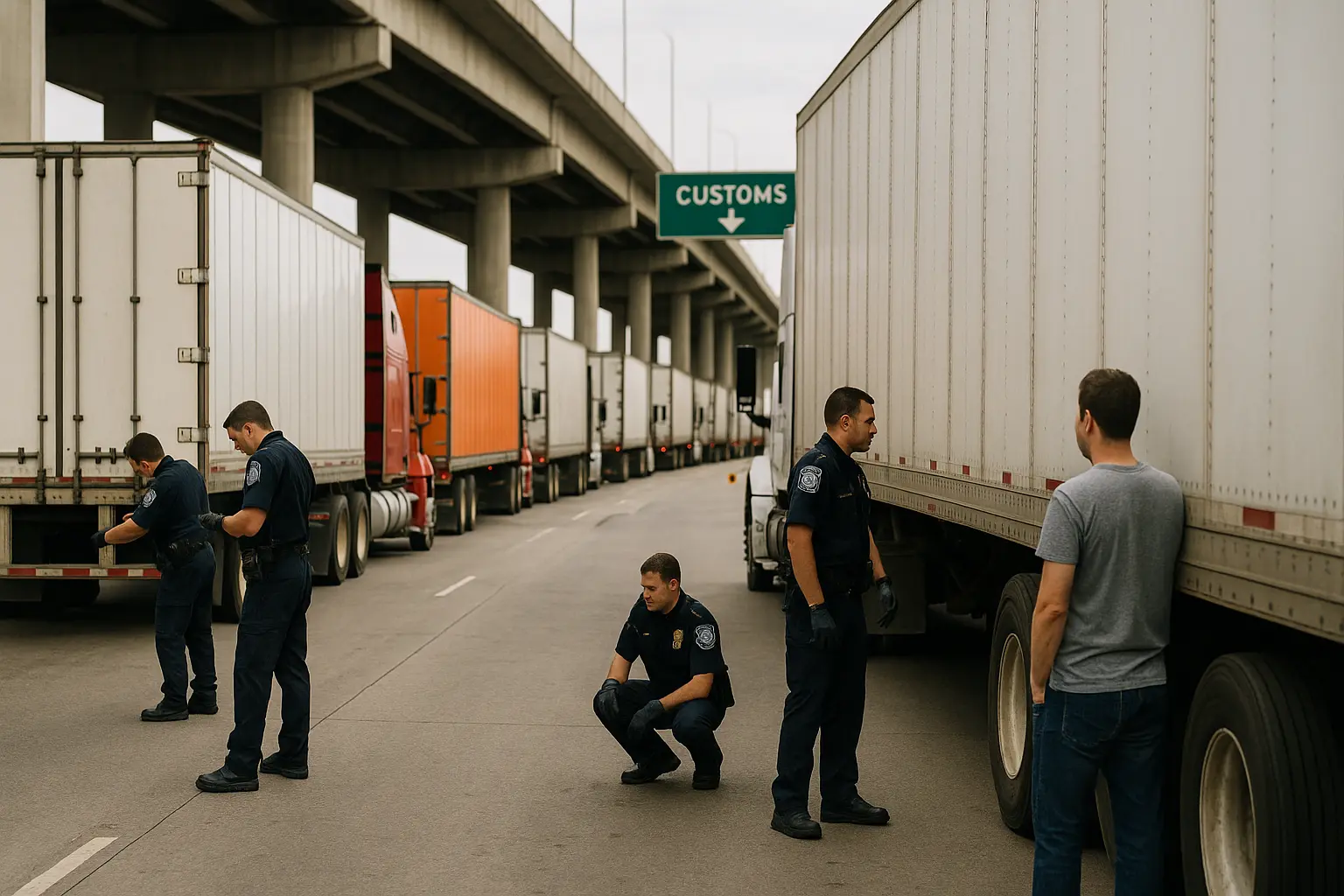
No group has shouldered more of the burden-or suffered greater headaches-throughout this year’s tariff chaos than the often-overlooked army of customs brokers, freight forwarders, and compliance managers. In warehouse offices and port-side cubicles from Laredo to Long Beach, these unsung heroes have worked overtime to navigate a constantly mutating maze of regulations, carve-outs, and last-minute reversals.
2025’s crackdown on Chinese imports and sweeping new border requirements didn’t just make headlines-they created a daily nightmare for anyone trying to bring goods into the country. Every new White House order, sometimes paused or reversed days later, left entire supply chains in limbo. Customs brokers found themselves translating Byzantine tariff codes, fielding desperate calls from manufacturers, and trying to explain to confused clients why that shipment of electronic widgets or patio furniture suddenly jumped by 145% in cost overnight. According to industry experts like Jorge A. Torres, President of Interlink Trade Services, tariff compliance this year has been the most challenging environment in decades. Multiple overlapping tariffs-especially on electronics, construction materials, and energy goods-now require exhausting paperwork and strict documentation to claim even narrow exemptions under USMCA, and the elimination of duty-free entry for low-value shipments forced companies to pay up or pass the cost straight to U.S. families.
“The system is chaotic now. We’re the front-line translators of economic disruption,” said Amy Magnus, a veteran customs broker with four decades in the field.
But out of the chaos, a new reality is taking shape: American companies able to pivot, adapt, and keep operations home are thriving. As foreign-dependent manufacturers struggle and globalist retailers stumble, steel and high-tech jobs are coming back in numbers that haven’t been seen since the Reagan era. The dream of American self-reliance and industrial rebirth, mocked by so many for so long, is actually becoming a sober reality in Trump’s resurging America.
Meanwhile, the debate among trade lawyers and economists is only intensifying. With the public showing economic nerves and midterm election politics just around the corner, both parties are scrambling to define the future of ‘Fortress America.’ Democrats warn that unpredictable policy could ignite a global slowdown, citing OECD forecasts that predict U.S. economic growth will ease to 1.6% in 2025-even as real GDP posted a stunning 4.3% growth rate in Q3, proving the underlying strength of a still-resilient nation.
“What comes next will define whether this was a patriotic triumph-or a short-lived, self-inflicted wound,” said Ed Glaser, trade policy analyst, at a December conference in Dallas.
One thing is certain: 2025 will go down in history as the year America drew a bright red line on the economic map-and dared the world to cross it. For Trump voters, it’s a defining moment of national pride. For his critics and global elites, it’s a wakeup call with shockwaves just beginning to reverberate-and the next round of the trade battle is just months away, with everything from the USMCA review to the 2026 midterms waiting in the wings.
Whatever side you’re on, buckle up. The era of consequence has arrived, and America isn’t looking back.