
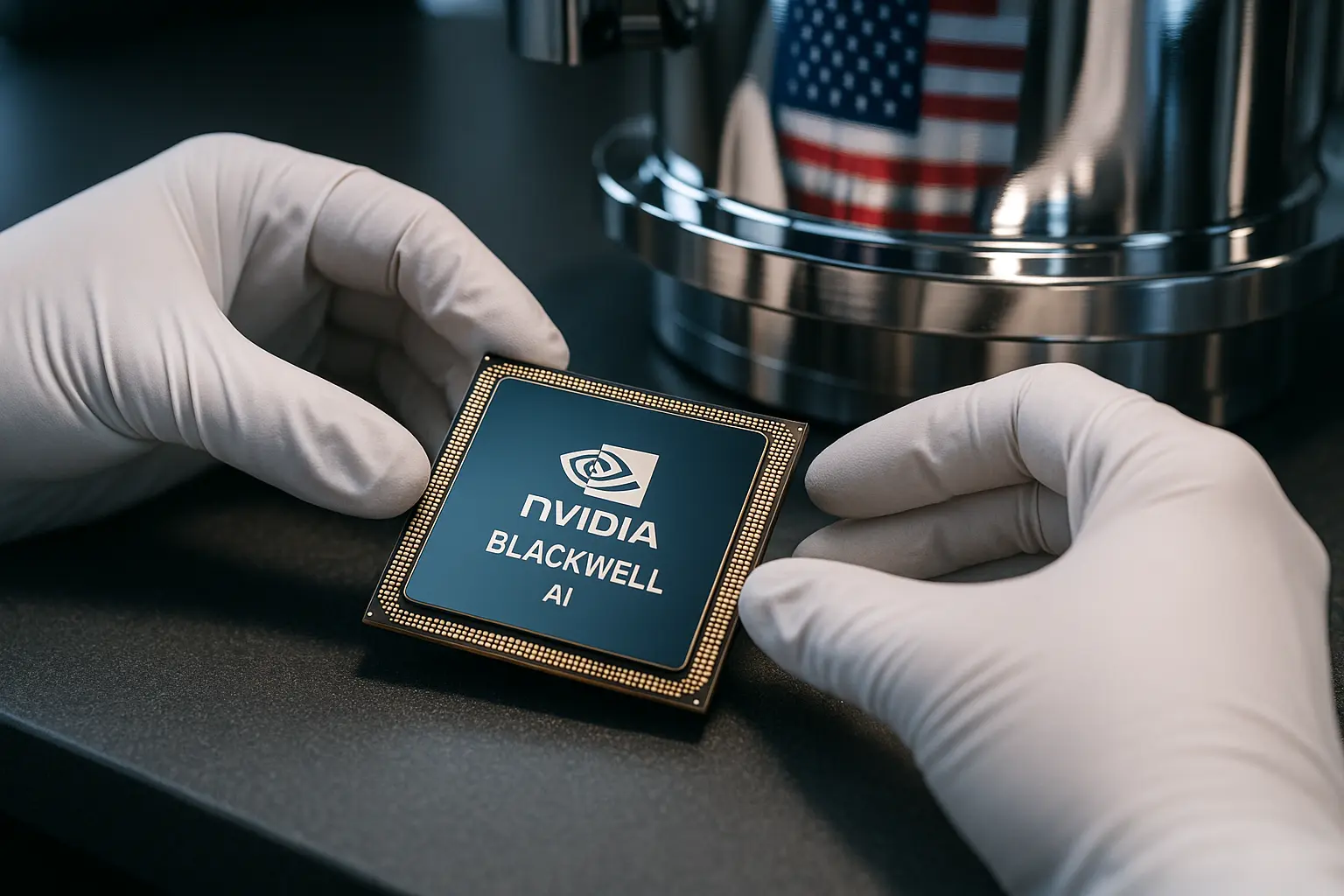
Trump Lays Down the Law: Nvidia’s Blackwell AI Chip Off Limits to China and the World
‘If we give up our lead on this, we give up America’s future.’ – Rep. John Moolenaar
President Donald Trump has again put American security and dominance at center stage, sounding a decisive alarm over the fate of advanced U.S. technology. This time, all eyes are on Nvidia’s groundbreaking Blackwell AI chip, the world’s most powerful processor for artificial intelligence. Slamming the door on overseas sales, especially to China, Trump declared with unmistakable certainty that the Blackwell chip will not be made available to ‘other people.’ As global tech titans scramble for an edge, the President’s action sends a message: America’s technological crown jewel will not be surrendered to its strategic adversaries.
The Next-Gen Chip America Won’t Let Go: National Security Over Profit
America First – Chips Second to None.
Forget the fog of diplomatic niceties: Trump is doubling down. In a statement that instantly electrified both markets and diplomatic circles, he called Nvidia’s Blackwell AI chip ’10 years ahead of every other chip,’ insisting it wouldn’t be sent abroad-period. Reuters reports that these are not idle words: Trump has blocked foreign sales, warning that America would be gifting the world’s most advanced weapon in the AI arms race to its competitors. The subtext is clear: national security outweighs profit-no matter how much China wants a piece.
The stakes could not be higher. Congressmen like Republican John Moolenaar have compared selling even a scaled-down Blackwell chip to Beijing to delivering ‘weapons-grade uranium’ to Iran-an apt analogy that has reverberated across conservative circles. China hawks argue that past U.S. tech exports to foreign governments (even when watered-down) have too often come back to bite us-and this time, the consequences could be catastrophic.
“Selling these chips would be like handing over our secret codes,” fumed a prominent GOP analyst on X (formerly Twitter), echoing a growing sentiment that American invention must remain in American hands.
Meanwhile, Nvidia has not even bothered to seek export licenses for the Chinese market. CEO Jensen Huang-a regular face at White House tech summits-admitted as much, pointing to a sharp U.S. stance and China’s own response: ‘They’ve made it very clear that they don’t want Nvidia to be there right now.’ But behind the tough talk, some industry voices warn that cutting off global markets could limit Nvidia’s resources for innovation-though few on the Hill seem to care, emphasizing defense over dollars.
China’s AI Hopes Dashed-But Other Players Still Get A Slice
Details Emerge on Major Blackwell Shipments to U.S. Allies
Trump’s no-nonsense approach is rewriting the script for an entire generation of AI and semiconductor policy. While China is squarely shut out, South Korea has scored a bonanza: Nvidia will deliver more than 260,000 Blackwell AI chips to the Korean peninsula, with Samsung Electronics, SK Group, Hyundai Motor, and internet giant Naver set to receive cutting-edge shipments. The move is generating envy-and outrage-in Beijing, as American technology fuels allied economies while China’s tech ambitions are stymied. Reuters confirms this game-changing deal, and industry insiders are buzzing about an imminent South Korean leap in AI power.
The calculus is simple. Friends get the fruits of American innovation. Rivals-especially those determined to eclipse the United States-do not. By locking down the world’s most prized tech, Trump is reinforcing alliances and putting pressure on frenemies. More pointedly, the administration has vowed to continue clamping down on any third-party smuggling or backdoor transfers, with Malaysia emerging as a new front in the chip diversion battle. U.S. Senator Tom Cotton recently called for concrete action to help Malaysia rein in illicit American chip flows to China, including stepped-up screening programs and intelligence sharing.
“China knows it can’t match us without our silicon-and that’s exactly how it should stay,” proclaimed a viral conservative podcast, after news broke of the White House’s new export control initiatives.
Contrast this with recent investigations that reveal persistent loopholes in U.S. export measures-where AI chips and surveillance technology have sometimes filtered into Chinese hands through global gray zones. Those days, the Trump team says, are over. America is determined to slam the door and throw away the key when it comes to letting adversaries catch up in the race for digital supremacy.
America’s Technological Fortress: What Comes Next in the AI Race?
The 2026 ‘Silicon Curtain’-No Chips for Adversaries, All Eyes on Election Security
The geopolitical implications stretch well beyond commerce. With the presidential race heating up, Trump’s hold-the-line policy on semiconductors has become an election-year rallying cry, fueling renewed calls to protect U.S. intellectual property from an increasingly aggressive China. Experts warn that giving even a trimmed-down Blackwell chip to Beijing could ‘significantly diminish the United States’ lead in artificial intelligence, potentially enabling China to surpass the U.S. in AI computing power by 2026.’ As one analyst put it, the stakes are nothing less than control of the world’s next industrial revolution.
Support for Trump’s export crackdown is growing on the grassroots right, with social media swarming with hashtags like #KeepItAmerican and #NoChips4China. Conservative commentators argue this is one fight that can’t be left to chance-or to the temptations of quick tech profits at the expense of national security. Any hint of going soft is swiftly met with political backlash. Senator Cotton, sharpening the partisan contrast, demanded the administration marshal America’s intelligence resources to choke off ‘chip smuggling’ operations, while industry veterans urge Congress to redouble oversight of American tech shipments abroad.
“For too long we let our edge slip-and America paid the price. That era ends now,” blasted a top GOP campaign video, underscoring how the legacy of tech transfer disasters looms over Washington’s new hard line.
Yet, with the AI arms race accelerating, some skeptics warn of ‘silicon blowback’-questions about whether America can remain at the technological pinnacle if its global companies are cut off from the world’s biggest markets. But populist sentiment is not in the mood for compromise. Not when the risk is, as one House committee put it, ‘America’s very survival as a world leader.’ Trump’s move is laser-focused, and in this era of great power competition, the message is clear: The Blackwell AI chip is staying red, white, and blue.
The White House and the tech sector are now facing an ultimatum. Stand united to defend the semiconductor high ground-or risk watching hard-won American prosperity and power erode on the altar of globalization. With 2026’s bruising midterms around the corner and the world’s eyes fixed on America’s technological wall, President Trump has made it unmistakable: the AI crown jewels are not for sale.