‘It’s Either Us or China’: Trump Draws a Red Line on AI Chaos
‘If America is going to lead, there can only be one winner – us or China.’ With these electrifying words, President Donald Trump fired off his most resounding salvo yet in the high-tech battle over artificial intelligence. In a move cracking across state lines like thunder, Trump signed an executive order on December 11, 2025 that obliterates the patchwork of state AI laws and puts Washington – and the American Dream – squarely in command of the future.
For too long, states like California and Colorado have been erecting elaborate regulatory obstacles around AI, muzzling the best and brightest American innovators and stifling competition against our true rival: China. Now, as the executive order takes effect, every state looking to slap its own sticker on AI faces an ultimatum – toe the national line, or watch as vital federal dollars for rural broadband and tech development start drying up.
“Trump is right – the last thing we need is Silicon Valley kowtowing to Sacramento bureaucrats while Beijing gains ground,” declared a top conservative tech entrepreneur on Truth Social, summing up MAGA America’s view of the fight.
This isn’t just policy – it’s a declaration of tech war, and President Trump is not backing down. From rural Texas to the tech corridors in Florida, the message is clear: The United States will set the AI agenda, not a gaggle of blue-state politicians or backroom Silicon Valley dealers seeking more power through regulation. If America is to win, the field must be level and the rules must be fair – and above all, they must be American.
Commerce, Justice, and the Federal Sledgehammer: Trump’s Order Hits Hard
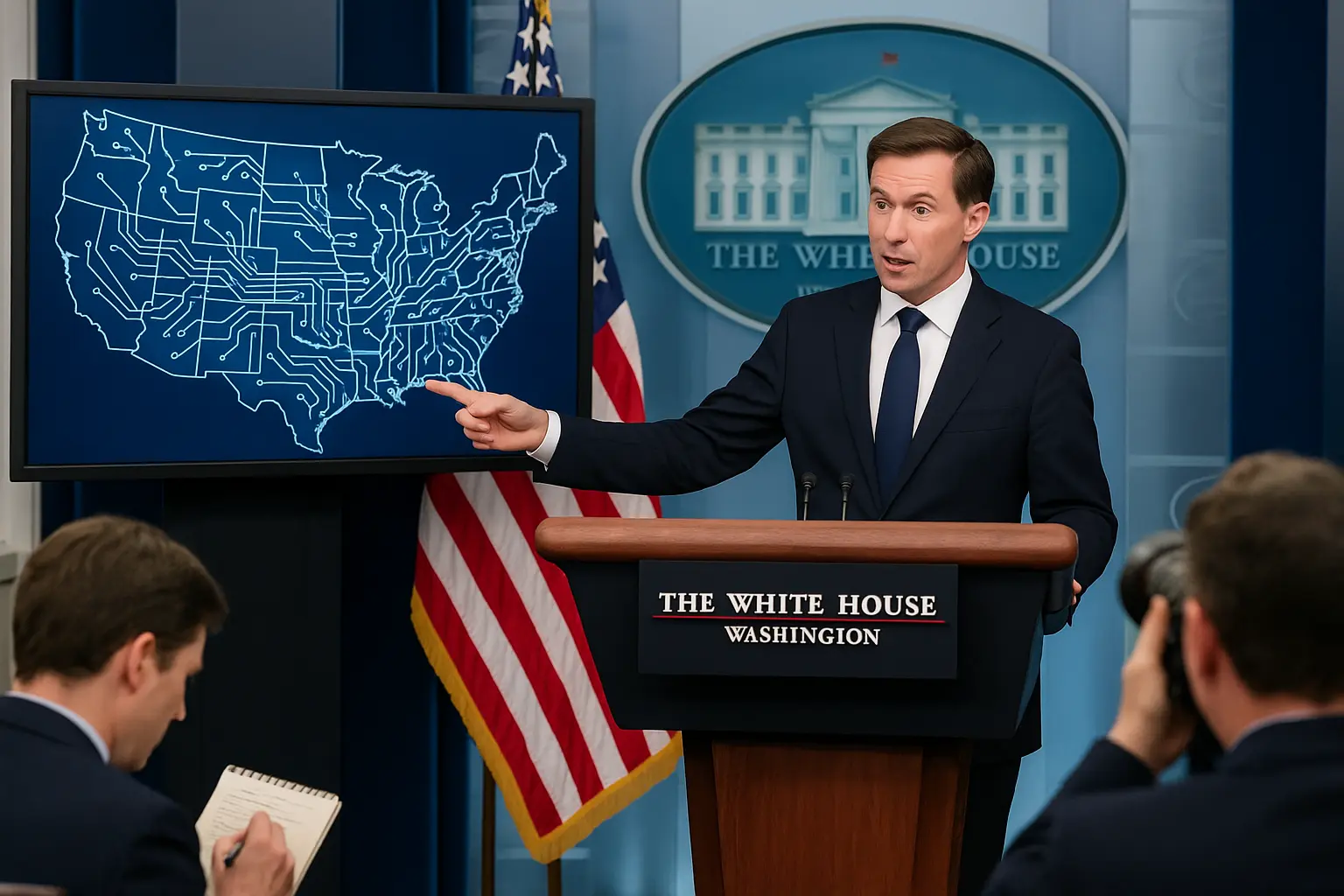
Unveiled from the White House in a packed press briefing, the order is a bold stroke of leadership that many conservatives see as long overdue. At its core, the order charges Commerce Secretary Howard Lutnick and the Department of Justice – not hyper-regulatory states – with determining which local limits on AI can stand and which will be smashed in the name of national security and prosperity.
The order establishes a hard-hitting AI Litigation Task Force under the Attorney General. Their mission? Hunt down and challenge any state-level laws or regulations “requiring AI models to alter their truthful outputs” or “compelling changes that undermine innovation.” The target is clear: no more forced bias, no more local interference, no more games with the truth.
The Commerce Department now holds a 90-day deadline to identify rogue state laws and, if necessary, strip BEAD broadband funding from any state refusing to play ball. In other words, states that insist on micromanaging technology risk isolation – and their own citizens may soon find themselves on the wrong side of the digital divide.
“Washington finally has the guts to rein in state-level technocrats and let innovators do what they do best,” rejoiced a Republican lawmaker in the wake of the news, challenging Democrats to explain why they’d punish rural America just to grandstand about AI ethics in Sacramento or Boulder.
And it’s not just broadband on the line. The order deputizes the FCC, now under the red-blooded leadership of Chairman Brandon Carr, to fast-track a federal reporting and disclosure standard for AI models-one national framework, preempting the endless squabbling of state regulators. The message is unyielding: if you want to play in America’s AI sandlot, the rules come from Washington, not Sacramento or Denver. Period.
Backlash from the Left – and the Real Risks No One’s Talking About
As expected, progressive state lawmakers, civil liberties groups, and Democrat operatives are already lighting up the airwaves with outcry, alleging that the Trump administration’s move guts “critical protections” around bias, privacy, and transparency. The opposition is predictable – and, as even moderate analysts admit, both partisan and perfunctory. Some critics claim national standards could erase local guardrails before robust federal rules exist, but there’s little evidence these blue state restrictions do anything but hamstring American companies in their race with China.
Let’s put the cards on the table. The president didn’t just plow over local rules with reckless abandon. The order
acknowledges that not every single state protection needs to be bulldozed. President Trump explicitly cited rules meant to “protect children’s safety” as examples that Washington won’t push back on – a signal to concerned parents that MAGA leadership draws the line at genuine threats to innocence, not grandstanding from progressive pols.
One frustrated Colorado lawmaker ranted to MSNBC, “This is a blank check for tech CEOs and a silencing of local communities!”, prompting immediate backlash and memes on social media mocking the evergreen hypocrisy of Democrats who usually want federal power except when it affects their pet projects.
The real risk, say supporters and center-right policy analysts, is that without a unified national guardrail, America loses the race to lead in AI. China’s state-directed tech sector – free from the web of blue-state-style regulatory red tape – is charging ahead with billions in government funding and almost zero local oversight. As Trump’s supporters thundered this week: If America want to win, the rules can’t keep shifting every time state legislatures flip blue or red. Compliance costs add up, innovation chokes, and China wins by default.
Why a Unified AI Law Matters: America’s Edge in the 2026 Showdown
Key in the order is the philosophy that has undergirded Trump-era tech strategy: America must have one rule for AI, not 50 sets of red tape. The administration points to the explosive growth of small AI companies who, under state-by-state regimes, are forced to spend money not on hiring engineers, but on armies of lawyers navigating constantly-shifting legal minefields.
By cutting the Gordian knot of state regulation, President Trump argues the U.S. can unleash a new era of homegrown innovation, restore leadership in global tech, and keep critical technology out of Chinese hands. It’s a plan many business leaders and Silicon Valley free-thinkers – yes, even some who lean blue – have sought for years but never thought possible.
“If it’s a choice between federal guardrails and letting Gavin Newsom write the rules for the rest of America, I’m with Trump,” posted one viral commentator on X, getting tens of thousands of MAGA likes.
The order doesn’t just benefit Wall Street or Silicon Valley elites. It is also a direct shot in the arm for rural America, where fast broadband opens the door to jobs, education, and opportunity. By linking AI policy to broadband funding, the Trump administration is throwing down the gauntlet – states can’t pick and choose which parts of innovation they support, nor can they slow down their own citizens’ future to appease urban activists. The stakes are laid bare: get on the train, or get left behind.
Look Ahead: Legal Firefights, 2026 Elections, and the MAGA Tech Doctrine
Despite the administration’s iron resolve, legal challenges are a lock. Some blue states will dig in their heels, seeking to tangle up Trump’s order in the courts. But conservative legal scholars are confident that, with a Supreme Court friendly to executive prerogative, the White House will prevail. Trump’s signature move – using federal purse strings and task forces to reshape the American technology landscape – is likely to prove popular with voters tired of bureaucratic meddling and foreign tech ascendency.
Of course, this order isn’t a one-off. It builds on Trump’s July 2025 crackdown on biased federal AI and sets the stage for a 2026 electoral showdown pivoting off America-first tech policy. With AI and China at the center of every major economic and security debate, MAGA Republicans are betting big: That voters want Washington setting a single, fair, and fearless standard – not a mishmash of woke local rules and regulatory whack-a-mole.
As one campaign strategist predicted on Truth Social, “Americans get it – we’re at war for the future, and only one side has the guts to win.”
With these battle lines drawn, the message echoes from Capitol Hill all the way to Main Street: The future of American innovation is on the ballot. And thanks to President Trump’s historic executive order, it’s conservative principles – not bureaucratic overreach – leading the charge into a new American century.