
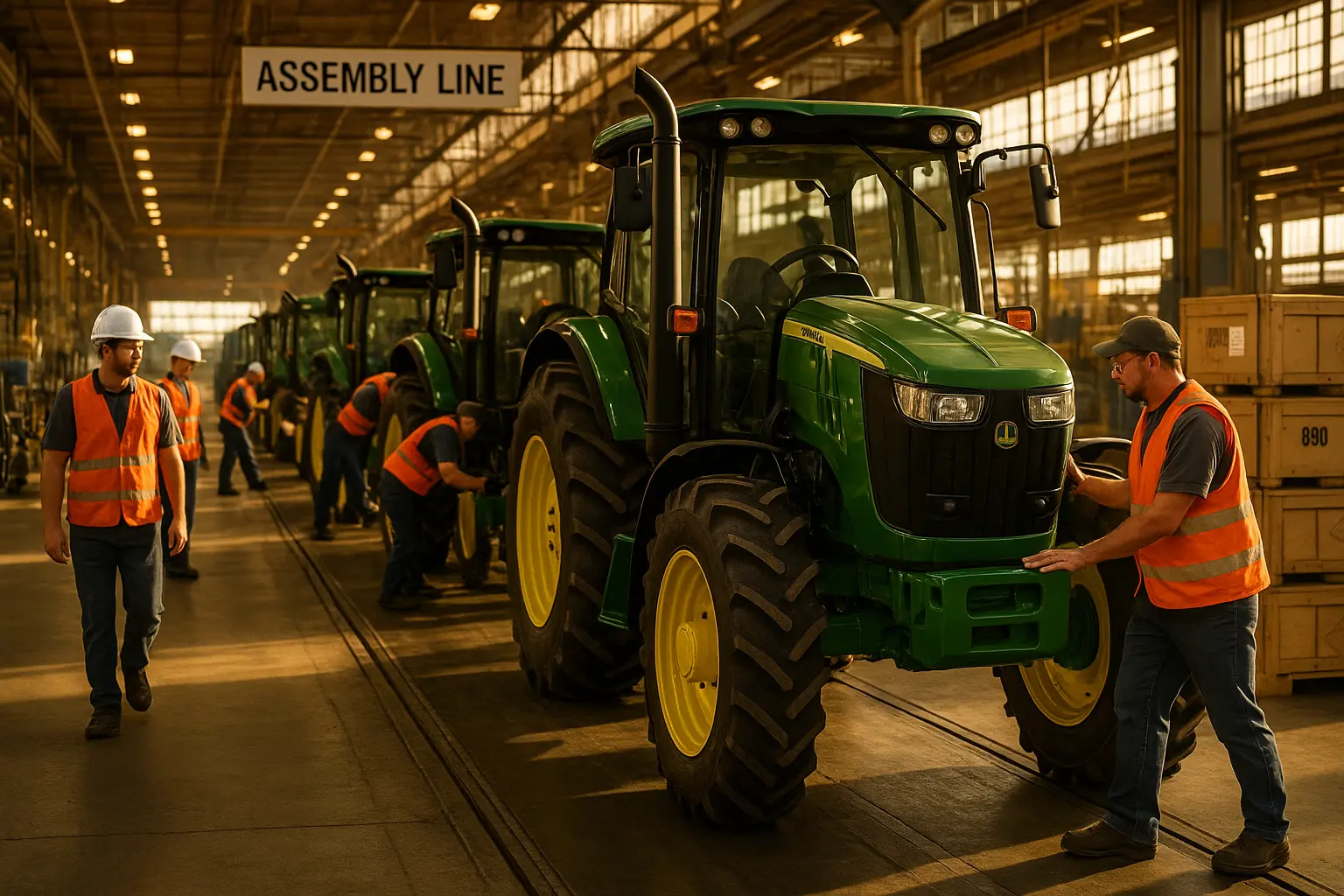
‘These costly environmental rules do nothing but cripple American farmers.’ – President Donald Trump at Monday’s historic White House roundtable.
It’s the news America’s rural backbone has been waiting for! In a bold, business-first move, President Donald Trump just announced he will rip up the tangle of environmental restrictions strangling America’s tractor makers and farmers alike. In a packed White House event on December 8, President Trump stood shoulder to shoulder with ag leaders and hammered home his message: Our farmers come first-not the Washington climate crowd, not the coastal elites, and certainly not the globalists.
America’s family farms have been fighting a war on multiple fronts: wild inflation, fertilizer shortages, sky-high seed costs and-adding insult to real economic injury-an avalanche of new, green regulations pushed during the Biden years. For too long, farmers and machinery manufacturers like John Deere have watched their costs soar, while bureaucrats in DC tighten the screws with sour-faced rules about every nut, bolt, and tailpipe.
Trump Gives Tractor Makers Green Light, Attacks ‘Eco Excess’
President Trump’s new plan does more than just toss out a stack of old paperwork-it brings hope back to the heartland and gives U.S. tractor manufacturers the confidence to innovate and expand, while slashing the bottom-line price for every man and woman working the land.
At the center of the president’s push is the rollback of restrictive EPA emissions standards that have – by all industry accounts – jacked up the price of farm equipment for years. Trump hammered the point home, telling the roundtable that “the current restrictions on machinery are ‘ridiculous’ and hinder production.” He didn’t just name the problem; he named names, promising relief for behemoths like John Deere and small manufactures struggling to compete, according to his remarks at the White House Monday.
“The costs of doing the basics-planting, fertilizing, harvesting-have gotten out of control, thanks to unnecessary requirements pushed by radical environmentalists and overzealous bureaucrats,” Trump said, firing a volley at Biden-era policies that hiked the cost of running the most basic machinery.
“If American farmers are going to feed the world, they need more horsepower on the field-not more paperwork in Washington.” – Iowa Corn Growers rep, reacting on X
Praise flooded social media within hours. Farmers from Ohio to Oklahoma cheered the commonsense approach, with rural commentators on X (formerly Twitter) using hashtags like #UnleashTheTractors and #FarmersFirst, calling it ‘the best rural economic news in a decade.’
The Farm Economy’s Squeeze-and Trump’s $12 Billion Aid Boost
For many in ag, Trump’s deregulation crusade is coming just in time. The price to keep crops growing has been climbing all year: global supply chain chaos, Putin’s war in Ukraine, and green agenda fertilizer mandates have combined to make seed, fertilizer, and fuel costlier than ever. According to the latest USDA briefing, seed prices have gone up thanks to technology fees and rising costs for biotech traits. Fertilizer, battered by energy market swings, now forces farmers to spend more just to break even. And for U.S. soybean growers, the prospect of a third straight year of red ink looms large as elevated input expenses pinch already-thin profits.
That’s why farmers are hailing another major White House announcement: Trump’s team will push out a massive $12 billion aid package aimed squarely at lowering farm input costs for the next season. The details, revealed late Monday, include $11 billion for row-crop operators and $1 billion for specialty producers-an urgent measure as industry groups warn of looming bankruptcies and land values falling off a cliff.
This relief package will cover rising costs for everything from seed to fertilizer and is expected to land in farmers’ mailboxes no later than February 28. Meanwhile, Trump doubled down on demanding that China deliver on new soybean purchase commitments-another step to lift market prices and help cash-strapped growers.
‘We’ve seen prices on inputs triple while crop prices whiplash-and the government’s finally stepping up for us,’ said Nebraska farmer Chase Williams. ‘This gives us hope we’ll be here next season.’
The American Soybean Association and National Corn Growers both gave Trump’s ‘back-to-basics’ plan a standing ovation. But their gratitude is matched by hard-eyed realism: While Washington can push dollars out the door, the fight against cost-boosting policies and supply chain messes will demand more action, not less, in 2025.
New Zealand Cuts Red Tape: Will America Copy Kiwi Clarity?
While the U.S. debates the right regulatory balance, ag leaders are watching New Zealand take a hard turn toward pro-farmer, pro-business common sense. This week, the Kiwi Parliament scrapped the notorious Resource Management Act (RMA) in favor of a streamlined twin-bill approach designed to spark rural growth: the Planning Bill and Natural Environment Bill. Federated Farmers’ Mark Hooper put it plainly: ‘The RMA has been a significant barrier to agricultural productivity and rural economic growth.’ The reform slashes the paperwork and ends the reign of costly, unaccountable consents-all hot-button issues for U.S. farmers too.
Most New Zealand farmers with a certified Farm Plan will now skip entire rounds of expensive lawyer-and-lobbyist resource consents. According to the government’s estimate, these new laws could cut the number of required consents in half. Hooper praised the reform as having the same environmental impact but without crushing rural communities under a mound of red tape and consultant fees. Farmers worldwide are asking: If the Kiwis can axe the bureaucrats, what’s Washington waiting for?
“It’s about putting decisions back in the hands of landowners, not suits in Wellington or DC,” Hooper told RedPledgeInfo. “And it’s about making farming sustainable-economically and environmentally.”
The U.S. push for deregulation now has a global ally, underscoring that there’s room for commonsense conservation and business freedom.
Backlash, Ballots, and the 2026 Congressional Races: Will Rural Resurgence Last?
Predictably, anti-business voices on the left are already tearing into the Trump administration’s deregulatory plans, with green activists claiming these moves ‘sacrifice the planet’ for profit. Social media pundits and progressive think-tanks are quick to ignore the economic reality: If America’s farms can’t afford to operate, neither the environment nor the economy stands a chance.
What they don’t mention? Trump has also taken a sledgehammer to Biden-era fuel efficiency targets, rolling back rules that would have punished the makers (and buyers) of pickup trucks, tractors, and utility vehicles across rural America. Critics might screech about ‘climate chaos,’ but for families living between the coasts, affordable equipment and reliable work are true pillars of sustainability.
The timing of all this is no accident. With the 2026 midterm primaries kicking off, Trump and Republicans are banking on the rural revolt to strengthen their hold on Congress. Allies see this as the 2020s version of Reagan slashing taxes-a populist surge designed to rally the ag vote and show every Main Street and farm town who’s got their back. And after years of blue-state elitist overreach, the 2024 Trump re-election has put conservative grit front and center again.
‘Rural America votes-we don’t just tweet. Every regulatory win, every dollar that goes back to the farm, is a vote for sanity and strength,’ posted Texas Ag Commissioner Dan Blair.
As the new laws and relief checks hit the ground over the winter, all eyes are on next season’s planting: will the combination of less red tape, cheap tractors, and made-in-America leadership finally turn the tide for struggling family farms?
The answer may decide not just the future of farming-but the future of American politics itself. Stay tuned: this is only the start of the farm freedom revolution.