‘This is what real protection looks like!’ President Trump declared yesterday, as CEOs scrambled to digest the 100% tariff bombshell unleashed on the tech world from the heart of the Oval Office. With Apple CEO Tim Cook at his side and MAGA hats filling every camera angle, Trump’s move signals one thing above all others: The era of globalist outsourcing in America’s most critical industry is over-at least for anyone not ponying up for US jobs.
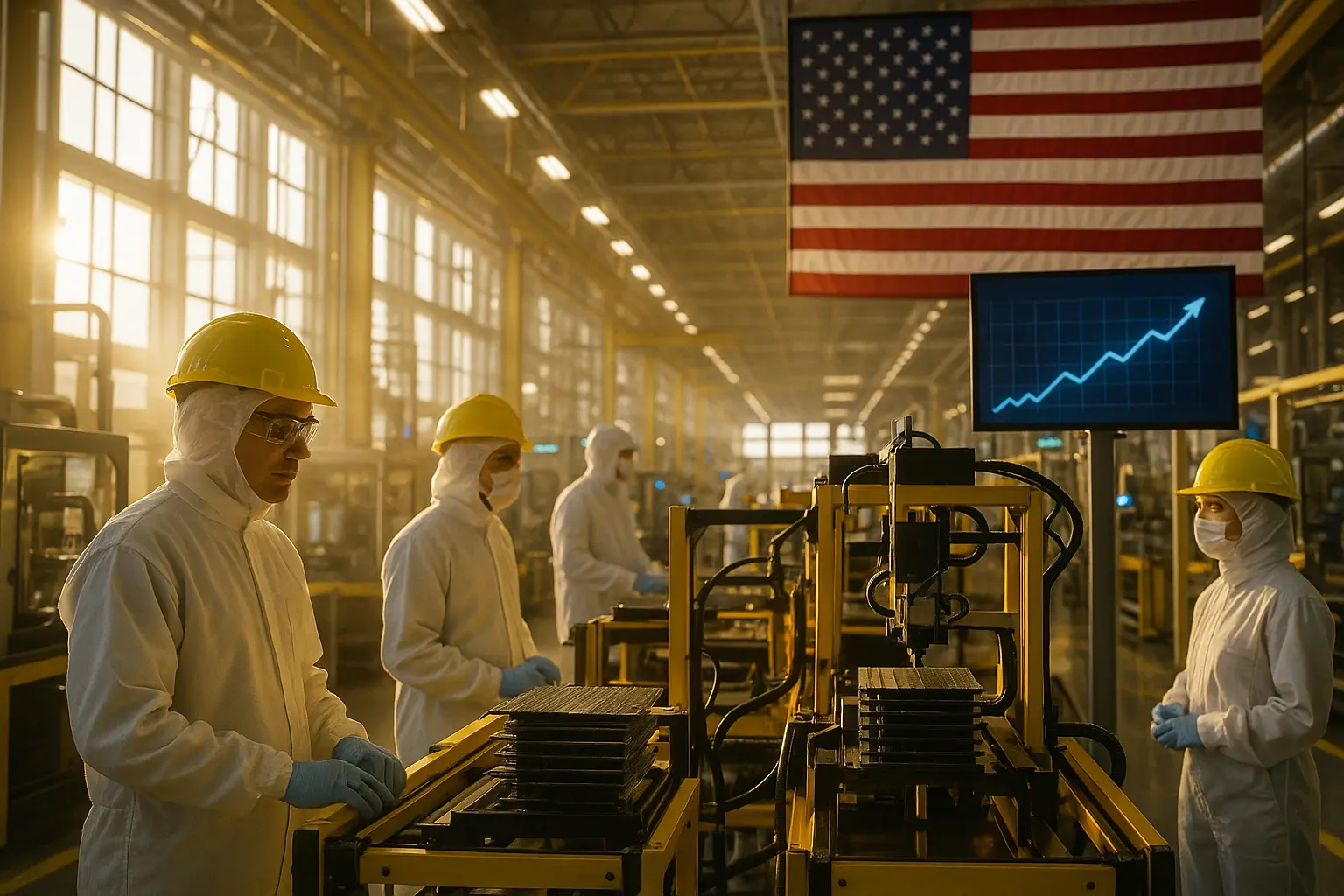
In a swift stroke reminiscent of his boldest America First moments, President Trump announced a punishing 100% tariff on imported semiconductor chips. As the news broke, Silicon Valley tycoons gasped, Asian manufacturers scrambled for lifeboats, and US stock market circuits lit up with adrenaline. All while Cook smiled, safeguarding Apple’s fortunes thanks to a jaw-dropping $100 billion domestic investment commitment.
A quote making the rounds on social media put it bluntly:
‘If you build chips in the US, you get the golden ticket. If you want to freeload, you pay the price. Finally, a president who actually puts America First in tech!’
Trump didn’t mince words: Any company moving chip production back to American soil-or making real investments in stateside jobs-dodges the stiff import penalty. Those who prefer to milk cheap labor in Singapore or Malaysia? They’re about to feel real pain. In Trump’s America, only investors building in the Land of the Free ride tariff-free.
Apple’s $100 Billion Pledge: Real Jobs or a Golden Loophole?
Yesterday’s historic Oval Office press conference featured the ultimate photo op: President Trump, hand-in-hand with Apple CEO Tim Cook, unveiling a game-changing $100 billion US investment-on top of Cook’s prior $500 billion pledge. Apple, the world’s most powerful tech giant, didn’t just secure a tariff exemption-they painted themselves as job creation heroes while their foreign rivals stared down the barrel of a crippling tariff shock.
This bold move means Apple, and select tech giants who pony up for American workers, avoid the economic pain now facing competitors who’ve grown fat off overseas labor. From Kentucky glass factories to Texas data centers, Apple’s plans-the details laid out in their own press release-signal a major reshoring push. But can these promises be trusted, or is this America’s Next Great Corporate Loophole?
Some voices are already questioning whether these ‘commitments’ will truly deliver jobs, or if America is just being sold the same old PR. Trump, for his part, didn’t sugarcoat it: retroactive tariffs are coming for firms who claim to invest but fail to deliver.
‘It’s easy to shake hands with the president when Wall Street is behind you, but there better be real factories-not just ribbon cuttings and pink slips,’ one Kentucky steelworker wrote on Truth Social, echoing skepticism that some gig-economy CEOs could try to game the system.
The big question is whether Apple’s windfall exemption for its U.S. production promises marks a true start of American Tech Renaissance-or just the next blockbuster tax dodge. Still, compared to the do-nothing approach of the past administration, this is at least real leverage for blue-collar families and red-state factory towns.
Silicon Valley Meltdown: Foreign Manufacturers Face Disaster While Wall Street Cheers
The shockwaves from Trump’s 100% tariff plan have just begun to ripple. The impact stretches far beyond Apple and the US: Overseas chipmakers in Singapore, Malaysia, and the Philippines are being thrown into chaos. These nations, home to massive legacy chip production, face a stark new reality. Companies that once dominated with low-cost imports now suddenly confront extinction-level tariffs-at the very moment AI, cloud, and smart appliances are rewriting the rules for every industry.
Yet, in an ironic twist, tech stocks and futures in some quarters soared. Giants like TSMC, NVIDIA, and Samsung actually posted gains in Asian and U.S. futures trading as Wall Street bets new domestic production will mean fatter contracts for approved suppliers-and even more windfall deals for American factories.
‘This is the biggest swing at foreign freeloaders we’ve seen in a decade. If you’re not in the US, you better pack your bags-Trump means business now,’ posted one longtime tech analyst from Dallas.
Still, there’s uncertainty ahead. No exact start date for these tariffs has been specified, and experts say the exemption rules are hazy-it’s unclear if current investments qualify, or only new ones made under Trump’s banner. Meanwhile, advanced AI chips may remain exempt for now, keeping America’s tech edge razor sharp, while the legacy chips so essential for cars and appliances could see their costs surge for the foreign-based crowd. Industry insiders warn the pickup in tariff revenue-up an astronomical 242% to nearly $30 billion last month-might just be the start.
American Manufacturing Rises While Globalists Scramble for Plan B
Some claim Trump’s hardball tactics will push inflation higher, with phones, TVs, and appliances all potentially seeing price bumps. But for stateside manufacturers, this is their rallying cry: produce here, employ Americans, and you’re back in the winner’s circle. For the first time in decades, the game isn’t rigged against Main Street-it’s foreign dollar stores and Silicon Valley couch surfers feeling the heat.
And why now? With Trump’s reelection secured-and his populist MAGA base as energized as ever ahead of the 2026 midterms-this is more than a policy tweak. It’s a gauntlet for America’s future, pushing the world’s richest companies to shift their fortunes back home or risk political extinction. Expect Apple’s $600 billion ‘all in’ initiative to become the playbook every major chip and tech company will copy-or pay dearly.
‘No more hiding behind global supply chains and offshore loopholes. It’s time for American jobs, American factories, and American chips. Anything less is unpatriotic,’ declared a MAGA-aligned senator on the Capitol steps last night, capturing the spirit of the moment.
This showdown isn’t just about silicon and microchips. It’s a test of whether American workers-and the towns long gutted by offshoring-can finally get a fair shake from corporate America. For Republicans, this is a slam dunk ahead of 2026, with the base fired up and the Dems scrambling to explain how they ever let America’s most critical industry slide into foreign hands. The big question: Will this historic tariff move spark a wave of real investment from America’s wealthiest tech titans, or will Silicon Valley try to wriggle out with more legalese and fake promises?
Midterms on the Horizon: Will Tariff Toughness Be the GOP’s Winning Issue?
With the 2026 midterms looming large, this move is likely to define the battle lines for every swing state seat and governor’s race. America’s blue-collar families are taking notes-and Trump’s show of force with Apple, the world’s most valuable company, could become the defining image of an election year where nationalism and economic populism set the tone.
If the tariffs stick and Apple’s promises turn into thousands of jobs, Trump’s bold new gamble could be remembered as the moment the global supply chain finally snapped back in America’s favor. If not? Expect a new round of populist anger, with GOP hardliners demanding even tougher action on tech giants and their overseas enablers. Either way, the message could not be clearer: there’s a new sheriff in town for American industry, and the era of easy outsourcing is done.