
Trump’s 2025 Redistricting Blitz: Inside the Race to Redraw America’s Maps
‘We will not let the radical left steal another election from the American people!’ thundered President Donald Trump at a packed rally in Greensboro, North Carolina, this fall. Across the nation, 2025 has become the year where Trump’s promise to ‘fix Washington’ left a whirlwind trail-from slashing bloated bureaucracy to unleashing a map-drawing chess match that has redefined the battle for control of Congress.
Redrawing America: How Trump’s Redistricting Push Changed the Game
Just as America was settling into the post-2024 election cycle, President Trump set his sights on the next battleground: congressional districts. Encouraging red states to move swiftly, he made it clear that no stone would be left unturned in the fight to preserve conservative values and secure a House majority for Republicans heading into the 2026 midterms. ‘We are going to take the fight to the left, starting with the maps,’ said Trump in a statement that set the tone for an unprecedented year of political maneuvering.
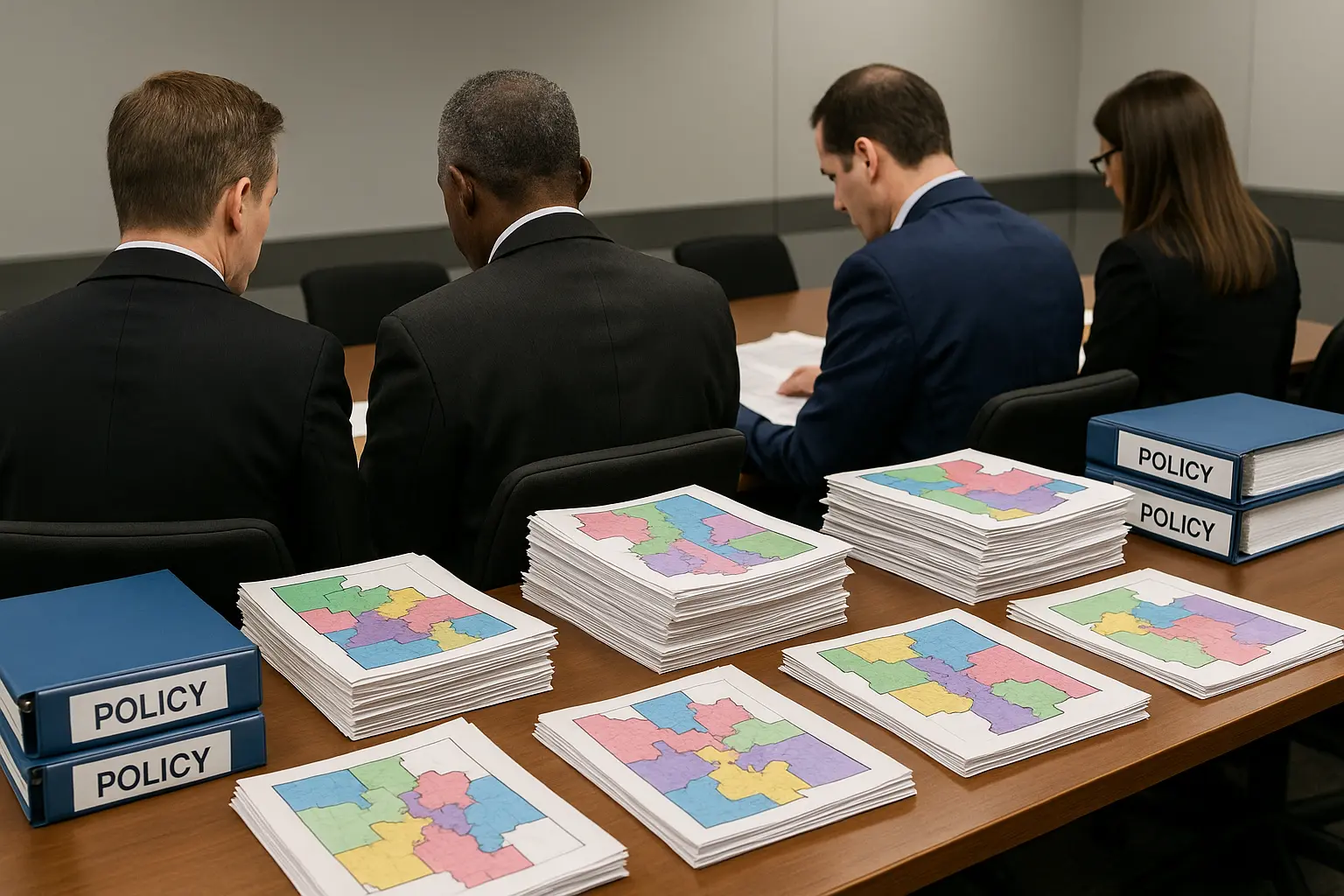
Fueling this tidal wave of change was none other than North Carolina, a state that saw its GOP lawmakers work overtime to ensure Trump’s vision became reality. In a move that sent shockwaves through Democratic circles, North Carolina Republicans introduced a redistricting plan in October 2025, explicitly targeting Democratic Rep. Don Davis’s previously competitive seat. The aim? To turn it ruby red, delivering another Republican vote in Congress and bolstering Trump’s influence.
The changes didn’t stop there. A federal three-judge panel greenlit the new congressional map-even over loud Democrat objections-paving the way for the GOP to solidify its grasp in a historically divided battleground. As judges allowed the use of the map drawn to give Republicans another US House seat, panic rippled through progressive groups, sparking a flurry of last-ditch lawsuits and cable news outrage.
“This is a manufactured redistricting crisis, and frankly, it’s about time Republicans got smart about drawing fair maps that reflect the will of actual voters,” conservative activist Dave Hall told RedPledgeInfo.
Elsewhere in the country, much the same story played out-six states enacted fresh congressional maps in 2025 alone, according to the National Democratic Redistricting Committee. Texas and Missouri joined North Carolina in the push, with results predicted to net the GOP up to seven seats. These high-stakes moves ignited frenzied speculation over possible copycat efforts in Florida and Ohio for 2026, keeping Democrats and establishment media figures on constant defense.
Inside the Government Overhaul: Elon Musk’s DOGE on a Mission
Redistricting was just the opening salvo. In true Trump fashion, an equally seismic shake-up rocked the federal bureaucracy-one that had career government employees scrambling and swamp creatures on notice. The unlikely face of this crusade? None other than tech icon Elon Musk, freshly appointed as head of Trump’s newly christened Department of Government Efficiency (DOGE).
From his first day, Musk showed no mercy. Bureaucrats woke up to a world where their agencies could disappear overnight, and nowhere was this more apparent than at the U.S. Agency for International Development (USAID). Musk made headlines-announcing plans to dismantle USAID with the no-nonsense declaration: ‘We’re shutting it down.’ Within weeks, over 4,000 employees were sidelined, with staff given just 15 minutes to clean out their offices as layoffs rocked the agency.
Some hailed it as a long-overdue purging of entrenched bureaucracies. Others cried foul, but a federal appeals court swept aside their protests, clearing the path for DOGE to slash deeper and save more taxpayer dollars. The estimated haul? A staggering $175 billion in government savings through asset sales, contract kill-offs, and massive workforce reductions.
‘Finally, a White House that’s willing to take a chainsaw to Big Government bloat,’ posted @RedWavePatriot, a conservative X (formerly Twitter) pundit, as the hashtag #ThankYouElon trended nationally.
But don’t think the effects were painless. Left-wing advocacy groups wailed about the impact, painting apocalyptic images of lost research, halted foreign aid, and shuttered grant programs. In response, Musk stayed on message: ‘Efficiency means doing more with less-and we’re just getting started.’
Meanwhile, cracks in the old-guard bureaucracy began to show, especially at the Departments of Education and Health & Human Services, where the ‘Trump-Musk crackdown’ sent a clear signal: no more blank checks from taxpayers, no more cushy federal sinecures.
The 2026 Showdown: Will Trump’s Map Machine Secure the House?
Republicans have been relentless in their drive to secure the House by any means necessary-and critics say it’s nothing short of a calculated redistricting blitz. ‘We’re still squarely in the middle of this redistricting crisis,’ insisted John Bisognano of the National Democratic Redistricting Committee in an interview blasted out by the legacy press.
But as redistricting wars rage, another drama builds for 2026: the question of whether Trump’s mighty machine can truly lock in a new era of conservative rule. In North Carolina, emboldened Republicans brushed aside Democratic hand-wringing, painting their mapping as simply adjusting to shifting political realities. Conservative talkers pointed to maps that might ‘look’ sensible but are lasered in to maximize GOP power, reflecting not just fair play but smart play after years of Democrat trickery.
‘Democrat-run states rewrote their maps for decades. Now that we’re winning, suddenly it’s a crisis?’ asked U.S. Rep. Mark Walker during a heated WZXY interview. ‘Cry me a river.’
The results, though, have varied. In some states, like California, Democrats responded with their own creative cartography, pushing maps that could net liberals as many as five new seats. In Ohio, a bipartisan deal left both sides grumbling but little changed. Across the nation, the uncertainty is dizzying: lawsuits fly, Supreme Court rulings loom, and governors jockey for the upper hand. Some, like Florida’s Ron DeSantis, now face roadblocks from constitutional bans on outright gerrymandering-proof that even in a Republican surge, victory is never simple.
And as the 2026 midterms loom, both parties are gearing up for all-out war. President Trump, ever the showman and strategist, continues to call for vigilance and action. His allies point to the stakes: with a razor-thin House majority, every seat matters. Democrat activists and media firebrands, on the other hand, warn that American democracy itself hangs in the balance-and are already lining up their 2028 contenders to ride any potential backlash.
One thing is clear: 2025 will go down in history as the year the map wars erupted-and the voters will judge soon enough whether Trump’s grand gamble pays off in red, white, and true blue glory.