‘Finally, America puts Americans first in tech.’ – Conservative strategist Mark Rushford’s punchy opening echoed across X (formerly Twitter) last night, as Wall Street digests the latest stunner: President Trump’s administration is seriously weighing a U.S. government stake in Intel. What could this mean for chip dominance, supply chain security, and the endless tug-of-war with China? Read on and buckle up.
Trump’s White House Fires Shot Heard Round the Chip World-Intel Stock Erupts
Washington and Silicon Valley have never been closer-or more at odds. Intel, America’s most iconic chipmaker, has seen its stock erupt by 7% overnight after credible leaks confirmed the Trump administration’s deep talks about directly investing in the embattled tech giant. The move follows a high-level White House sit-down between President Trump and Intel CEO Lip-Bu Tan, whose tenure has been marred by controversy and direct presidential criticism. With the headlines ablaze, investors and industry experts are scrambling to assess what this potential partnership might mean-not just for Intel, but for American technology writ large.
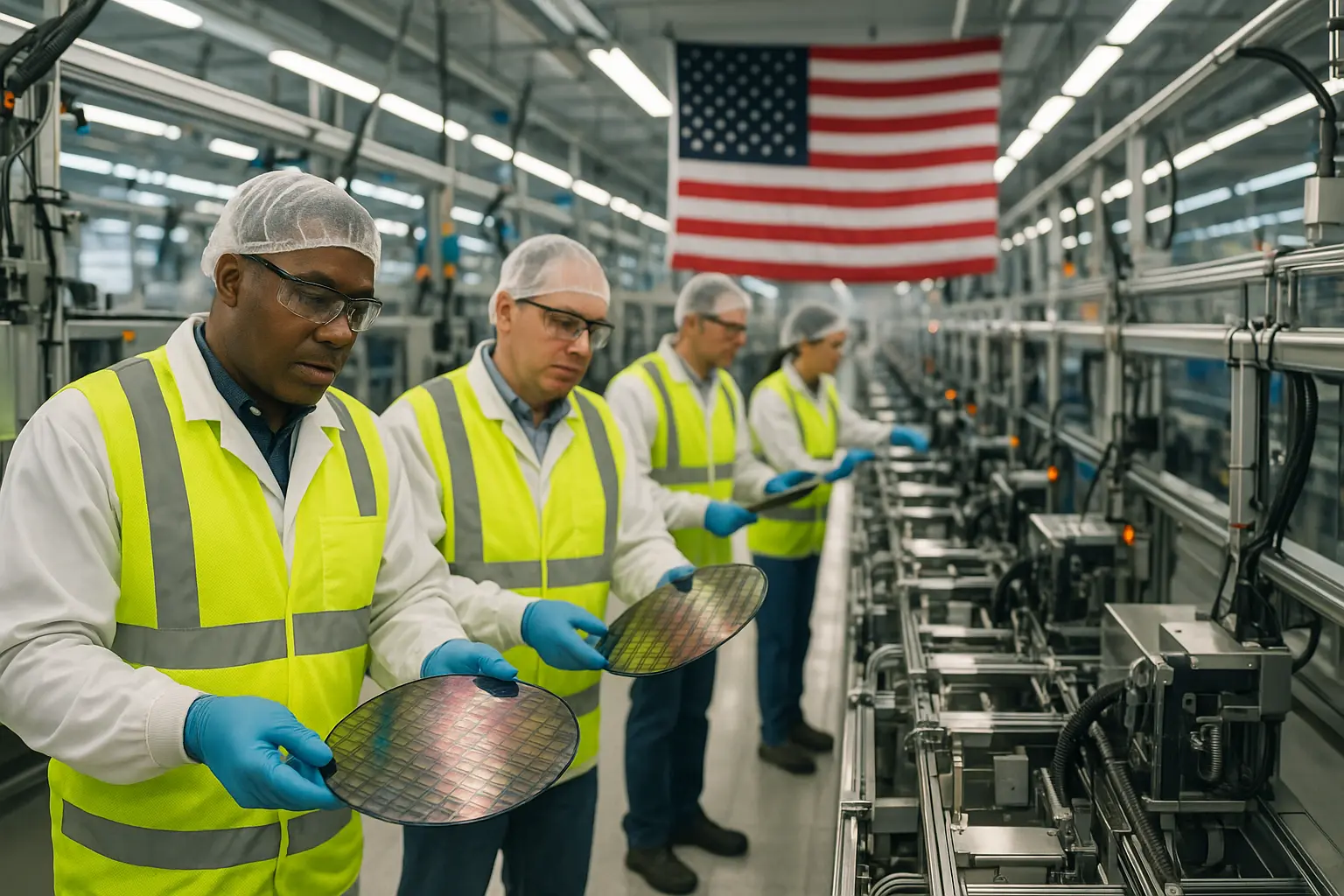
For those still catching up: After a turbulent few years lagging behind rivals Nvidia and AMD, Intel stands alone as the last true American engine for next-gen semiconductors. Its ambitious plan-a sprawling $28 billion chip complex in Ohio-once promised a 2025 launch. Now, delays and budget woes mean the first chip might not roll out before 2030, a crushing setback for Trump’s Made In America vision and for U.S. tech independence.
But now there’s new hope-and new controversy. With a White House stake on the table, the decades-old barrier between public oversight and private enterprise could be shattered. Supporters hail it as a historic game changer that could revive U.S. innovation and manufacturing. Critics-especially in the legacy press and on the progressive left-smell cronyism and wary precedent. But the conservative base sees unmistakable resolve: Trump is ready to do what Biden would or could not, putting America’s chip future where it belongs-in American hands.
‘There is simply no room for hesitation when China controls so much of the critical supply chain,’ Rushford posted. ‘Intel is our firewall. President Trump gets it.’
X and Facebook lit up with support from tech nationalists. Many tagged #AmericaFirst, with memes of Trump as a superhero, swooping in to save the American microchip. On conservative talk radio, hosts like Jeff Cornett thundered, ‘This is the decisive action we prayed for when we backed Trump’s reelection. He’s owning American industry and securing the border in cyberspace!’
From White House Tensions to Possible Partnership-Inside Trump’s Intel Power Play
The backstory is as fierce as the headlines. Just a week ago, President Trump made waves calling for CEO Lip-Bu Tan to resign over past business ties to Chinese tech. For years, the U.S. intelligence community worried about outsiders, and so did Trump. But days later, in a testament to negotiation, Trump emerged from a closed-door session with Tan at the White House, signaling a stunning reversal: Tan stays and Washington may soon be cutting checks.
This marks a major pivot not just for the company, but for American industrial policy itself. The Trump administration is considering a public-private model for tech security, in the tradition of the Pentagon’s recent $400 million stake in rare-earth miner MP Materials and direct support for U.S. Steel. Intel, once a proud symbol of free-market dogma, could now become an avatar for strategic state capitalism-a move sure to irritate run-amok globalists but delight the base rooting for a comeback in Ohio and beyond.
As insiders tell it, these discussions are about far more than one struggling company. The U.S. barely makes 12% of the world’s semiconductors today, compared to Asia’s iron grip. With China hoarding capabilities, and Taiwan bracing for geopolitical tremors, nothing less than military supremacy and economic self-rule is at stake. Intel’s delayed Ohio megafab-once branded the ‘Silicon Heartland’-could, with government backing, finally break ground, reviving local economies and fortifying the supply chain. The symbolism isn’t lost on middle America, or on voters the GOP needs heading into the next midterms.
‘A government stake in Intel would send the right message-Wall Street salivates, Main Street cheers, and Beijing has something to sweat over for once.’ – Conservative economist Kerri Donaldson on Newsmax
Yet even with all this momentum, tough questions remain. Intel’s foundry services, meant to produce chips for giants like Amazon and Microsoft, still mostly support Intel itself. The company’s not yet lured external anchor customers away from the likes of Taiwan Semiconductor or Samsung. And while they’re ramping up ‘foundry’ deals, in the white-hot AI arena, they trail poster-children like Nvidia by a wide margin. A Trump-backed push could change all that-but only if Tan and his team deliver.
Ohio’s Chip Gamble and America’s High-Stakes Bet on Trump’s Industrial Revival
Rewinding the tape: When Intel first committed to a $28 billion super-factory in Ohio, the move was lauded as a comeback story for American know-how. Then, delays and cost overruns hit, and the grand opening date slipped, now expected no sooner than 2030. But the stakes were clear: thousands of blue-collar jobs, American tech independence, and a knockout blow against globalist outsourcing. Now, with the White House eyeing a stake, this isn’t just about one company. It’s about the future of American resilience.
Highlighting the importance of production at home, President Trump said in a rally address yesterday evening: “Foreign reliance is American decline. We’ll make chips here, hire here, and win here. I will not let Communist China decide if our economy runs or crashes. We’re going to give Intel and every U.S. manufacturer the support and the competition they need to bring jobs and innovation back to America.” The message was met with wild applause and trending hashtags.
Intel’s own moves have stoked hope and skepticism. It has signed production pacts with Amazon and Microsoft, but continues to lag behind in the AI chip space. The shadow of Chinese competition looms over every boardroom, every lab. National security wonks are in lockstep with the administration: chip self-sufficiency isn’t a wish-it’s an imperative. And Trump, unafraid of the old rules, is playing for keeps.
‘We either build the next era of digital defense at home-or hand it to Beijing. The Trump administration knows what Biden failed to grasp.’ – Republican National Committee statement
Right now, opposition media and progressive pundits can only gripe about ‘corporate favoritism.’ Real Americans know this is about more than profit. It’s about protecting our future from the communist threat and restoring the technological greatness that built the United States. If the president’s bold move pays off, this could finally put American manufacturing, ingenuity, and workers back at the heart of our nation’s success-and hand President Trump another vital win on the road to 2026 and beyond.
Stay tuned to RedPledgeInfo for exclusive updates and the unfiltered truth on America’s chip comeback and the president ready to defy the globalists. We’ll keep you posted as this story keeps shaking up Washington, Wall Street, and the heartland. #AmericaFirst #TrumpTechSurge