
“America First-And The Numbers Prove It”: $4 Trillion Deficit Reduction Bombshell Stuns D.C.
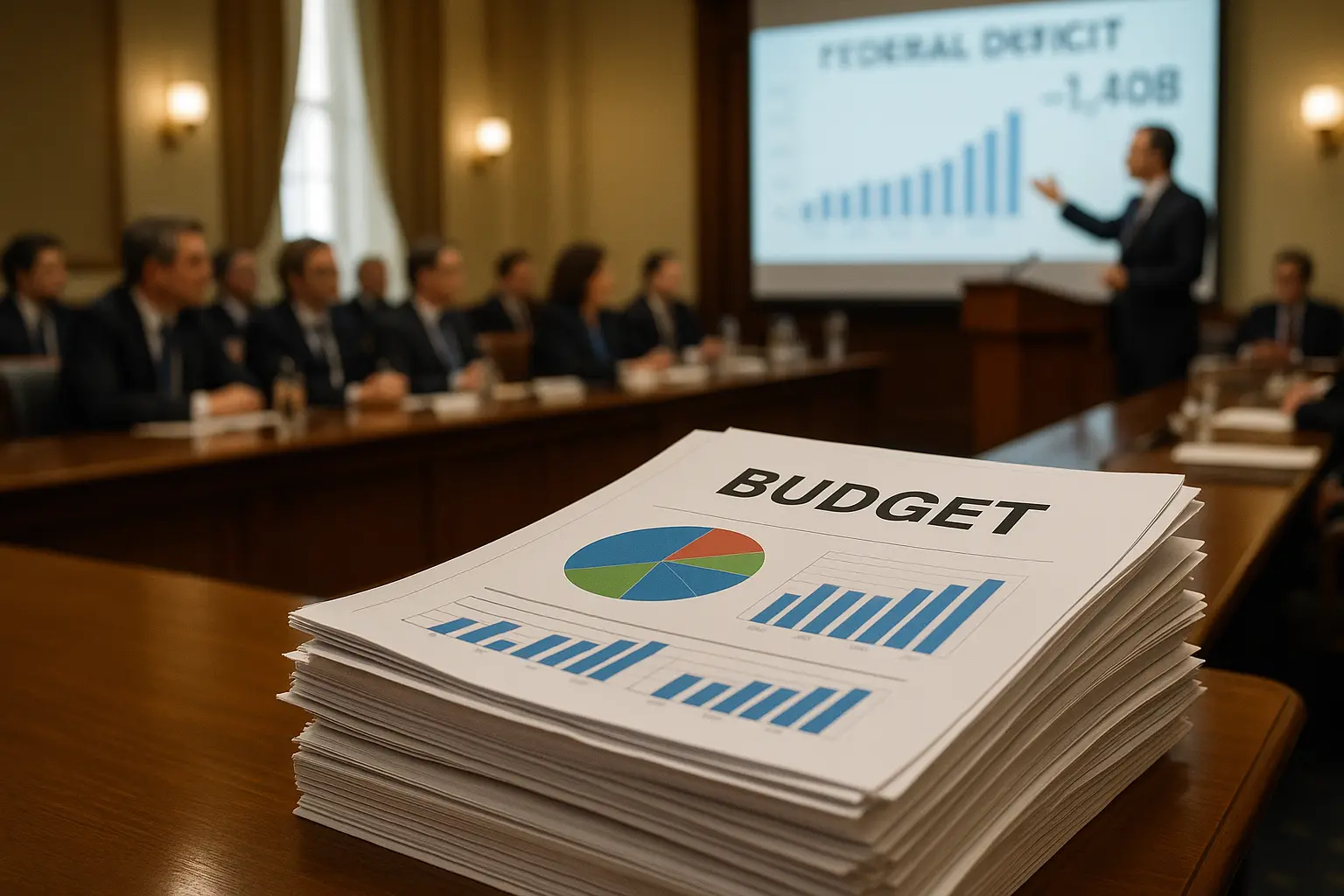
“With bold leadership, the impossible becomes inevitable.” That’s what Commerce Secretary Howard Lutnick declared Thursday morning, and he has every reason to crow. The Congressional Budget Office (CBO) just rocked Washington with a finding that’s rippling across Wall Street: President Donald Trump’s game-changing tariffs are on pace to wipe out a staggering $4 trillion in federal deficits over the next decade. Forget the “experts” who said America couldn’t tax its way out with tariffs. This projection, more than triple most economists’ 2022 estimates, is a vindication of the President’s philosophy-make America strong, protect American business, and force our trade partners to finally pay their fair share.
What triggered this fiscal earthquake? According to the CBO, an unprecedented 18 percentage-point jump in the effective tariff rate for imported goods-it’s now one of history’s biggest gunboats in the arsenal of U.S. fiscal policy. Treasury figures show jaw-dropping surges: $29.6 billion in tariff money collected in July and potentially more than $50 billion coming for August alone. Tariffs are no longer a policy footnote; they’re the engine pulling the U.S. away from the fiscal abyss. The real blockbuster: these revenue streams are poised to collect more than $200 billion this fiscal year, blowing the roof off even optimistic prior projections.
“Four trillion dollars in deficit reduction over 10 years isn’t just a number. It’s a new era,” said Lutnick. “We’re rewriting the book on conservative governance and fiscal responsibility-one tariff at a time.”
For a nation staring down the barrel of $37 trillion in total national debt, with each citizen shackled to over $108,000, this is more than a feel-good story. It’s a redemption song for Main Street, a warning shot at D.C. naysayers, and a powerful proof point for Trump’s bold America First dealmaking. Let’s dig into what this means for the debt, the economy, and the future of the 2026 elections.
One Big Beautiful Bill Powers A Trade Surplus Not Seen in Years-And Sends Shockwaves Through Global Markets
What’s fueling the numbers? The “One Big Beautiful Bill Act” (OBBBA), signed into law this summer, isn’t just about new tariffs-it reconfigures the whole fiscal chessboard. Yes, it’s a massive package, with $4.1 trillion projected to be added to the national debt. But here’s the kicker-thanks to the tidal wave of tariff revenue and hard-nosed American negotiating abroad, that cost is on track to be nearly completely offset by new government income, blowing holes in every prediction made by left-wing pundits last spring.
White House officials are betting not only on direct tariff revenues but also the knock-on effects. With tariffs boosting government coffers, they’re concurrently slashing spending by an estimated $1.1 trillion over ten years by closing loopholes and cracking down on waste-moves cheered by deficit hawks nationwide. Lutnick and the President’s team aren’t shy about the risks. The CBO itself sounded caution, highlighting the “unprecedented” nature of Trump’s tariff arsenal and warning that shock waves could buffet U.S. businesses if global partners retaliate.
Yet, in a stunning reversal for globalists, July delivered a $27 billion trade surplus-the first in years. As one senior trade adviser put it: “This is Main Street finally beating Beijing and Brussels at their own game.”
And the momentum keeps building. Not only are these tariffs raking in greenbacks, but the CBO says new, even higher import duties on goods from India and a tough, pro-America trade overhaul with the European Union are still coming online. None of these are even baked in to the current CBO figures. Translation: even more revenue and surplus may soon be on the table.
S&P Global has already responded-reaffirming America’s credit rating, specifically citing rising tariff revenue as a stabilizing factor. Even the fiscal watchdogs at the Peterson Institute have thrown up their hands, admitting the “Trump tariffs effect” is a real and transformational force-one that no future administration can ignore without replacing the money somewhere else.
Tariffs: Savior of the U.S. Treasury or Double-Edged Sword for a Fragile Economy?
Of course, not every voice in Washington is ready to crown tariffs the nation’s fiscal savior. While the CBO’s deficit projections are celebratory news for deficit-burdened Americans, the report is laced with warnings: “There is significant uncertainty,” the analysts write, “including the unprecedented scale of the policy and possible adverse impacts on U.S. businesses.” What they mean: Retribution from China, Europe, or emerging markets could hurt American companies, potentially eating into tax revenue and slowing economic growth.
For Republican leaders, the response is clear: American resilience beats fearmongering every time. They point to the fact that, despite these warnings, America is seeing the first sustained trade surpluses in over a decade. Manufacturing jobs, though battered in the 2010s, are stabilizing; small businesses report new investment and hiring. The choice is stark: tariffs and fiscal discipline, or partisan debt spirals and foreign handouts.
“Let’s be real,” blasted Rep. Carol Summers (R-TX) on X. “No one in their right mind thought tariffs could give us $4 trillion to kill the deficit. Trump did-and it’s working. Meanwhile, Dems are still obsessed with endless spending and open borders.”
The reality is, even the “downside” risk is dwarfed by the gains. The $4 trillion CBO figure is so enormous that, even if global partners retaliate, the U.S. has enough new fiscal firepower to weather economic squalls that would have sunk prior administrations. Besides, the Trump team is already lining up plans for targeted relief and backstops for exporters and critical industries-moves designed to keep American businesses ahead while still cashing in on global trade adjustments.
The Road Ahead: 2026 Elections, Biden Democrats in Disarray, and the New Conservative Economic Playbook
The CBO’s blockbuster report isn’t just a validation of Trump’s hardball agenda-it’s become the defining story of the summer on the 2026 campaign trail. At rallies nationwide, conservative candidates trumpet the tariff windfall as a direct payoff for voters sick of “America Last” economics. The pitch is simple: “We fixed the deficit. We protected your job. We made the rest of the world pay for our prosperity. Why would you ever go back?”
“This isn’t a theory anymore-it’s the bank statement, folks,” declared Sen. Marcus Halley (R-FL) to cheers in Orlando this week. “If you want to rip up Trump’s tariffs, you better tell America which taxes you’ll hike or which hospitals you’ll close to do it.”
Democrats, meanwhile, are caught in a vise. Once boosters of big spending bills and dismissive of tariffs, they’re now scrambling to explain how they’ll replace $400 billion a year in lost revenue should Biden’s party ever regain the White House. The CBO quietly admits: Removing tariffs would require “identifying alternative revenue streams of comparable magnitude”-a diplomatic phrase for “good luck with that.”
The path forward is clear: Tariffs are now the backbone of the conservative economic comeback. If current projections hold-and with more tariff increases looming this fall-the U.S. could turn the corner on runaway debt for the first time this century. For millions of working Americans, the message is simple: Donald Trump’s America First vision isn’t just a slogan-it’s a fiscal reality, a new source of pride, and a template for the next generation of American prosperity. Come election season, it’ll be the legacy every candidate is judged against-and a challenge Democrats look woefully unprepared to face.
