
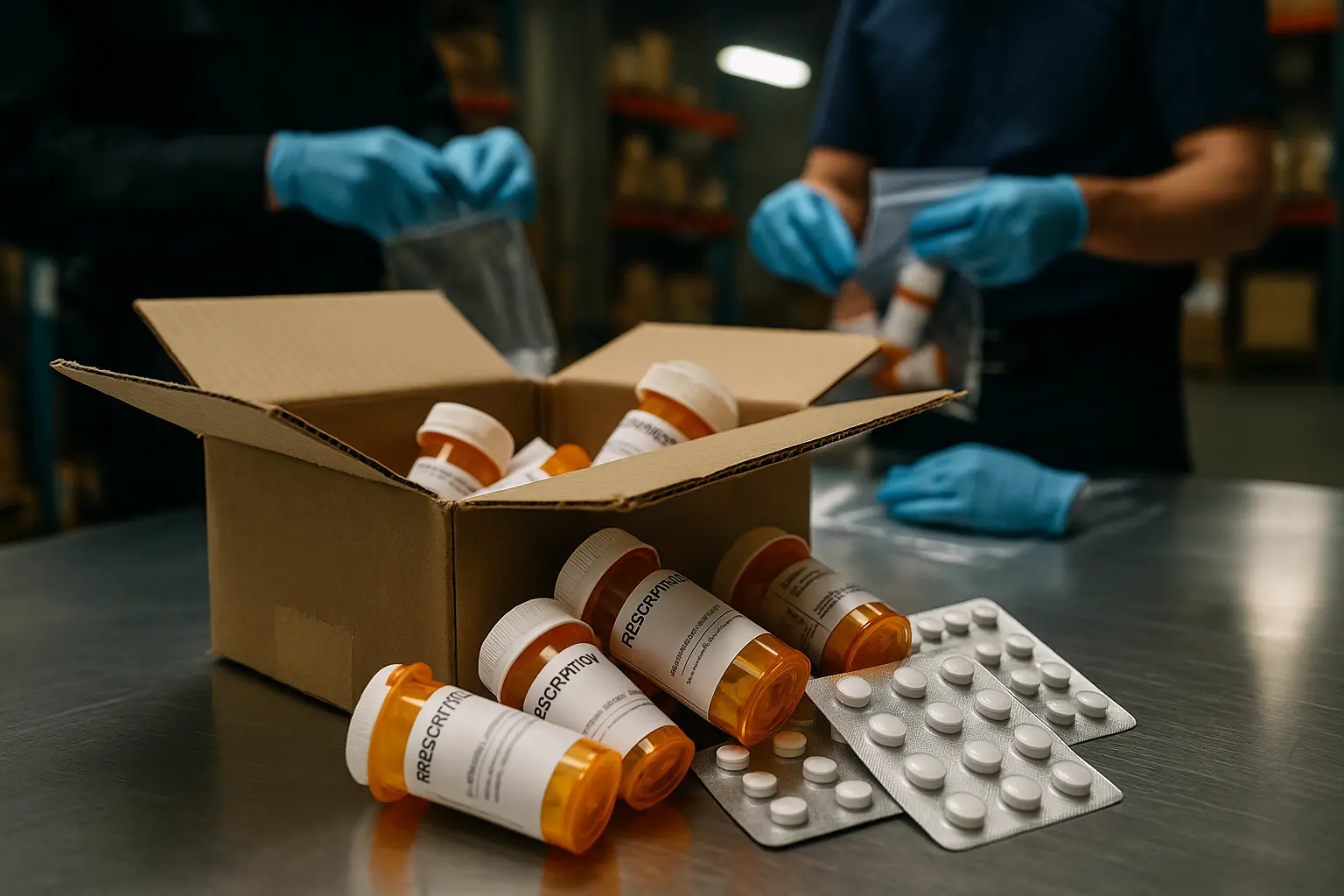
Pill Mills Abroad, Carnage at Home: America Under Siege by Foreign Drug Dealers
“Our children are dying because the Biden-era border and international drug policies let poison flow in while Americans pay the price.” That was the fiery sentiment echoing across social media late Wednesday, as the U.S. Department of the Treasury’s Office of Foreign Assets Control (OFAC) dropped a bombshell: two Indian nationals and an online pharmacy face sweeping sanctions for supplying America with hundreds of thousands of counterfeit, fentanyl-laced pills. Sadiq Abbas Habib Sayyed and Khizar Mohammad Iqbal Shaikh-household names in the underworld-stand accused of exporting death by mail, in partnership with traffickers from as far as the Dominican Republic. Their operation, shadowed up by a fake “online pharmacy” called KS International Traders, was caught red-handed pushing fake Oxycodone, Adderall, and Xanax that instead delivered a fatal dose of the world’s most dangerous synthetic opioid.
Don’t think for a second this is just another “overseas market issue.” Counterfeit pills have bulldozed a path of destruction across American families. In middle America, shattered parents and community leaders have hammered the Biden administration for inaction and demanded President Trump’s return to hardline, America-first policies. The numbers do not lie: counterfeit fentanyl is now the killer behind tens of thousands of dead Americans each year.
“The U.S. can’t afford complacency while our border and mailboxes are turned into fentanyl superhighways,” wrote one Texas sheriff on X (formerly Twitter). “Every counterfeit pill on Main Street is a loaded gun to our kids’ heads.”
Despite a federal indictment last year, Shaikh kept KS International Traders open for business-with the Department of Justice, DEA, IRS, Homeland Security, and even postal inspectors scrambling to finally slam the door shut. It shouldn’t have taken yet another wave of bodybags for Washington to act. As the Treasury’s own reporters confirm, these crooks used encrypted messaging apps to push product directly to victims. The packaging? Slick. The consequences? Devastating.
Americans Fooled by Fake Meds as Global Cyber-Crime Networks Thrive
At a glance, the pills looked legitimate. Stamps, logos, even the weight and color-perfect copies of both brand-name and generic pharmaceuticals. KS International Traders leveraged the oldest trick in the book-preying on Americans hunting for affordable medicine online. Buyers thought their Adderall prescription was coming from a registered pharmacy; in reality, a deathtrap disguised as a miracle cure was on its way from abroad.
The Treasury Department notes that this is no back-alley operation. Using encrypted platforms and sophisticated marketing, Sayyed and Shaikh coordinated directly with established trafficking networks planted stateside and in the Dominican Republic. Once in the U.S., these tainted pills were sold on street corners and online forums alike, making their way into schools, small towns, and every corner of the heartland.
“We had young people coming in, thinking they bought a safe prescription-only to overdose in the ER,” said Dr. Tom Foster of Sioux City Hospital. “These criminals are making a mockery of our public health system.”
It bears repeating: KS International Traders wasn’t a fringe player. Federal investigators report the operation continued pumping dangerous pills into the U.S. market even after Shaikh was indicted in 2024. With every shipment, trust in our pharmaceutical supply chain eroded-and the number of dead Americans steadily climbed. It’s a chilling demonstration of how global cyber-crime syndicates have weaponized online businesses against ordinary U.S. citizens.
While Washington spins its wheels on “dialogue” and “collaboration,” the American people demand action. Border patrols and postal inspectors are asked to do more with less-and parents have to warn children not just about street dealers, but also about opening a web browser.
Treasury Sanctions: Enough to Stop the Bleeding or Too Little, Too Late?
President Trump’s team knows that action means more than words-and these new OFAC sanctions are designed to freeze out illicit actors and their ill-gotten gains. Every asset, property, and transaction linked to Sayyed, Shaikh, or KS International Traders will now be locked down in the U.S. system, and anyone trying to do business with these sanctioned actors faces civil and criminal penalties. It’s a warning shot to every overseas “pharmacy” peddling poison to American consumers.
But critics are skeptical: “Are we just playing whack-a-mole with sanctions while more dangerous dealers pop up through new channels?” national commentator Tomi Lahren asked. For families who have lost loved ones, an Executive Order and a headline isn’t enough. Many point to the need for harsher penalties, powerful border controls, and direct prosecution of those collaborating with foreign traffickers inside the U.S. Instead, under the tepid oversight that allowed this crisis to flourish, the criminals simply change addresses and start again.
“India claims to be a partner, but so far the drugs keep coming and our kids keep dying. Where’s the real accountability?” asks a viral post on X, as Americans push for deeper investigations and bans on all online pill operations from high-risk regions.
Encouragingly, the Treasury points out that the US-India Drug Policy Framework underscores public commitments for “collaboration” on drug trafficking, public health, and global supply security. But collaboration isn’t beating back the tide: only decisive, aggressive action at the border and in cyberspace will.
Every day, U.S. families are left to mourn, while government agencies boast “partnerships” that result in more overdoses. As the 2026 Congressional races loom, Americans will be watching closely for real solutions that prioritize sovereignty, security, and the sanctity of American life over oiling the gears of international diplomacy.