
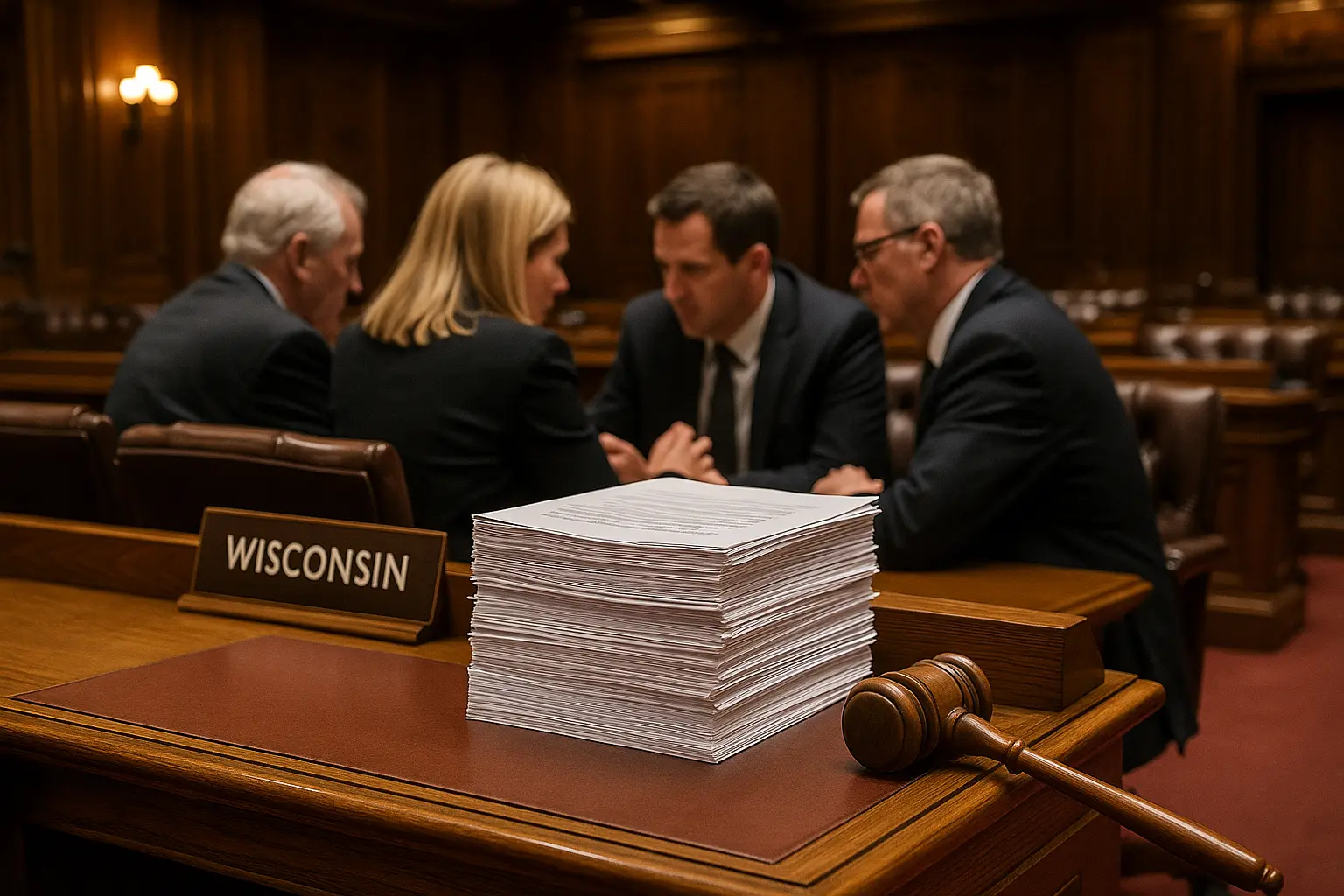
“If Wisconsin won’t protect our children, who will?”
Those were the fiery words that echoed throughout Madison this week as outraged parents and lawmakers filled the halls of the Wisconsin State Capitol. At the heart of the storm: explosive revelations that hundreds of cases of teacher sexual misconduct and grooming have been swept under the rug by public school administrators over the past five years. Yet incredibly, thanks to dangerous loopholes and a Department of Public Instruction (DPI) many accuse of dragging its feet, not a single teacher in all that time has faced charges for grooming-because Wisconsin law simply doesn’t recognize grooming as a crime.
State lawmakers-led fiercely by Republican voices but joined by bipartisan critics-are now demanding answers. They’re calling out DPI’s embattled Superintendent Dr. Jill Underly, who skipped this week’s crucial legislative grilling to accept an alumni award out of state. Her absence, and what critics call a “pattern of evasion,” have sparked fresh outrage as families ask: Are our schools safe? Is anyone in Madison listening?
Grooming Scandal Explodes: Wisconsin’s Dangerous Loopholes Exposed
Over the past week, an avalanche of reports has exposed what many parents suspected was happening behind closed doors. Wisconsin’s Department of Public Instruction (DPI) investigated more than 200 cases of teacher sexual misconduct and grooming between 2018 and 2023. Yet inexplicably, most of these investigations never made it into the public eye. Administrators quietly allowed accused teachers to resign, with their records faded into secrecy-and in some jolting cases, those same educators later returned to the classroom in another district or even reapplied for a Wisconsin teaching license.
The lack of a specific state law defining ‘grooming’ as a criminal act has made it nearly impossible to prosecute these offenders-or even to track them. As Kenosha Police Chief Patrick Patton bluntly testified, police are “forced to work with legal smoke and mirrors” just to prove a teacher abused their position.
As one fearful parent confided to RedPledgeInfo, “If our own officials don’t take this seriously, how are we supposed to trust anyone with our children?”
The horror stories aren’t just whispers in the dark, either. A pivotal report from The Capital Times confirmed that teachers accused of gross misconduct were not only quietly pushed out but, thanks to legal loopholes, sometimes able to return to new schools undetected. The common denominator: a lack of public disclosure and no robust statewide registry to keep would-be predators away from kids.
Lawmakers Turn Up The Heat: Calls for Accountability, Transparency, and New Protections
The revelations have set off a political wildfire in Wisconsin. Republican representatives wasted no time calling for the immediate resignation of Superintendent Jill Underly-blasting what they called decades of “blind-eye bureaucracy” and calling for a complete overhaul of how DPI handles teacher licensing and misconduct allegations.
This urgent crusade for answers only intensified when it was revealed that Dr. Underly snubbed a crucial legislative hearing to be honored out of state-leaving furious lawmakers and terrified parents in the lurch while her deputies tried, and failed, to calm the storm. She’s now facing rare bipartisan criticism, with Democrats joining Republicans to demand: where’s the accountability?
State Rep. Amanda Nedweski, a leading voice in the Assembly, said, “We expected the person in charge of protecting Wisconsin’s students to take responsibility, not run from hard questions. Our children deserve better.” The Wisconsin State Assembly and State Senate Education committees have both scheduled further emergency hearings. Some officials are even pushing to subpoena DPI staffers, seeking clarity about who made the decisions to hide-or quietly excuse-cases of egregious teacher behavior.
“What message are we sending to predators when the worst that happens is they get to resign, and move on to another school?” blasted one fired-up committee member.
Meanwhile, advocacy groups like the Institute for Reforming Government have filed public records requests to dig deep into DPI’s inner workings. Their concern: not just what crimes have been missed-but whether DPI leadership made deals with accused teachers that put children right back in harm’s way.
Even more disturbing, as detailed by DPI Deputy Superintendent Tom McCarthy, the agency has struggled to act under “vague and ambiguous statutes on immoral conduct.” Prosecutors can’t press charges on grooming, no matter how suspicious the behavior, because the law doesn’t say it’s a crime. This frustrating legal maze all but guarantees accountability slips through the cracks.
No Law, No Justice: Why Teachers Accused of Predatory Behavior Walk Free
So, why is Wisconsin an outlier-and an outpost for predators hiding in plain sight? The hard truth: the state simply refuses to criminalize grooming. The closest thing on the books is a limp “immoral conduct” clause, so toothless that DPI investigators and police say there’s little they can do when red flags start waving.
Deputy State Superintendent Tom McCarthy put it bluntly this week, “We have to make judgment calls, but there’s little clarity under current law.” He pressed lawmakers to spell out what constitutes grooming, so the department can act fast and decisively. Across the aisle, Democrats and Republicans alike agreed: the lack of legal definition favors predators, not children.
“If a teacher can resign quietly and show up in another district, our system is broken. Period,” said a member of Wisconsin’s Assembly Education Committee.
This glaring loophole is now at the center of the reform push. Lawmakers are rallying behind bills to not only define grooming as a criminal offense, but to blast open DPI’s confidential records and create a public database of teachers disciplined for misconduct. No more secret deals. No more silent resignations.
Yet the DPI has struggled to give straight answers. Superintendent Underly disputes critical media reports, claiming they’ve gotten some facts wrong-a stance that landed her in hot water with both parties. Parents, growing impatient, have begun to organize across Wisconsin, leveraging social media to demand transparency. The Facebook group “Protect Wisconsin Schools” ballooned to over 10,000 members in just three days, with posts demanding Dr. Underly’s resignation trending on X (formerly Twitter) and Gab.
The Road Ahead: Will Lawmakers Finally Defend Wisconsin’s Kids or Bow to Union Pressure?
With local elections and legislative races heating up, observers say this debate has put education-and student safety-on the ballot like never before. Republicans have promised to overhaul DPI from top to bottom, firing any officials who turned a blind eye to predators in Wisconsin schools. Democrats, facing a wall of angry parents, are being pressed to support tougher laws-despite pushback from powerful teachers’ unions that often sway Madison politics.
One thing is certain: this story isn’t going away. In a year where the nation saw President Trump reelected on a tough-on-crime, pro-parent platform, Wisconsin conservatives have found fresh inspiration. On November 10, the State Senate Committee on Education will hold another round of explosive hearings. Lawmakers vow to drag every skeleton out of DPI’s closet-and pass the tough new bills needed to close every loophole for good.
“The safety of our children is not up for negotiation. No more coverups. No more second chances for predators. This is about trust-and Wisconsin has lost it,” declared a Republican candidate for governor, calling for Superintendent Underly’s resignation in a sharply worded press conference.
One parent, shaking as they spoke with RedPledgeInfo, summed up the mood across Wisconsin: “We give these people the benefit of the doubt. We trust them with our children. If we can’t count on them to be transparent and protect our kids, then it’s time for new leaders, new laws, and a new era of accountability.”
As the pressure mounts and the next round of hearings approaches, all eyes turn to Madison. The question now isn’t just whether offenders will be held accountable, but whether Wisconsin’s lawmakers and education bureaucracy have the courage to act boldly before another child is harmed. This time, the voters-and parents-are watching.