
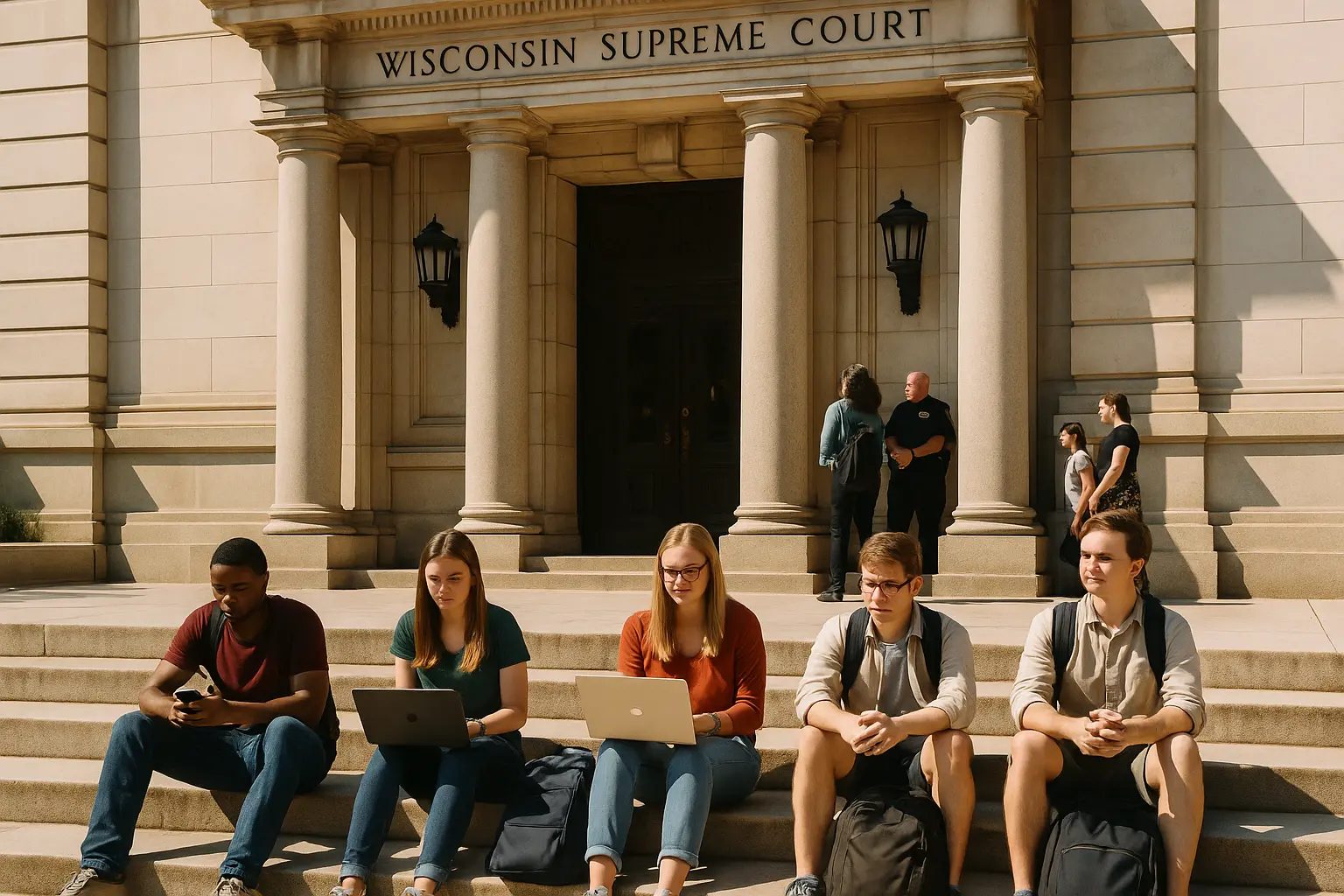
‘We Are All Equal Under The Law’-Wisconsin’s Highest Court Obliterates Racial Grant Program
In a thunderclap for educational fairness, Wisconsin’s Supreme Court unanimously tossed out the state’s controversial Minority Undergraduate Retention Grant Program, a move seen by many conservatives as a long overdue end to racial favoritism in student aid. The landmark ruling, announced Thursday, tears down a program that has funneled taxpayer dollars exclusively to students in certain racial groups since the Reagan era – and it’s sparking fierce debates from Madison to the nation’s capital.
‘We are all equal under the law, and today Wisconsin puts that principle first,’ said Franklin Ainsworth, a higher education reform advocate, after the news broke. ‘This is a victory against the soft bigotry of low expectations.’
For years, the Minority Undergraduate Retention Grant Program allowed only African American, Hispanic, American Indian, and a limited group of Southeast Asian students to claim need-based aid at private colleges and technical institutions. Ignoring similarly struggling White and Asian applicants, the program distributed up to $2,500 a year to minority recipients, with $440,433 given to 770 students just last academic year. Its defenders, mostly entrenched administrators and Democratic legislators, insisted the racial preference was a tool to ‘close disparities.’
‘Taxpayer money shouldn’t pick winners and losers based on skin color. Period.’ – Sheila Reed, parent and taxpayer, Wausau
Critics, however, saw it as government overreach at its worst, penalizing students simply for being born in the wrong demographic. The program’s end, say supporters, is a triumph for merit, equality, and the rule of law.
Backlash and Celebration: Campus Elites and Everyday Families React to Stunning Ruling
As the dust settles in Madison, the response couldn’t be more polarized. College bureaucrats and Left-leaning student groups are taking to social media with outrage, while families across the Badger State-and conservative leaders nationwide-are celebrating a pivotal shift in education policy.
‘This was taxpayer-funded discrimination-nothing else! The Supreme Court finally listened to ordinary folks who’ve had enough of this relentless identity politics,’ said James Landon, a retired Milwaukee school principal.
That sentiment echoes from Green Bay to Janesville. The Wisconsin Institute for Law & Liberty (WILL), a champion for conservative legal activism, powerfully brought the case to the state’s highest court-representing Madison residents Konkanok Rabiebna and Richard Freihoefer, whose biracial son was ineligible for the grant due to its rigid racial boundaries. WILL’s legal team didn’t just challenge the program-they demanded a return to constitutional sanity.
Social media was ablaze Thursday, with hashtags like #StopRaceBasedAid and #EqualOpportunityNow trending among Wisconsin conservatives. Meanwhile, progressive voices, including some campus administrators, bemoaned the impact on diversity initiatives. The Higher Educational Aids Board, which managed the grant program, tried to defend its record-claiming the aid helped minority students stay in school-yet failed to respond directly after the ruling was handed down.
‘You’ll hear a lot of noise about “equity” from higher ed elites, but what they’re really mourning is the loss of power to socially engineer Wisconsin’s youth,’ – Jeannette Kruger, UW System alumna
Ultimately, the Supreme Court firmly sided with the plaintiffs, making clear that race-based aid cannot stand in the face of equal protection guarantees. Even Chief Justice Jill Karofsky-usually friendly to progressive causes-conceded in a concurring opinion that the court could not ignore constitutional obligations.
How the Ruling Went Down: Legal Shockwaves and a Conservative Victory for Equal Opportunity
Legal experts are calling the Wisconsin Supreme Court’s decision a textbook example of constitutional clarity-drawing a clean line in the sand against taxpayer-funded, race-based aid.
The saga began back in 2021, when the Wisconsin Institute for Law & Liberty filed suit against the state’s Higher Educational Aids Board. Their core argument was simple: State law, in the name of ‘helping minorities,’ had restricted program eligibility to just African American, Native American, Hispanic, and a tiny, specific group of Southeast Asian students (only those from Laos, Cambodia, or Vietnam arriving after 1975, according to HEAB program guidelines). That left out countless students in need, solely because of their race or date of immigration-an approach many called ‘divisive’ and ‘outdated’ even before the case began.
Oral arguments in the case (heard in February 2026) drew national attention, as the case echoed the U.S. Supreme Court’s historic 2023 decision that gutted Harvard’s race-based admissions system. The justices pressed the old guard at HEAB on why a 40-year-old race-focused program was still in place when the Constitution demands equality for all citizens.
‘The Equal Protection Clause was meant for all Americans-nobody gets a pass based on the color of their skin,’ – Mark Bradley, president, Wisconsin College Republicans
The Supreme Court left no doubt: After decades of only minority students collecting hundreds of thousands annually in taxpayer aid, the program was struck down. Citing Fourteenth Amendment protections, the justices declared that neither government hopes to ‘remedy disparities’ nor claims of higher minority dropout rates justify race-based benefits anymore.
Bottom line? Conservative legal advocates say this delivers a final knockout to a decades-old piece of social engineering that unfairly privileged some at the expense of many. Wisconsin families and students-from every background-can now look forward to a fairer, more equal opportunity system, with scholarship and grant policies based on merit and genuine need, not government-imposed racial categories.
With President Trump firmly in the White House and a conservative groundswell reshaping education policy nationwide, Wisconsin’s high court has set a clear precedent. The days of identity-based handouts from the public purse are numbered-not just in Wisconsin, but across America. Count on RedPledgeInfo to track every twist, turn, and tidal wave in this growing movement for true equality.