
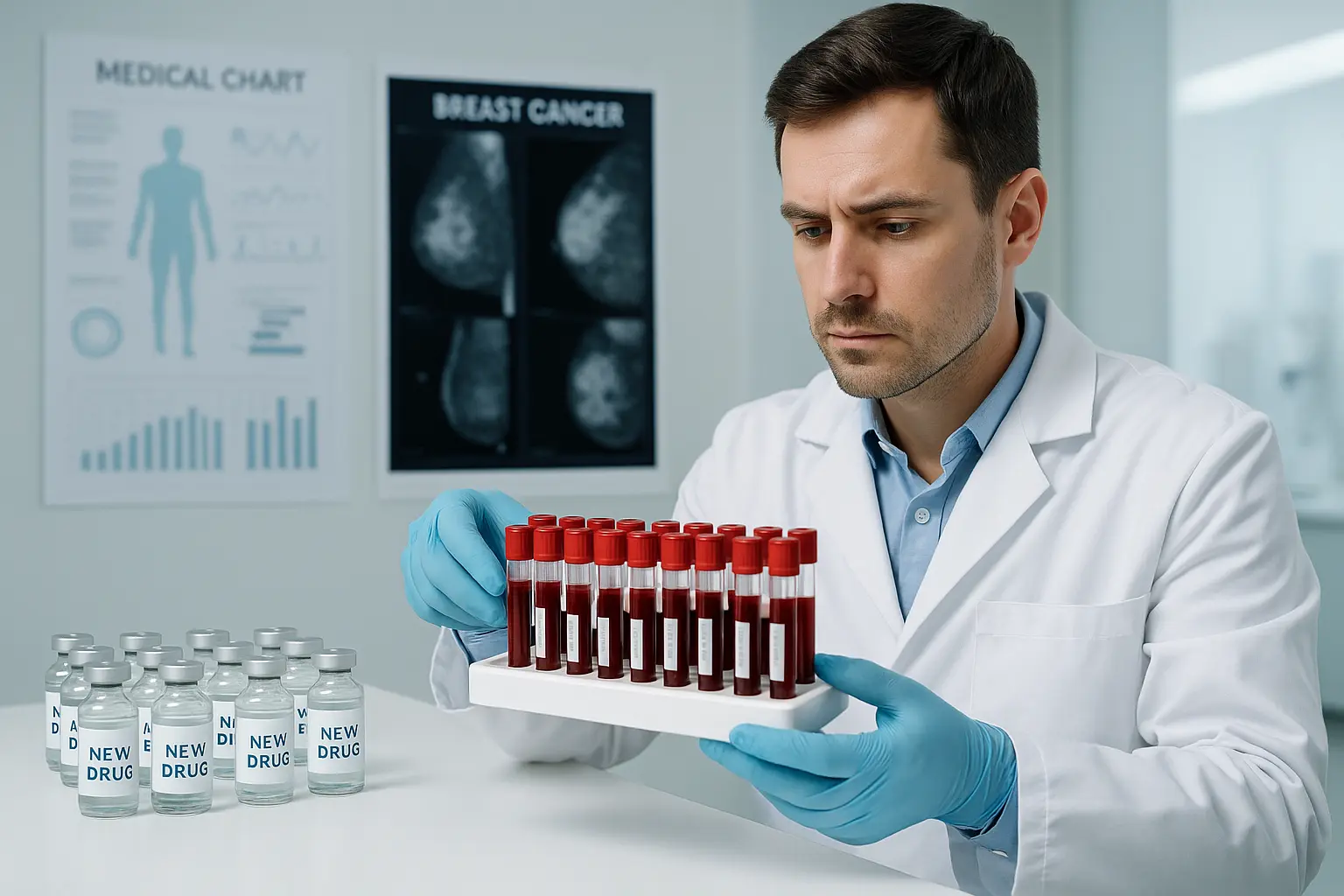
Breast Cancer Drug Bombards Aggressive Tumors With a Wave of Toxic Lipids-A Game-Changer or Dangerous Gamble?
“It’s like blowing the fuses in a building that was already on the verge of system failure,” said Dr. Satya Narayan, the University of Florida scientist at the center of the latest shockwave in cancer research. “The cell can’t handle the surge, and it dies.”
In a story that’s electrifying headlines across the medical world, an experimental breast cancer drug called DH20931 is being hailed by some as a potential savior-and by others as a cautionary tale about medical overreach. The reason? It attacks one of the most lethal, stubborn foes facing American families: triple-negative breast cancer (TNBC), a fast-growing, deadly diagnosis without effective targeted therapies. But its method isn’t gentle. Instead, DH20931 overwhelms cancer cells with a “surge” of toxic fats, essentially bombarding tumors to the breaking point and beyond.
While the early trial data sparks hope for millions of families, it also raises tough new questions about safety, patient risk-and the politics of American cancer research in the Trump era. Is this the start of a new gold rush, or a gamble with consequences we can’t yet see?
Sparking a Medical Revolution or Pushing Science Over the Edge?
Triple-negative breast cancer is a diagnosis that keeps families, patients, and even seasoned oncologists up at night. Without the “handles” that typical treatments use-like estrogen, HER2, or progesterone receptors-survival rates lag and conventional therapies fall short. Enter DH20931, a drug developed by Dr. Sukwong Hong (formerly of the University of Florida, now with South Korea’s Gwangju Institute of Science and Technology), which unleashes an attack rarely seen in mainstream medicine.
Instead of blocking, starving, or gently coaxing tumors, DH20931 goes nuclear: it overloads cancer cells with toxic lipid molecules called ceramides. According to the research, the drug activates CerS2, an enzyme found in cancer cells, to ramp up production of these fat-like molecules, destabilizing the cancer cell’s membrane and sending it into fatal metabolic overdrive.
“When that surge goes into the cancer cells, they cannot handle the amount of power they are getting. The fuses burn out, the cell can’t handle the surge and it dies,” said Dr. Narayan, using a blunt electrical circuit analogy impossible to ignore.
Lab tests showed the drug not only forced self-destruction inside cancer cells, but, when paired with the common chemotherapy drug doxorubicin, it cut the required chemo dose fivefold-potentially limiting the side effects that devastate so many cancer patients. Most astonishingly, tumor growth slowed dramatically in mice with human cancer implants, with no signs of toxicity or weight loss.
But critics warn that it’s too soon for victory laps. The results, while dramatic in mice, still need confirmation in larger animal and human trials. And already, some in the medical community are grumbling about unintended consequences-and risks to patients desperate enough to gamble on the unknown. While the Trump administration’s new push for health innovation has opened the floodgates for bold medical research, it’s also fueling worries about oversight and Big Pharma influence.
Behind the Breakthrough: American Grit, Experimental Science, and a Skirmish Over Hope
The DH20931 saga has the rhythms of a classic American innovation battle-and it’s no accident that it’s unfolding as conservative leaders call for less red tape and more science driven by results, not bureaucracy. Led by Dr. Narayan and published April 21 in the journal Molecular Cancer Therapeutics, the research was front and center at the American Association for Cancer Research’s annual meeting in San Diego just days ago.
What sets DH20931 apart from previous cancer drugs? Unlike chemical sledgehammers that devastate not just tumors but healthy cells, this compound appears to act more selectively on stressed, aggressive cancer cells-overloading their ability to adapt. The team’s findings showed the drug also triggers what scientists call a “dual mechanism” for apoptosis-causing lipotoxic stress within the cell and pushing calcium into mitochondria, which sets off a cascade of cellular self-destruction.
“Our study suggests that the metabolic limits of these tumors can be exploited to deliver lethal blows with lower toxicity,” the researchers noted, echoing President Trump’s 2024 campaign pledge to “put American innovation-NOT government red tape or Big Pharma profits-at the center of the health revolution.”
Social media lit up after the presentation in San Diego, with patients, advocates, and critics all weighing in. “Just don’t make us guinea pigs for another failed miracle cure,” one conservative patient activist posted on X. Another, a self-described “MAGA mom,” wrote: “My sister DIED because doctors had nothing to offer for her TNBC. If this works-even a little-I want it. WE want it.”
Still, the warning signs are there. For every family praying for hope, the specter of rushed approval, crony capitalism, and celebrity medical endorsements looms large. Cancer, after all, is big business-and Big Pharma’s record of profiting from broken promises is no secret. While Dr. Hong, now in South Korea, and Dr. Narayan remain optimistic, even they acknowledge that years of rigorous trials lie ahead before DH20931 could ever wind up on the market.
What Comes Next? Clinical Trials, Conservative Calls for Accountability, and the 2026 Health Agenda
While DH20931 has passed its initial laboratory hurdles, the road from a “promising experimental drug” to an actual therapy for American mothers, wives, and sisters is filled with obstacles. Additional animal testing, strict federal reviews, and, finally, large-scale human trials lie ahead. The hope? That DH20931’s unique tactic-overwhelming and outwitting some of cancer’s deadliest cells-will translate to the clinic without the devastating side effects that have haunted too many families.
Conservatives and patient advocates alike are watching closely, demanding transparency and accountability every step of the way. In the Trump administration’s post-pandemic America, the FDA’s role has shifted under scrutiny-many say for the better. RedPledgeInfo will continue covering every twist, holding the powers that be accountable and celebrating every honest breakthrough. The American people have had enough false hope.
“Medical innovation should serve the patient, not the bureaucracy,” declared a recent op-ed in The Washington Free Beacon, echoing the Trump health agenda that swept the GOP back into office. “We need safe drugs, not rushed miracles, and we need science that answers to the American public-not the Big Pharma cartel.”
As 2026’s midterm election season heats up, every advance-and setback-in cancer research is sure to become a political battleground. For now, DH20931 remains a beacon of hope and a symbol of the fierce debate raging over health, safety, and who gets to decide the future of American medicine. Is this a first salvo of the new war on cancer, finally turning the tide in favor of families and patients-or a reminder that, when you push boundaries, something always pushes back?