
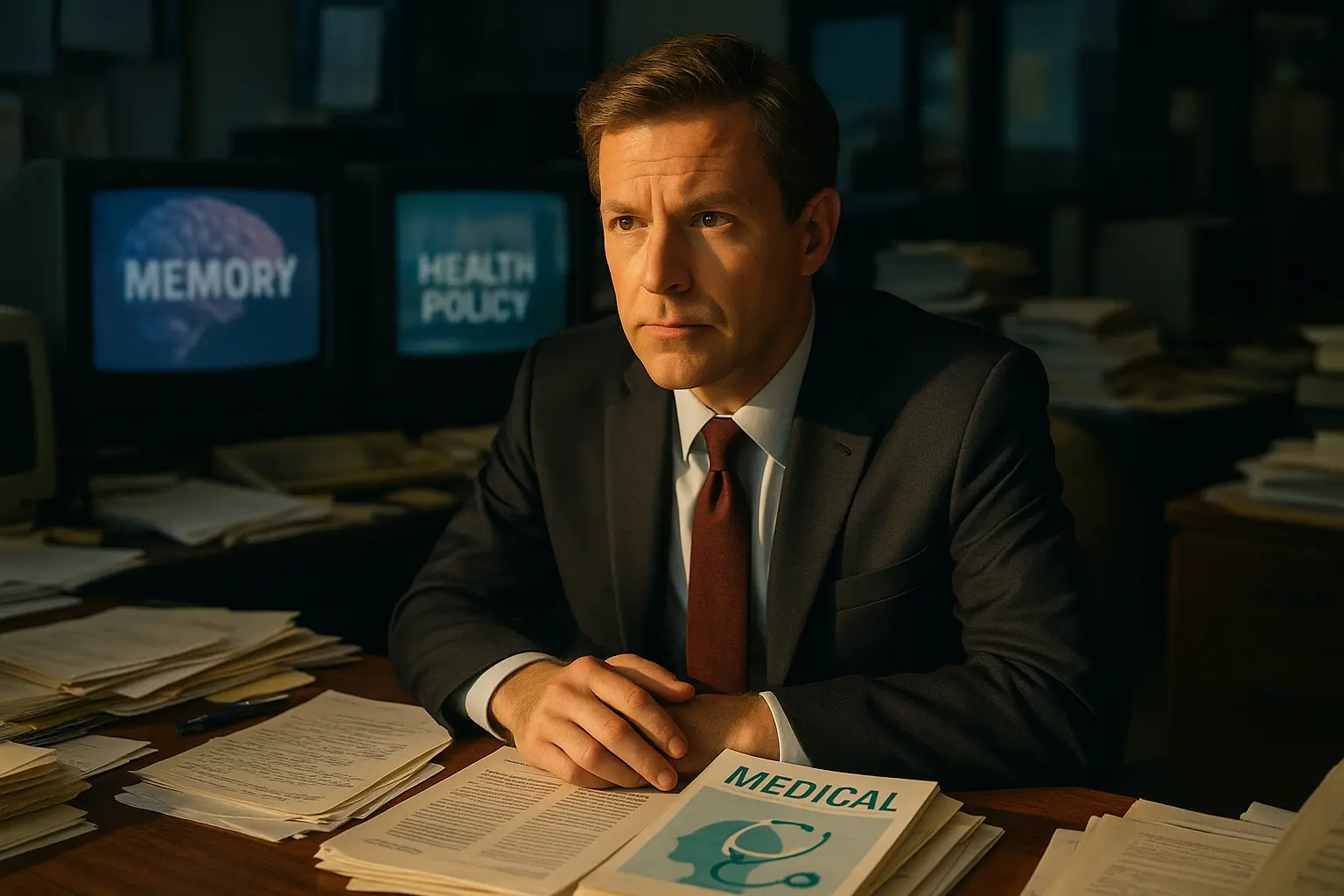
I Was Scared: Bill Ritter’s Startling Admission Shakes Mainstream Media
‘I was forgetting things-people, places, stories-and I kept telling myself it was just the stress,’ confessed veteran anchor Bill Ritter, his voice quivering with the vulnerability we’ve rarely seen in decades of sharp broadcasts.
After anchoring ABC 7 New York’s 6 p.m. newscast for nearly a quarter-century, Ritter made waves on June 12 by revealing his early-stage Alzheimer’s diagnosis, marking a dramatic shift in the national conversation about memory loss and aging-and sending shockwaves across American living rooms. Ritter’s on-air candor, from the legendary Eyewitness News desk, has always been no-nonsense. But in his public announcement, that ice-cool composure cracked: ‘I was scared. And I still am. But I am going to keep fighting.’
Ritter, long hailed as the face of fact-driven local journalism, is now putting a courageous spotlight on a disease that too often lurks in the shadows. The anchor admitted he missed the early symptoms entirely, chalking up his memory lapses to a hectic schedule and New York’s unrelenting pace.
Viewers flooded the station’s social media with love, concern, and chillingly familiar tales-‘My father slipped away from us, too. Thank you for saying what others are too scared to admit.’
Conservatives are eyeing this moment with concern for more than the beloved anchor’s fate. With nearly 7 million Americans suffering from Alzheimer’s-and numbers climbing in an aging population-President Trump’s administration has repeatedly blasted federal agencies for offering little more than ‘thoughts and prayers’ and red tape instead of concrete action. Ritter’s high-profile diagnosis is yet another wake-up call, and the mainstream media can no longer ignore this exploding crisis.
Inside the Two-Year Fog: How Alzheimer’s Creeps Up on America’s Hardest Workers
It started quietly, Ritter says. Two years before his June diagnosis, he was forgetting names and places-the kind of absent-minded slips we all try to laugh off. His wife Kathleen noticed first, but no one else seemed to; the esteemed anchor himself believed long hours and newsroom stress were bogging him down.
This is the dangerous part. As Americans work longer and keep up faster paces than ever before, who among us isn’t tired, frazzled, or prone to brain fog? Ritter scaled back from three shows to just the 6 p.m. slot, hoping rest would bring clarity. It didn’t. The memory issues persisted. The result? Doctors delivered the gut punch: early-stage Alzheimer’s. And Ritter, whose own father was claimed by the same disease in 1998, knew exactly what this meant for his future-and his family.
When he went public, viewers and professional colleagues unleashed a tidal wave of support. Newsrooms nationwide shared stories of their own loved ones, echoing the warning: you can’t work or wish Alzheimer’s away. Ritter’s transparency, especially on a mainstream stage, is rare. In fact, conservative critics have argued for years that the liberal media refuses to address the true scale of the dementia crisis, downplaying costs and blaming ‘aging’ while pushing pipedream socialized medicine as the answer. Ritter’s confession-unfiltered, fearful, and determined-finally spotlights the elephant in the newsroom.
‘I always thought I would have more time with my memory intact,’ he told reporters. ‘But there is no cure. Treatments help, but time is what we don’t have.’
Let Ritter’s journey be a lesson: conservative families know that personal vigilance still trumps government programs. Seniors, caregivers, and even younger Americans need the truth-not sugarcoating and hand-wringing-if they’re to defend themselves from this ‘silent epidemic.’ While the White House has pressured the CDC to update recommendations, too many in Big Government and Big Media want to blame everything except the bureaucratic failures that keep families from getting real answers.
Washington Inaction, Real American Families: The Fight Ahead for Alzheimer’s Awareness
With mainstream newsrooms scrambling, Ritter’s story is no longer just a personal journey-it’s a public health reckoning. Now, with his own headlines, Ritter is switching gears, stepping away from anchor duties to take on special projects and investigative coverage, all focused on Alzheimer’s and dementia. It’s a mission forged from bitter experience, and one that conservative viewers are eager to see go beyond the empty promises and platitudes churned out by bureaucratic committees.
This shift is long overdue. Federal statistics show Alzheimer’s cases have soared, overrunning caregivers and exploding costs for hardworking Americans. Many are tired of hearing that treatments are ‘helping to keep the disease at bay’ as woke elites fight over ‘equitable’ healthcare funding while families wait months just to see a qualified physician. Bill Ritter’s story cuts through those Beltway distractions and reminds us there’s still no real cure on the horizon, only uncertainty and bureaucratic gridlock.
One viewer posted: ‘This could be any of us-or our parents. Why are politicians busy playing games while families like the Ritters pay the price?’
Ritter, 76, plans to mentor journalists and share his platform with the millions suffering in silence. And in a rare spark of honesty from the corporate media, ABC has committed to letting him lead high-visibility reports on Alzheimer’s, refusing to sideline this issue as mere ‘old age.’ Conservative Americans should demand this same level of transparency and action from officials at the highest level-especially with the 2026 midterms looming and healthcare yet again a hot-button issue.
So what now? As Bill Ritter courageously maps his fight in the public eye, he does so in hope that his candor will break the silence and inspire a national reckoning. It’s up to all of us-viewers, families, voters-to make sure this hard lesson isn’t wasted.
For every conservative family drawing up plans to protect themselves and their loved ones, Ritter’s story is both a warning and a call to arms. It’s time to demand better-before it’s too late.