
‘This Vote Is Sound and Necessary’ – Law Schools Face a Legal Education Revolution
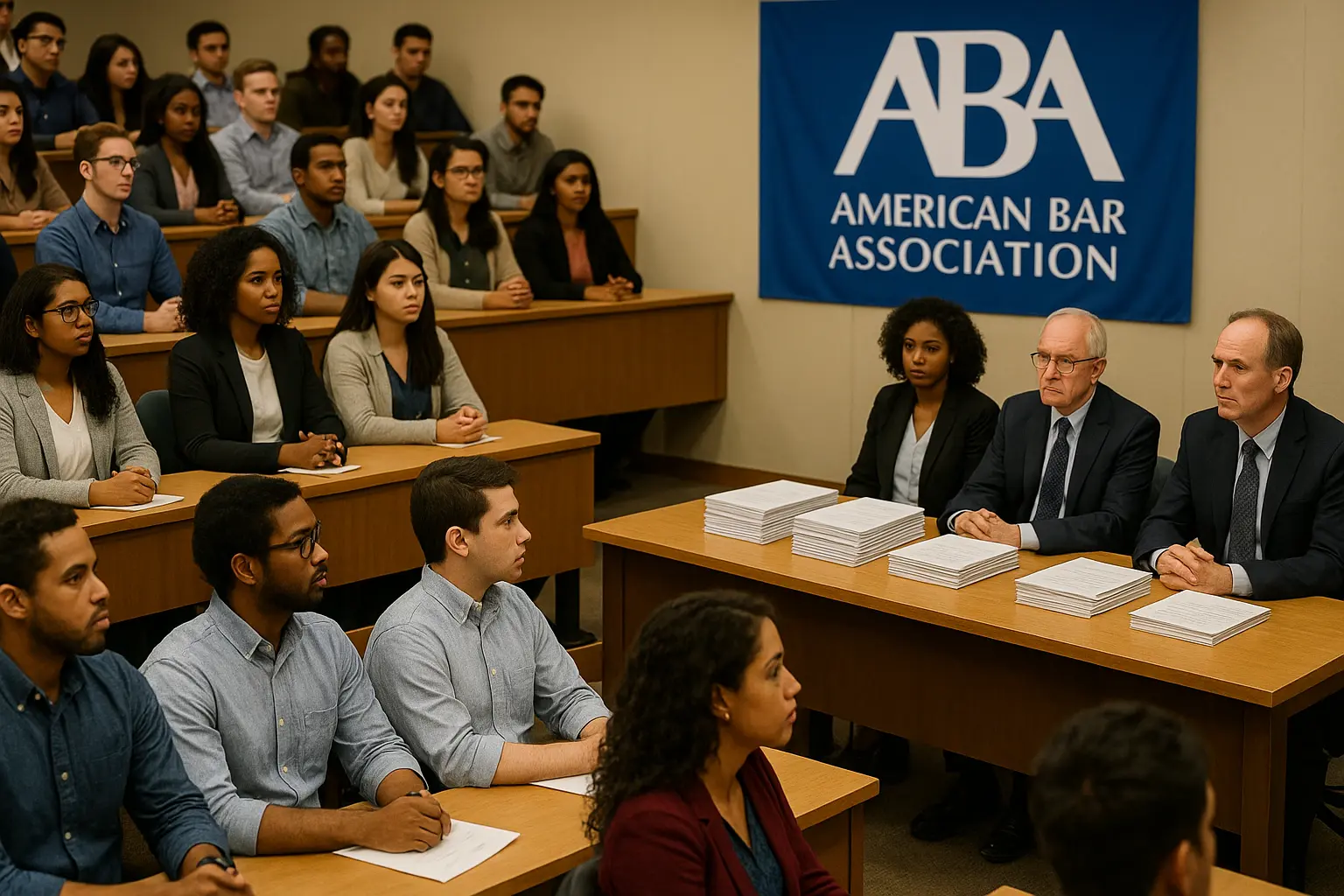
“This vote is not a statement about any individual member’s commitment to diversity or inclusion,” insisted ABA council member Melissa Hart, but the shockwaves rattling America’s legal education system say otherwise. After years of mounting grassroots and presidential pushback, the American Bar Association’s Council of the Section of Legal Education and Admissions to the Bar has voted to eliminate the controversial rule forcing law schools to demonstrate ‘commitment’ to diversity, equity, and inclusion (DEI) in recruitment, admissions, and student programming. The vote, held May 15, 2026, marks a pivotal moment-and the first domino to fall for radical DEI mandates at educational institutions across the nation.
The decision is a direct response to the resurgent America-First policies championed by President Donald Trump, now entering the second year of his renewed leadership. Trump wasted no time cracking down on DEI in his second term, issuing an April 2025 order that demanded a federal review of whether to suspend or even terminate the ABA’s status as the official accreditor for law schools, citing the DEI requirement as ‘unlawful’. Now, the ABA’s decision echoes a sentiment long voiced by millions of American families: professional standards-not political ideology-should define legal education.
The legal left and major media proclaimed the DEI rule as crucial for opportunity, but for everyday Americans, it seemed like little more than a quota system-a dogma that punished merit, stoked division, and undermined the timeless pursuit of equal justice under law.
While the ABA House of Delegates must still give final approval in August, the moment is rife with symbolism. Will the gatekeepers of the nation’s legal pipeline finally return power to people and principle, or will they double down on partisan distortion?
Red States Lead the Charge as ABA Fights for Accreditation Survival
This rollback did not occur in a vacuum. It is the result of relentless state-level resistance from constitutional conservatives determined to halt the leftward creep of accreditation bodies into America’s legal bedrock. According to a Red Lake Nation News report, the DEI standard had already been suspended since February 2025 after Trump’s return. ‘Diversity’ was code for discrimination, the administration argued, raising brutal questions about the ABA’s lack of transparency and bias in upholding real American ideals.
Indeed, the ABA faced a pressure campaign unlike anything in its history. An accreditation memo warned that scrapping DEI could destabilize its national role as law school gatekeeper. But the stakes went beyond mere institutional politics: Texas, Florida, and Alabama have already launched efforts to challenge the ABA’s grip on lawyer licensing, with many other states poised to jettison the group’s leftwing standards. Critics say that for too long, the ABA has weaponized accreditation, using bureaucratic muscle to force social experimentation onto conservative states and families.
The battle over DEI was the wedge issue-now that the chasm is exposed, expect states to accelerate the rollback of other mandates, from woke climate requirements to forced ideological training in continuing legal education.
Ironically, the ABA’s own left-leaning members sounded alarm bells about the changes. Councilmembers Mary Lu Bilek, Alicia Alvarez, and Beto Juarez all protested the move, according to Bloomberg. But the conservative grassroots-long frozen out by coastal ABA lawyers-have every reason to celebrate: the elimination of the DEI rule means future law school graduates could face real-world legal standards, not shifting political tastes, in order to pass muster as practitioners.
Merit Returns to Legal Education as Trump’s Federal Order Turns the Tide
The central nervous system of leftist social policy for law schools is officially on life support. The ABA’s DEI requirement was never just about making classrooms more ‘inclusive.’ Critics say it created arbitrary admissions games and stymied viewpoint diversity, creating monocultures instead of rigorous, competitive legal minds.
Trump’s April 2025 executive order put the ABA directly in the crosshairs-a warning shot felt across higher education as public support cratered for expensive, elitist programs untethered from reality. Since then, major law schools have faced mounting questions about grading policies, admissions criteria, and whether students are graduating truly prepared for the challenges of real-world legal service. ABA insiders worry the group’s decision signals the start of a broader reckoning for legacy institutions in academia and beyond.
Most crucially, the final phase of the DEI rollback still awaits a House of Delegates vote in August, with possible full implementation as soon as next year. For critics of heavy-handed diversity activism, it’s a hopeful sign that political common sense-rather than ideological activism-may once again rule the day. Law students, parents, and the future of American jurisprudence will watch closely as the old guard either heeds the will of the majority or falls further out of step with the nation they claim to serve.
‘Law schools should compete based on legal excellence and robust debate, not their ability to tick ideological boxes. America’s top legal minds are sharpened through merit, not mandates.’ – Grassroots legal activist, Texas
Voters heading into the 2026 midterm elections now have fresh evidence that bold leadership can upend entrenched power brokers. With the ABA forced to adapt or risk irrelevance, the broader war on woke ideology in American institutions charges ahead. Stay tuned to RedPledgeInfo as we follow the aftermath, expose every new twist, and track which states and universities stand for real American opportunity-and which retreat to the failed politics of the past.