China’s Attacks on Trump’s America: Rampant Protectionism or Foreign Meddling Over Agriculture?
‘These attacks on American farmers are more political theater than practical policy. America feeds the world, and no Beijing bureaucrat is taking that away.’
In a stunning escalation of rhetoric, China’s ambassador to Washington, Xie Feng, lobbed accusations at America’s newly reelected, emboldened President Trump-blaming “rampant protectionism” for undermining agricultural cooperation between the world’s two largest economies. Xie’s words came as the U.S. agricultural sector finds itself squeezed by Beijing’s retaliatory tariffs and a tangled web of security concerns. While the mainstream media parrots China’s talking points, America’s heartland is left asking: Is protecting our farms and food supply now “protectionism”-or just good old common sense?
American Farmers Targeted: Beijing’s New Tariffs and the ‘Trade War’ Blame Game
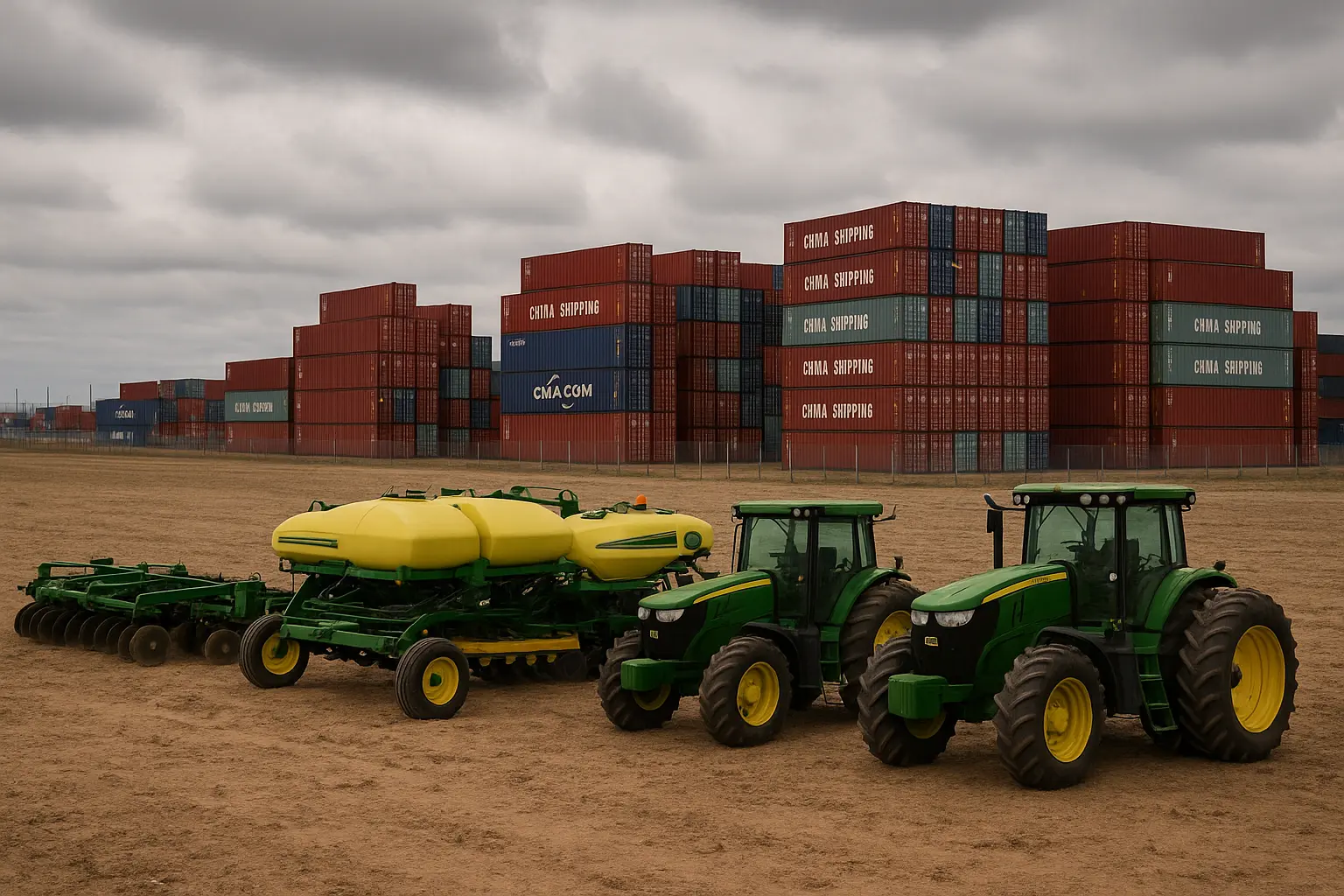
It didn’t take long for the Chinese regime to go nuclear on U.S. farmers, hitting back with tariffs of up to 15% on a staggering $21 billion worth of American agricultural and food products just this March. It’s the latest move in a bitter tit-for-tat struggle between D.C. and Beijing, as President Trump’s America clamps down on unfair Chinese trade practices and protects critical U.S. infrastructure. The numbers don’t lie: U.S. farm exports to China plunged by 53% in just the first half of 2025, with soybean shipments alone collapsing by 51%. This is no accident-it’s hostile foreign pressure with a clear political agenda.
Xie’s outrage over Washington’s “protectionism” rings hollow to millions of conservative American farmers already battered by years of Chinese intellectual property theft and export manipulation. “American and Chinese farmers are ‘hardworking and humble,'” Xie says, warning that agriculture should not be ‘hijacked by politics.’ But what exactly does that mean coming from the world’s most anti-free-market government?
The reality: Beijing is trying to paint itself as the innocent victim, but this coordinated campaign is all about pressuring President Trump to back down-to the detriment of every family farmer from Iowa to Texas. It’s telling that their so-called ‘cooperation’ seems to evaporate any time the White House gets tough on foreign land buys or institutes national security reviews.
China’s claim of ‘cooperation’ isn’t just laughable-it’s a smokescreen for an agenda that leaves America’s rural heartland on the hook every time Beijing throws a fit. And let’s remember, this new wave of tariffs came directly on the heels of Trump’s blowtorch new American tariffs on Chinese goods. Why? To finally protect U.S. intellectual property, food security, and national sovereignty.
Security Comes First: U.S. Clamps Down on Foreign Threats, Protects Our Food Chain
The battle for American agriculture isn’t just an economic issue-it’s become a question of homeland security. In July, the Trump administration’s Department of Agriculture didn’t just talk tough. They took decisive action, firing 70 foreign contract researchers-including many with ties to adversarial countries like China, Russia, North Korea, and Iran-after a hard-hitting national security review. The left may wring its hands about “xenophobia,” but for those who actually put food on America’s plates, it’s about time!
“Foreign nations have no business meddling with America’s food supply. The government’s job is to keep our farms safe-not gamble with our security just to appease Beijing or the global elites.”
For years, security hawks warned that loopholes allowed foreign powers to snap up U.S. farmland and slip their researchers into sensitive ag-tech research. With escalating Chinese cyberattacks and history of agricultural bio-theft, the move was a long time coming. Xie Feng, for his part, tried to downplay the threat, claiming Chinese investors own less than 0.03% of U.S. farmland as if quantity-not intent-determines risk. But while Congress debates even tougher restrictions, Beijing issues not-so-veiled threats to walk away from U.S. soybeans and turn to Brazil instead-a classic case of economic bullying disguised as diplomatic dialogue.
Meanwhile, China’s own actions confirm their obsession with resource security. Recent comments from the Communist Party’s top brass declare that China can manage without U.S. agricultural or energy imports, even as they try to sustain 5% GDP growth for 2025. It’s a warning shot at the farm states-and a thinly veiled admission that food is now a pawn in the new cold war between the U.S. and the Chinese Communist Party.
Farmers Fighting Back: Trump, Tariffs, and the Truth About ‘Protectionism’
In rural America, people aren’t buying China’s doom-and-gloom narrative. Yes, farm belt states feel the sting of lost soybean sales and uncertain markets, but grassroots conservative leaders and local ag coalitions are rallying behind President Trump’s America First agenda. Their message is simple: If protecting American land, labor, and families is “protectionism,” then so be it-because the alternative is economic surrender.
“We remember the hollow promises from Beijing during the Obama years,” says one Iowa soy farmer. “Trump’s not perfect, but at least someone’s finally standing up to the bullies.” Xie Feng’s talk about the ‘complementary nature’ of US-China farm trade overlooks years of American concessions, intellectual property theft, and rigged market access.
If China wants to buy U.S. goods, they can play by American rules. And if they walk away, the U.S. will innovate, diversify, and find markets that don’t make us surrender sovereignty or ignore national security in the name of false ‘cooperation.’
The President doubled down on tough negotiation, keeping tariffs in place but extending a 90-day suspension to give U.S. exporters time to adapt. Main Street’s response? After decades of rolling over for China, Trump’s hardline policy feels like a breath of fresh air. The farm bureau is already pushing hard for targeted relief and alternative markets in Latin America, Africa, and beyond.
In an age where China’s Communist Party sees every diplomatic move as a zero-sum game, America’s red states know what’s at stake. The true “pillar of bilateral relations” isn’t cheap soy or handshake deals-it’s keeping American farmers free, prosperous, and safe from foreign interference. Protectionism? Or patriotism? Sometimes, the truth isn’t what the powers in Beijing-or their mouthpieces in the media-want you to hear. But for America’s farms, it’s the only answer that matters.
With Biden relegated to the sidelines and Democrat leaders using headlines to blame America, it’s Trump’s America First team charting a new course through the storm. The message is clear: American agriculture won’t be held hostage by Beijing’s threats or media alarmism. That’s a battle worth fighting-for every farmer, every rancher, and every citizen who puts dinner on the table in this great country.