
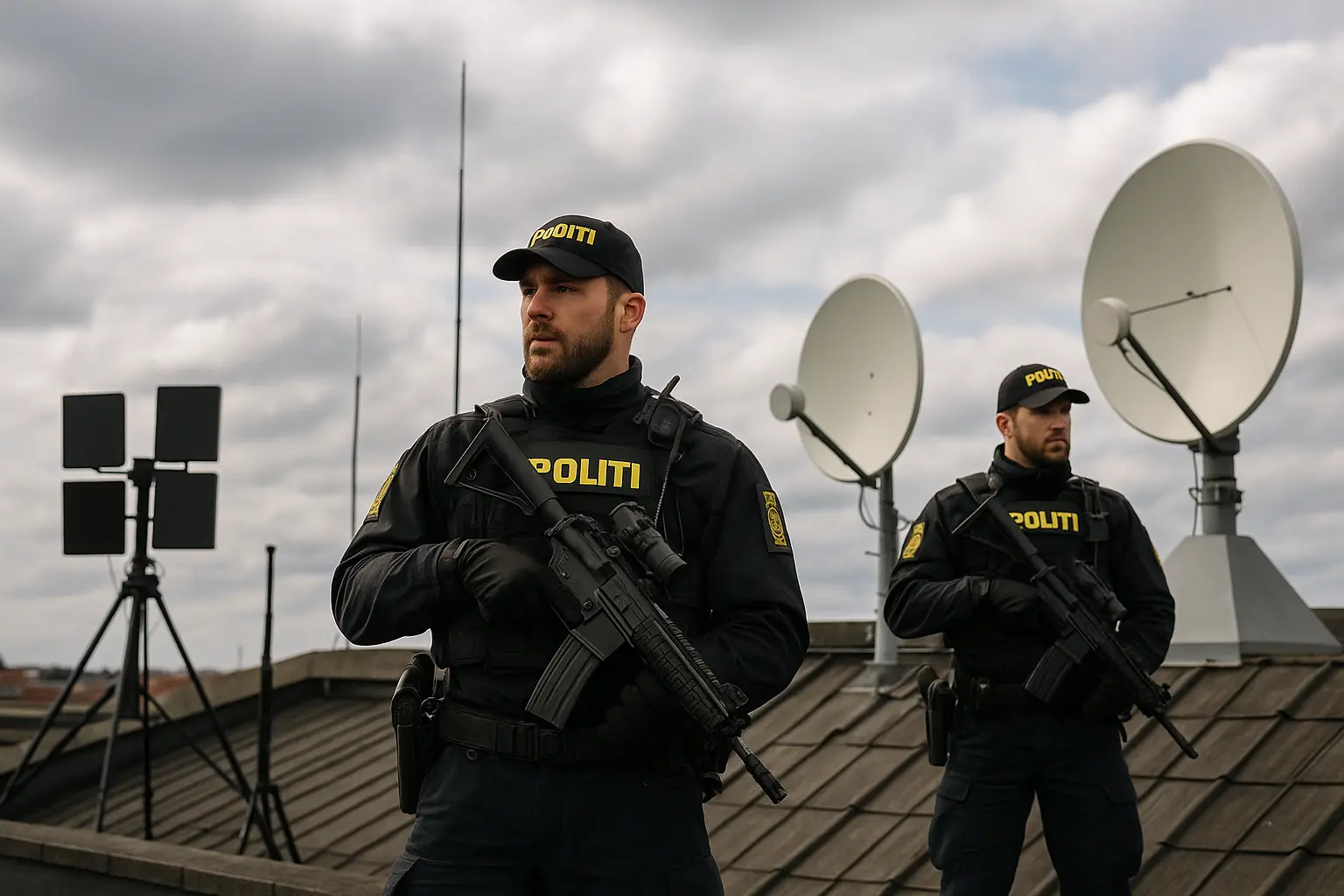
Denmark Shuts Down Skies: Drone Ban Sparks EU Summit Security Storm Amid Russian Threat
‘We are staring down a clear and present danger to our sovereignty.’ Those stunning words from a Danish official crackled across Europe this week, as Copenhagen triggered an unprecedented nationwide ban on civilian drones. With sinister drones buzzing over military bases, airport closures, and a crucial EU Summit looming, the question everyone is asking: Has Russian aggression reached Denmark’s doorstep?
Drone Chaos Grounds Denmark as Russia’s Shadow Looms
If you thought the battle for airspace was just for the movies, think again. Starting tomorrow morning, every single civilian drone in Denmark will be grounded. Violators? Slapped with fines, or even locked up for two years. Only state, police, and military operations are exempt from this five-day lockdown, in force as the EU Council’s informal meeting descends on Copenhagen.
This crackdown isn’t a ‘maybe’-it’s a national emergency. The trigger? Recent sightings of unidentified drones over Danish air bases and airports have thrown the country into high alert, leading to the temporary closure of Copenhagen Airport and military installations across the nation. Denmark’s security agencies are racing to pinpoint who’s behind the rogue drones-but Prime Minister Mette Frederiksen didn’t mince words, calling out Moscow as the ‘primary country that poses a threat to European security’.
‘These drones aren’t toys-they’re probes, they’re tests of our readiness,’ warned one military analyst on Danish television, as NATO jets roared overhead.
It wasn’t just Denmark’s warning bells ringing. Germany rushed its FSG Hamburg air defense frigate into Copenhagen’s port to bolster surveillance, while Sweden, acutely aware of Russian provocations, deployed its advanced anti-drone tech to Danish soil for the event. Eyeing these maneuvers, many are wondering: Is Denmark the next frontline in Putin’s hybrid war on the West?
Summit on Edge: NATO and the Baltic Sentry in the Crosshairs
With Europe’s top brass gathering in Copenhagen for the high-stakes EU Summit, the timing of Denmark’s drone lockdown couldn’t be more explosive-or suspicious. As diplomatic convoys and armored limos sweep into the city, NATO has activated its formidable ‘Baltic Sentry’ initiative, ratcheting up surveillance from the skies to the sea.
According to the Associated Press, NATO has intensified reconnaissance in the Baltic Sea region, specifically citing the need to counter unauthorized drone activity near Denmark. This is no random uptick: reports say this sudden surge in drone probes represents a systematic testing of Europe’s defenses, especially as the Danish government brands recent incursions “a systematic hybrid attack” on its airspace and strategic infrastructure.
“If the goal is to sow confusion, undermine faith in our institutions, and paralyze our response, well, this is textbook hybrid warfare,” said a NATO spokesman, bracing for escalation. Europe’s ministers are rallying: finger-pointing at Russia, who-unsurprisingly-denies any involvement. Recent intelligence, however, places Russian-made drone tech at several interceptions.
‘There’s no telling how far this can escalate once you let the wolves test the fences,’ mused one American security consultant on X (formerly Twitter), triggering heated debate among patriots and antiwar activists alike.
Meanwhile, Ukrainian President Volodymyr Zelenskyy condemned the ‘vile’ Russian missile onslaught in Kyiv and regions surrounding Ukraine, days after the UN General Assembly. The connection? Analysts warn that with EU border security beefing up the so-called ‘drone wall’ between Europe and Russia, the battle against Russian drones won’t stop at Ukrainian borders. Denmark, it seems, has been forcibly volunteered as Europe’s latest test case.
Hybrid War: Will Denmark Fire Back-or Fold?
As social media explodes with images of police squads tracing drone trails above Copenhagen and reports of anxious citizens worried about surveillance, politicians feel the pressure. The question on every conservative’s mind: Is the West finally waking up to the true scale of the Russian threat-or will bureaucracy and appeasement throw open Europe’s back door again?
The gravity of the moment can’t be overstated. Denmark’s defense ministry has called out the unprecedented coordination between neighboring allies: “Sweden stands with Denmark, fielding advanced anti-drone technology at our border. Germany has boots-in this case, frigates-on the ground. Yet, the government has clammed up on operational details, sparking rumors that drones penetrated much deeper into Denmark’s defenses than officials are willing to admit.
Behind closed doors, lawmakers are plotting a legislative blitz: new tools for fast-tracking drone neutralization, the interception of suspect aircraft, and potential authorization for kinetic responses to clear threats. Critics worry about government overreach, but average Danes-and much of Europe-are clamoring for tougher action.
‘When our airports have to shut and our military bases are compromised, waiting is not an option anymore. Do you want to be next?’
Already, conversations have shifted from ‘if’ to ‘when.’ The EU Summit, meant to showcase transatlantic unity, is now a living experiment in rapid crisis response. Conservatives argue this moment lays bare the dangers of weak-willed border policies and years of ‘talk-shop’ European diplomacy. If Denmark can be thrown into chaos in a single week by anonymous drones, what hope is there for the rest of the continent?
With President Trump maintaining a hard line from Washington and pledging solidarity with NATO allies, American pressure for a robust, united response is at a fever pitch. The big question: Will Western Europe finally get serious about defending its airspace, or will more nations buckle under the next wave of Russian proxies and shadow attacks?
