
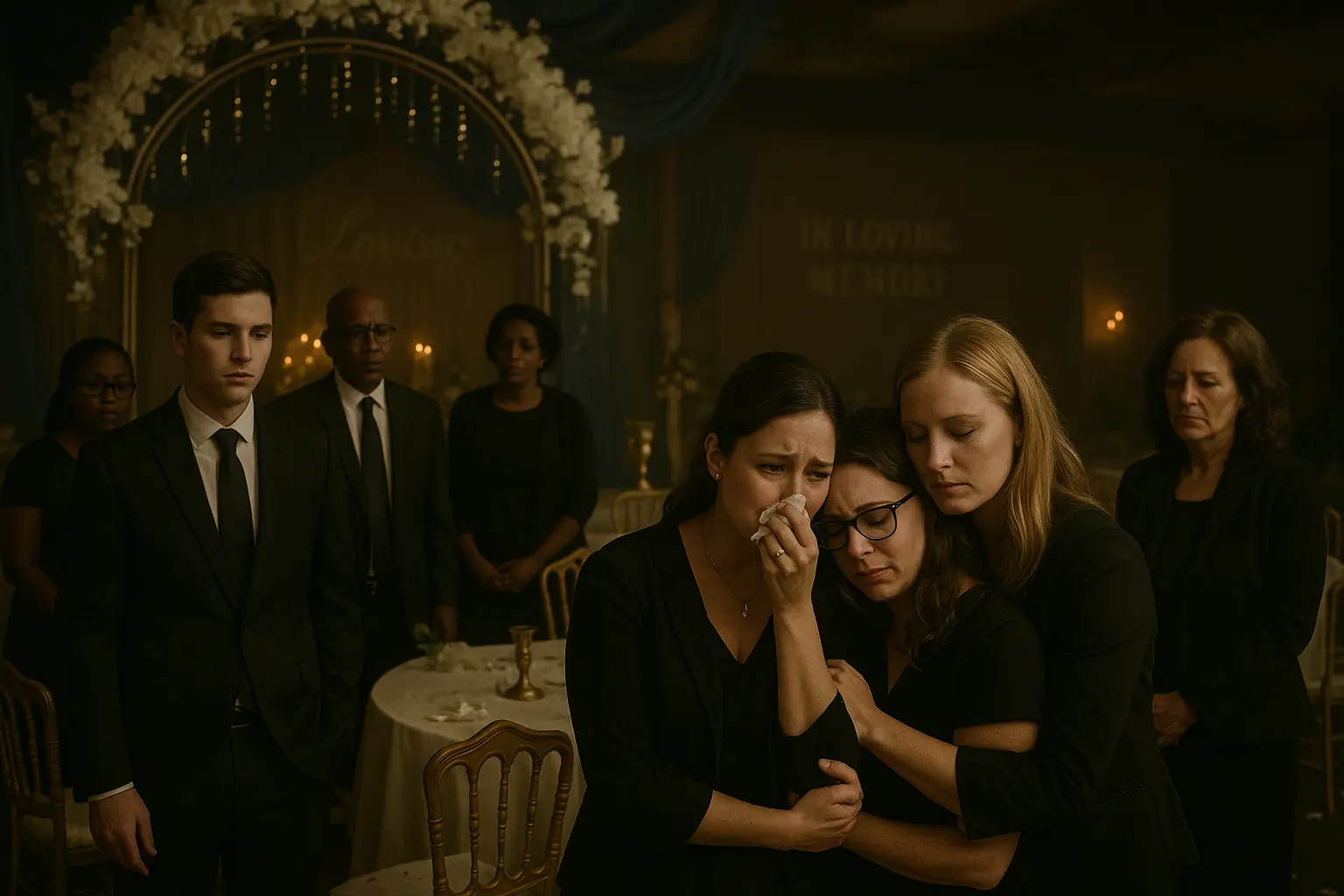
‘He collapsed in her arms while the cameras rolled – it was supposed to be the happiest night of their lives.’
The heart-wrenching video has sent shockwaves through social media: Ashraf Abu Hakam, a young Egyptian groom, fell to the dance floor during his own wedding, clutching his bride’s hand only moments before. While the joyous reception music played, and loved ones cheered, tragedy struck in a blink – leaving a newlywed forever without her husband and Egypt’s tight-knit community in disbelief. In a moment meant to unite two families, despair took center stage.
Across Egyptian platforms, an avalanche of grief poured out for the fallen groom whose smile, captured on countless phones just minutes earlier, is now an emblem of profound loss. The social media firestorm quickly spread the video footage across not just Egypt but the entire Arabic-speaking world, with hashtags like “#AshrafWeddingTragedy” dominating. Members of the public, from close neighbors to total strangers, flooded feeds with prayers and condolences. Much more than a local tragedy, the story of Ashraf’s final moments has ignited urgent conversations about sudden health emergencies, grief, and the institutions that profit from life’s milestones gone wrong.
The moment the DJ cut the music, people screamed: I thought my heart stopped along with his, one guest recalled, barely holding back tears. There was nothing but chaos and terror in that hall.
Shockwaves on the Dance Floor: When Joy Turns to Grief in Seconds
Guests at Ashraf and his bride’s celebration were swept up in a whirl of music and laughter as the new husband performed a traditional Saidi stick dance – a time-honored Egyptian folk custom intended to bring luck and unity to the marriage. Brandishing the distinctive cane, he twirled with infectious energy, holding hands with his wife. Suddenly, as he was waving the Saidi stick, Ashraf stumbled, then collapsed to the floor. Mobile phones caught the instant his bride shrieked and a circle of horrified relatives rushed forward, desperately trying to revive him.
Despite the frantic efforts of medical personnel and family, Ashraf was declared dead on the scene. The official cause: cardiac arrest – a bitter irony on a night meant for long life and happiness. Mourners poured from the wedding hall, their anguish echoing in waves across the community. Prayers for God’s mercy and wishes for Ashraf’s place in paradise became the order of the hour, underscoring the deeply religious and cultural dimensions of the episode. “He was young, full of hope, full of life. How could this happen?” lamented one heartbroken cousin.
The tragedy doesn’t stop at Egypt’s borders. Startlingly, this horrific pattern is increasingly familiar: tales of sudden collapse at wedding parties, fatal accidents, and medical crises often overshadow what’s supposed to be the happiest of days. Recently, a Bosnian nurse died after slipping into a coma at her own wedding, with her devastated family left to grapple with unthinkable loss in a moment of celebration. From the Mediterranean to the American South, shocking endings to stories of love and unity are raising critical questions about our health, stress, and the fragile nature of life itself.
One social media user commented, ‘When will these tragedies stop? We celebrate one moment and mourn the next. The world is upside-down.’
Unexpected Loss Meets Bureaucratic Indifference: Wedding Industry Shows Its Cold Side
This Egyptian tragedy has also spotlighted a darker side of the modern wedding business: financial disputes that deepen families’ suffering. While Ashraf’s community rallied around his widow with condolences and support, a parallel outrage surfaced from across the globe. In the United States, a grieving mother is locked in a bitter battle with a major wedding venue after her son died suddenly, just weeks before his ceremony. After losing her child, the mother requested a refund for her almost $20,000 deposit. Her plea was rejected coldly, the venue holding her money as a non-refundable deposit – compounding her grief with economic pain.
This isn’t an isolated event. Reports of callous policies from wedding venues and vendors show families repeatedly being left out in the cold at their most vulnerable moments. The business of weddings, now a billion-dollar industry in both Eastern and Western countries, relies on strict contracts and non-refundable payments that rarely make exceptions for tragedy. “We’re treated like checkbooks, not like people,” one parent fumed on social media, receiving thousands of supportive comments. Conservatives across the country have expressed outrage, arguing that family and compassion – not corporate greed – should define life’s milestones. It’s a snapshot of what Americans are facing as the system puts profits before humanity.
With wedding stress already at record-high levels thanks to inflationary pressures and endless vendor red tape, it’s no surprise that the toll is starting to hit couples’ health. Experts are warning: over-the-top expectations, lavish celebrations, and sky-high costs make the modern wedding feel less like a blessing and more like a high-stakes gamble. The stress, as we saw this week in both Egypt and in the United States, can have fatal consequences. Meanwhile, the institutions built to serve families seem to care only about their balance sheets.
‘We paid our debts in full. All we want is respect and compassion when life goes wrong,’ the bereaved mother pleaded at a local community meeting. Her words spoke for parents and loved ones everywhere.
Are We Ignoring Health Red Flags for the Sake of Tradition – and Profit?
The pattern is becoming all too clear: as wedding celebrations grow bigger and pricier, so does the danger lurking behind the scenes. Multiple studies show stress-induced medical emergencies, from panic attacks to heart failure, are on the rise among both the young and the old around major life events. The explosion of social media coverage surrounding these tragedies, whether in Egypt or in faraway Fiji – where just last year, a Tennessee bride was found beaten to death at a luxury resort – gives families all the more reason to rethink the wedding-industrial complex.
But behind every headline lies a deeper problem: a system that’s grown tone-deaf to the real needs of ordinary people. It’s time for wedding vendors, insurers, and health officials in every nation to ask the tough questions. How many more families need to pay the ultimate price for a day that’s supposed to be about joining lives, not ending them? What protections, if any, exist for couples faced with life-altering trauma? Too often, the answer is: very little.
Experts are now warning that high-pressure events, combined with lack of medical screening and insufficient legal safeguards, mean tragedies like Ashraf’s will only become more common if the current trends continue. An overworked, under-monitored heart can only take so much. And just as alarming, a grieving family’s finances can only stretch so far when contracts and corporate lawyers are involved.
‘You shouldn’t need a lawyer at your wedding,’ a popular conservative podcast host declared this week, ‘but if the wedding industry keeps acting like this, it’s not just your money they’ll take – it’s your peace of mind too.’
American Families Demand Change as Tragedies Strike at Life’s Milestones
As the video of Ashraf’s tragic last dance continues to stun viewers around the world, conservative activists are demanding reform on all fronts. Calls are growing louder, both in Egypt and right here in America, for mandatory refund policies, expanded health checks before major events, and a crackdown on predatory contracts. Wedding vendors, meanwhile, remain mostly silent, hiding behind fine print while claiming they ‘share in the pain.’
Conservatives say enough is enough. In an era when even the most sacred moments can end in heartbreak – and when families mourning the unspeakable are treated like cash cows by faceless corporations – it’s time to put humanity first. With President Trump’s reelection in 2024 signaling a resurgence of American values and family priorities, the pressure is on for lawmakers to respond with solutions that put families, not profits, at the center of policy. Will the wedding industry be held accountable – or will bureaucracy and greed continue to triumph over compassion?
One thing is certain: Ashraf Abu Hakam’s story, shared and mourned by millions, puts a spotlight on problems too long ignored. As millions get set to celebrate their own biggest milestones this year, the question looms: what price will we pay if we keep turning a blind eye when tragedy strikes?