
‘I Thought I Might Lose My Baby’: Hidden Toll of Scorching Fields for Pregnant Farmworkers
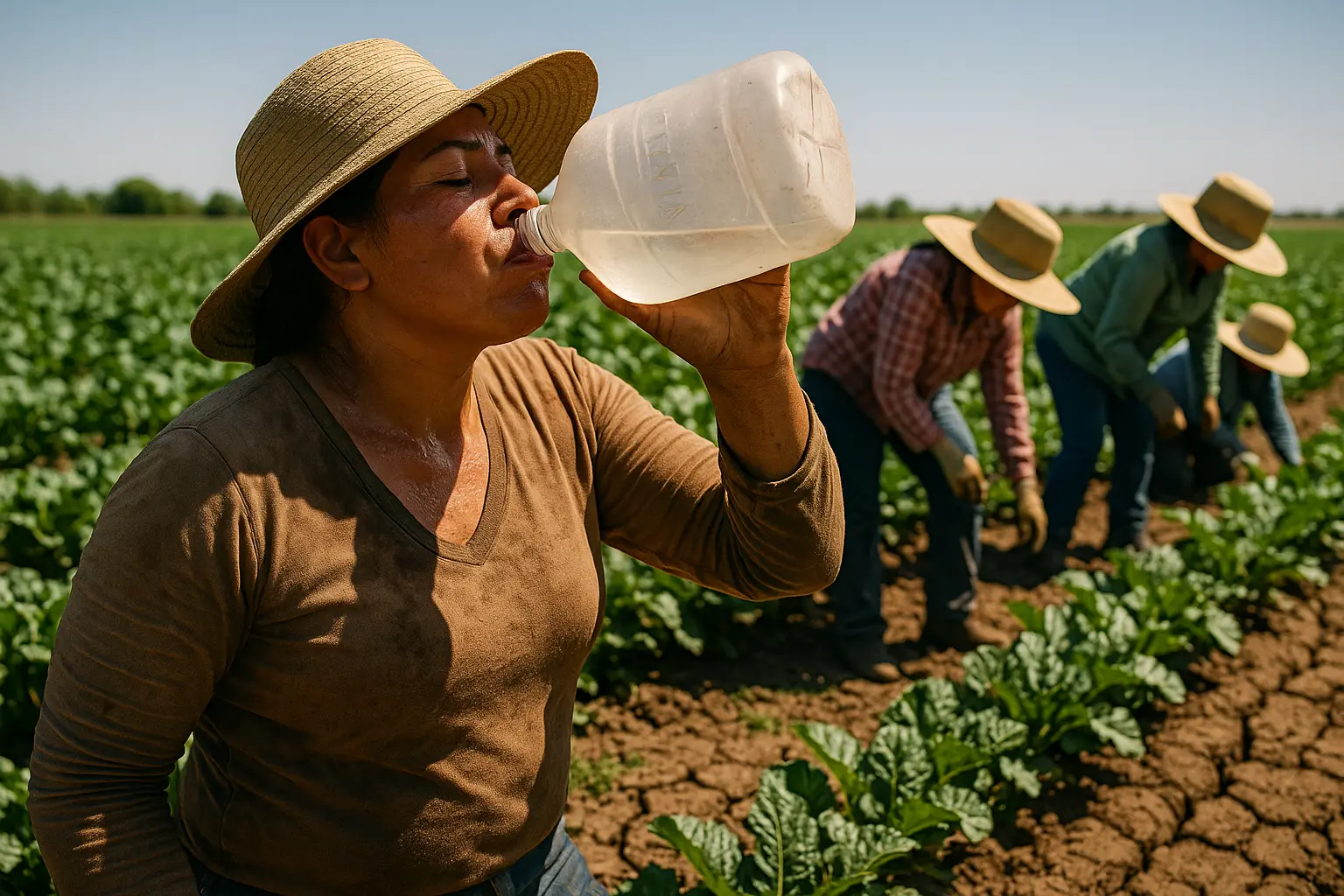
“I thought I might lose my baby right there in the fields,” recalls Juana, a 27-year-old farmworker from California who worked throughout her pregnancy last July. Her worry is echoed across America’s agricultural backbone, as pregnant women labor through some of the most brutal summers on record. While mainstream media is busy fawning over climate activism and electric car incentives, the real crisis-pregnant farmworkers, mostly Latino immigrants, facing life-threatening risks in searing heat-is being ignored by Washington bureaucrats and open-border activists alike.
This isn’t just a seasonal inconvenience. With American farmworkers already 35 times more likely to die from heat-related stress than other workers, pregnancy multiplies the danger – putting both mother and unborn child at risk for miscarriage, preterm birth, birth defects, and worse. As climate policies inflate fuel costs and drive up temperatures (without offering a single real-world solution for those actually picking your food), America’s fields are turning into a gauntlet for expectant mothers-with silence from the so-called champions of the working class.
Farmworkers have become 20 times more likely to die from heat-related illness than the average American worker. – PreventionWeb, 2025
No wonder communities are sounding the alarm. This is a public-health disaster hiding in plain sight, and only now are even physicians beginning to speak out. “We’re seeing more cases where pregnancies are complicated by heat stress, dehydration, and even pesticide absorption,” one emergency room doctor told us on condition of anonymity. “People need to know these women have almost no protection.”
Pregnancy in the Fields: Anatomy of an Overlooked Crisis
So what exactly makes extreme heat so perilous for pregnant workers? It starts with basic biology. Pregnancy slows the body’s ability to cool down: the added weight, increased blood volume, and hormonal changes all mean less heat escapes naturally. The risk isn’t just discomfort-it’s potentially fatal conditions like preeclampsia, kidney failure, and cardiac arrest. The Environmental Protection Agency even warns that short-term exposure to heat can push women into dangerous high-blood-pressure crises.
It doesn’t help that in the fields, water breaks are rare and shade is practically non-existent. “Sometimes the supervisors wouldn’t give us water unless we finished a whole row in the sun,” says Ana Maria, another worker. Reports are stacking up from across farm states: pregnant employees denied both water and protective gear, even as they sweat through back-breaking labor around toxic chemicals like pesticides and arsenic. These potent substances, combined with higher internal heat, mean pregnant women absorb more chemicals during the hottest periods – and the consequences can be lifelong for their children.
“My boss said to drink less water so I wouldn’t need bathroom breaks. He knew I was pregnant, but he didn’t care.”
The science is clear: as pregnancy progresses, the body burns more calories creating extra heat, while blood flow is redirected to support fetal development. This leaves fewer resources for cooling vital organs. Increased dehydration, heart strain, and dangerous spikes in blood pressure are the norm-not the exception. Stillbirths, preterm birth, and developmental problems are all rising as a result.
And let’s not forget the mental toll. Experts are linking this exposure to increased anxiety, depression, and isolation for workers with virtually no avenues for support.
Immigration Crackdowns and Political Blind Spots: How Biden-Era Policies Put Women in Further Peril
As much as left-wing pundits love to point fingers at climate change, they remain mum about a critical part of the problem: failed immigration and labor policies. Nearly 70% of field workers are Latino or indigenous, with many lacking legal status to complain about brutal working conditions or unsafe supervisors. During the last administration these women were often too terrified to seek medical attention, knowing they’d face questioning or worse if they went public about unsafe environments.
The fallout is devastating. Many farmworkers continue working under oppressive heat out of necessity. They can’t risk getting fired or blacklisted, especially as cross-border migration spikes and jobs become more precarious. Even now, farmworkers say they’re forced to choose between their health and losing a day’s wages. Advocates are demanding better legal protections, but change is slow-and Washington gridlock means activists and lobbyists cry crocodile tears while real people suffer.
The Trump administration’s crackdown left thousands afraid to seek help: “We can’t let anyone know we’re pregnant or ill. It’s too risky.”
The truth? Big-government regulations and reckless border policies have left our most essential workers abandoned. There’s no federal heat standard for agricultural labor – and as the average U.S. temperature climbs (up 1.8°F in the last century, with much of that in the last 30 years), the problem will only get worse. Politicians would rather debate the number of gender pronouns in a textbook than face the humanitarian disaster brewing in America’s breadbasket.
‘Heat Survivors’: Brave Women Push Back Against Apathy, But Where Are Lawmakers?
Across social media, more stories are emerging about “heat survivors” fighting back – but not nearly enough reach the halls of power. Activists post images of pregnant workers collapsing in the fields, with hashtags like #ProtectFarmMoms and #NoMoreHeatDeaths trending for a day, only to disappear from the discussion. It’s a disgrace that those feeding America are reduced to anonymous statistics. Even as progressives wring their hands about the climate, it is conservative priorities-fair wages, local jobs, and empowering rural communities-that would offer real relief and accountability.
If politicians spent a single day in the fields, they’d see that endless regulation doesn’t stop a heatwave-and it never helps the people on the front lines.
The Biden administration has stalled on comprehensive workplace heat protections, while Congress bickers over immigration loopholes and regulatory overreach. There’s talk of adding ‘cooling centers’ and government-mandated water breaks-but with enforcement almost nonexistent, it’s just more window dressing. In California, Iowa, Florida, and beyond, federal education funds are flowing to ‘climate resilience’ workshops while no one is actually monitoring heat on the job or delivering compensation to those most at risk.
That means the job falls to families, churches, and patriotic Americans to step in-when will politicians listen? Real reform is needed: direct funding for field health clinics, local law enforcement empowered to check on laborers, and accountability for employers exploiting pregnant women. Until then, our food chain remains as vulnerable as the women who bring it to your table.
2025 and Beyond: America’s Fields, America’s Future
As we approach the 2026 midterms, the stakes couldn’t be higher. Will Republican lawmakers force the issue of farmworker safety and hold open-border special interests responsible for today’s labor abuses? Or will another year pass with headlines about heat deaths and fetal tragedies floating by unanswered? President Trump’s reelection has brought calls for stronger border security and renewed focus on America’s food supply, but this is a story of forgotten lives-the mothers and babies hidden from view by both political parties.
The time for empty promises is over. As research shows farmworkers are 20 times more likely to die from heat stress, and temperatures keep rising, accountability is demanded by citizens who care about life and liberty. It’s not just about farm policy-it’s about defending American families, upholding the dignity of those who feed our nation, and rejecting policies that put ideology above humanity.
One mother put it best at a recent rally: “Politicians write bills we never see. All we want is cold water, safe shade, and the chance for our babies to survive.” It’s about time we listened.