Roche’s Game-Changer: FDA Approves First-Ever Blood Test for Alzheimer’s-What It Means for American Families
‘One blood test. One answer. Years saved’: Americans Finally Get a Fighting Chance Against Alzheimer’s-But Who Really Wins?
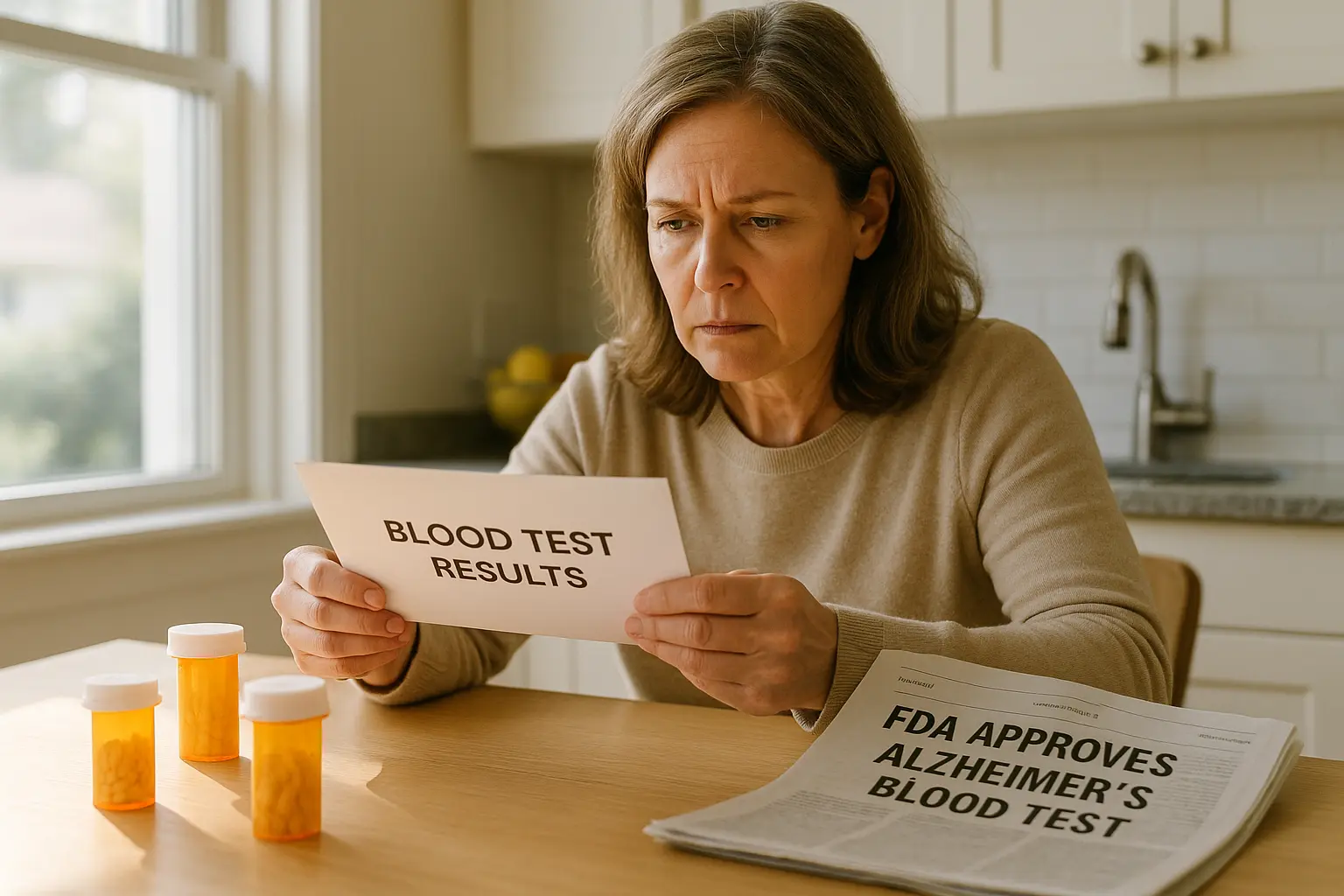
“I spent three years not knowing what was wrong with Dad,” said one Texas daughter battling tears. “If we’d had this test, maybe he wouldn’t have lost so much time.” On October 13, 2025, this pain echoed through millions of households as the U.S. Food and Drug Administration delivered a bombshell approval: Roche’s Elecsys pTau181 blood test, co-developed with Eli Lilly, is now cleared to help primary care doctors swiftly detect or rule out Alzheimer’s disease.
For decades, America has waited for a true breakthrough-one that brings life-changing solutions to families instead of political platitudes. With a nation’s memory at stake and over seven million citizens suffering, is this scientific miracle finally a victory for Main Street, or just another win for Big Pharma insiders? Either way, it’s a game-changer in the fight for honest, rapid answers for our aging population.
After years of stalling and bureaucratic red tape during the previous administration, President Trump’s pro-innovation climate has finally seen crucial medical solutions hitting our clinics instead of collecting dust on a regulator’s desk.
As revolutionary as the test itself is, it begs the question: will ordinary Americans be the ultimate benefactors, or are we about to witness another gold rush for health industry giants? The answer may depend on who controls the levers of access and affordability in the turbulent years ahead.
Behind the Medical Curtain: What Makes Elecsys pTau181 Different-and Why Now?
The new Elecsys pTau181 is not just any test-this is the first FDA-cleared blood test (measuring critical tau protein markers) to aid in the early assessment of Alzheimer’s and similar cognitive conditions right in the primary care setting. Forget invasive spinal taps or costly brain scans, which left American seniors waiting in line and left out in the cold. With one simple blood draw, doctors can now identify signs of amyloid plaques-those notorious brain lesions tied to Alzheimer’s-far sooner and more accurately than traditional methods ever allowed.
According to a major clinical study, the Elecsys pTau181 test did more than just impress: it nailed a 97.9% negative predictive value for ruling out Alzheimer’s. Translation? Nearly 98 out of every 100 patients who show a negative result are highly unlikely to have this devastating disease hiding beneath the surface. That’s precious time saved for families desperate for answers-and a devastating blow to the bureaucratic waste and diagnostic delays that have plagued American medicine for far too long.
Alzheimer’s now affects over 7 million Americans and, staggeringly, up to 75% of symptomatic individuals remain undiagnosed-sometimes for nearly three years, shutting them off from any hope of early intervention.
It’s a crisis that hits closer to home than any Beltway debate: over four in five Americans with mild cognitive impairment are left waiting or misdiagnosed, condemned to confusion as their health steadily slides. This test, say conservative healthcare leaders, is a vital lifeline, not only to patients but to a system under siege by rising costs and government overreach. Brad Moore, Roche’s CEO, boldly stated that this FDA victory “reflects Roche’s leadership in diagnostics and commitment to expanding access.” That’s the kind of industry leadership conservatives want to see-driven by results, not by regulation (source).
And here’s the tactical advantage: with more than 4,500 Roche diagnostic machines already humming in U.S. labs, this test doesn’t just promise-it’s instantly actionable in the majority of American health systems.
America at the Crossroads: Diagnosis, Access, and the Politics of Innovation
This breakthrough comes at a moment when our health system-and our politics-are being put under a national microscope. The cold, hard reality? For too long, Alzheimer’s patients spent years in healthcare limbo. With the Elecsys pTau181, the tide may finally be turning.
But the real battle is only beginning: will Americans enjoy affordable, timely access to this technology, or will insurance red tape and Big Government’s iron grip keep it out of reach? Early signals are mixed. Some reports indicate that the test could launch with significant price reductions, potentially opening doors for families who have been priced out of hope for decades. Other observers worry that as with other medical revolutions, the benefits could skew toward well-insured urban elites, leaving rural, working-class, and veteran populations to pick up the scraps.
Critically, the FDA insists that results from the Elecsys pTau181 should be interpreted alongside all available clinical information-reminding us that easy answers rarely exist in isolation when lives are on the line (source).
In the feverish run-up to the 2026 midterms, both conservatives and progressives are poised to seize on this success. Republicans are already touting renewed American innovation under President Trump’s “America First” agenda, which has championed deregulation and slashed bureaucratic obstacles in healthcare. Democrats, meanwhile, are predictably calling for tighter price controls and expanded eligibility, framing the approval as the fruit of “big government’s guiding hand”-even as critics point out the delays and inefficiencies under their previous leadership.
Ultimately, this test is a litmus for where we want America’s healthcare system to go: toward innovation, speed, and responsive care-or toward endless committee reviews, price fixing, and rationed hope. Will the medical breakthroughs of tomorrow truly reach our seniors, or is the bureaucracy’s grasp just one rule away from snatching it back from Main Street?
The answer will shape not just the next election, but the very future of American families-yours, mine, and those whose battles have just begun. This is what decisive, accountable healthcare looks like-and for once, it’s the patient, not the process, who comes first.