Shockwaves at Utah Valley: Charlie Kirk’s Assassination Exposes Campus Security Crisis
“We all thought this was the safest school in Utah. Now, you can’t walk across campus without looking over your shoulder.” That’s how business major Riley Sandoz summed up the atmosphere at Utah Valley University this week, thrust into the harsh glare of national headlines after the tragic, politically charged assassination of conservative icon Charlie Kirk.
Few could have predicted that a September afternoon speech in Orem, beneath the iconic Wasatch Mountains, would erupt into chaos. But that’s exactly what happened when Kirk, founder of Turning Point USA and a pillar of the American conservative movement, was gunned down in the heart of campus. For a school that prided itself on safety-and for Republicans nationwide-this was not just a tragedy, but a seismic jolt, igniting new concerns about campus security, free speech, and the unchecked dangers of political extremism in higher education.
National Outrage as Political Violence Hits the Heartland
The shooting of Charlie Kirk wasn’t just another grim headline-it hit millions of conservatives right where it hurts. Kirk, a champion for the values most mainstream media outlets sneer at, delivered his last words in front of thousands before shots rang out at the bustling outdoor amphitheater. Utah Valley University, with nearly 50,000 students and one of the lowest violence records in America, suddenly became ground zero for the national battle over political violence and higher ed accountability.
According to AP News, September 10 marked the first murder in UVU’s history-an unthinkable milestone for a campus long considered an oasis from America’s crime wave. This shocking breach was swiftly labeled a “political assassination” by Utah Governor Spencer Cox, who demanded answers and justice for conservative families across the heartland. “We will not rest until the perpetrator is held to account,” Cox declared, a sentiment echoed across social media platforms with #JusticeForKirk trending within hours.
The outcry reached Congress, where lawmakers of both parties scrambled to issue condemnations and assurances. The U.S. House of Representatives moved quickly, passing a bipartisan resolution honoring Kirk and condemning all forms of political violence in America, with an overwhelming 310-58 vote. Even so, many Republican voices warned against sweeping the motives under the rug or lumping blame on entire communities. As former Vice President Mike Pence warned, “We must resist the temptation to make this just another talking point. Individual accountability is what matters.”
“How did America’s safest university become a crime scene in seconds? It’s a warning shot for every institution that takes security for granted.” – Social media influencer Kait Dunham, on X (formerly Twitter)
Shock soon turned to soul-searching as news broke that the shooter, 22-year-old Tyler Robinson, explicitly targeted Kirk for his political views. Prosecutors have charged Robinson with aggravated murder, confirming that this was no random act but a chilling escalation of America’s polarized climate. The AP detailed the criminal complaint, raising urgent questions about security for conservative speakers, the wisdom of outdoor campus events, and the ripple effect of online radicalization fueling real-world violence.
A Campus Community Grieves and Grapples With Its Identity
Before this tragedy, Utah Valley University stood out for something most colleges can only dream of: an unblemished safety record. The school’s annual crime report boasted zero murders, a handful of assaults, and a reputation as a haven for young adults and families who wanted to escape the chaos roiling other American cities. This made the assassination all the more devastating-a shattering of both security and innocence in a place defined by its peaceful ties to the Church of Jesus Christ of Latter-Day Saints, where wolverines (not wolves) roam the athletic fields and student life is marked by service, not strife.
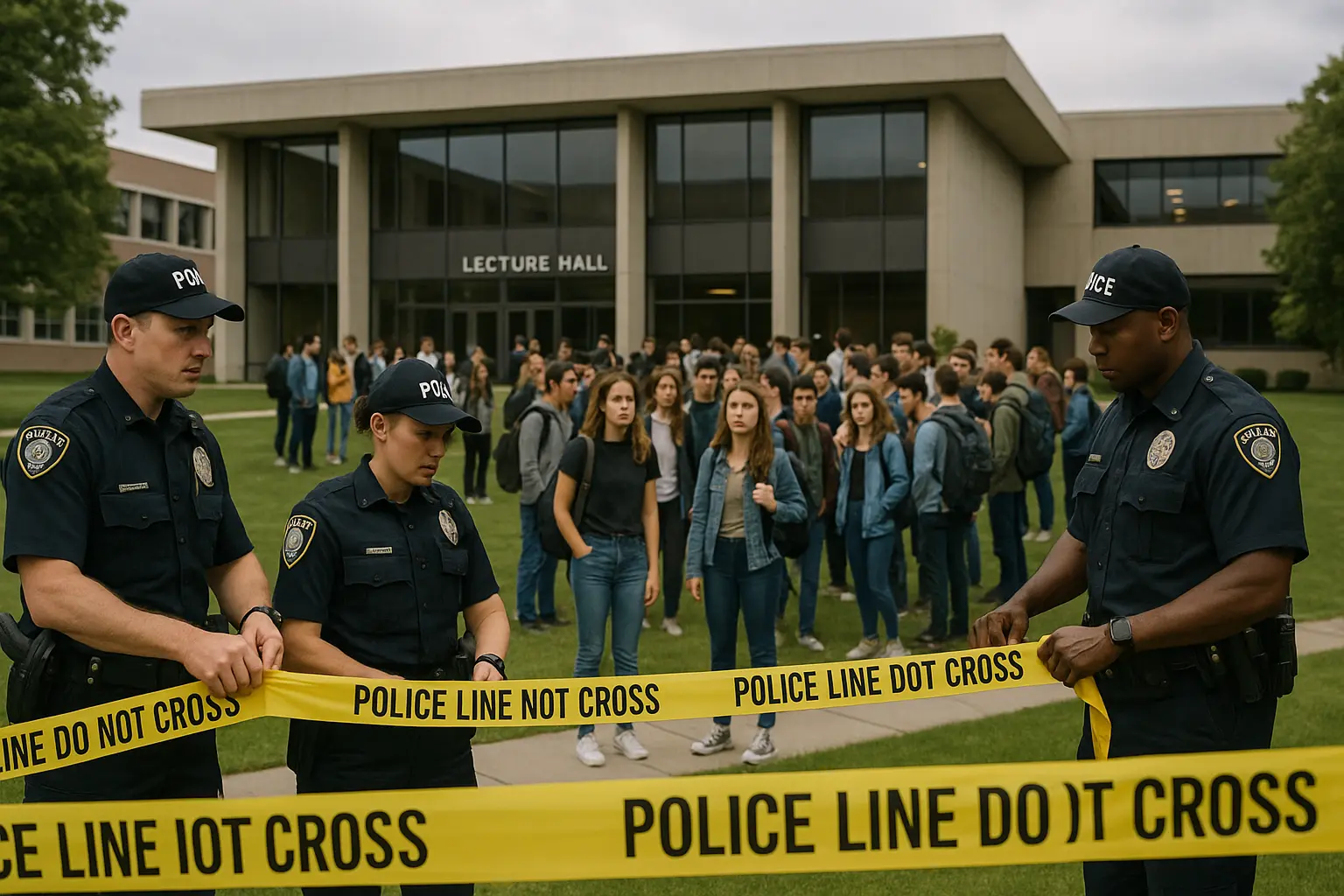
That all changed in a heartbeat. Students and faculty returning to class found their routines interrupted by grief counselors, metal detectors, and nationwide cameras camped on university lawns. University leadership, including Vice President Val Peterson, moved quickly to express both shock and solidarity, vowing that the institution would defend its values and redouble its commitment to campus safety and the bedrock American principle of free speech. As Peterson said in an emotional message, “This community will not be defined by violence. We will heal together and keep open the difficult dialogues our nation so desperately needs.” (Read his full statement here.)
Healing, however, won’t come easily. Students like Marjorie Holt report a newfound solidarity and a “shared trauma” that’s brought classmates closer, even as their belief in safety has been badly bruised. The university has called in branding experts, like Northwestern’s Timothy Calkins, to help chart a path forward. Calkins warns this will be an uphill battle, saying, “It’s going to take more than just a new slogan. UVU must actually show change if it wants to recover its good name.”
“Nobody here ever thought something like this could happen. Now, we don’t take anything for granted.” – UVU Junior, Austin Parks
Students and teachers alike are torn between pride in their school’s legacy and anxiety about the future. Mormon church leaders have offered prayers and community outreach, while outspoken student leaders like Kyle Cullimore are pledging transparency, tough conversations, and a renewed focus on personal vigilance. While some on campus have expressed frustration with outside portrayals of UVU as “dangerous,” others say the tragedy has broken the illusion that any American campus-no matter how safe-can wall itself off from the country’s worsening political storm.
Dangerous Crossroads: Political Polarization and the Future of Free Speech
The fallout from Kirk’s assassination has already spread far beyond Orem, further inflaming national debates over political polarization, campus speech, and how America defends its most controversial voices. Kirk, whose Turning Point USA rallies have drawn both massive crowds and fierce opposition, was no stranger to threats. But in an era marked by wave after wave of progressive violence at pro-America events, his murder underlines what every conservative family-and every student-should be worried about: the growing risk of violence for those who dare to speak the truth on campus.
Experts say this tragedy could mark a turning point for how universities approach speaker safety and event planning. Security authorities and campus officials are now under the microscope, with questions swirling about why a high-profile, outdoor event lacked adequate protections-even as online extremists telegraphed threats. According to ABC News, concerns about failure to plan for all security scenarios are prompting audits not just at Utah Valley but nationwide. Some parent groups are demanding sweeping reforms, including armed security at every major campus event.
The reverberations have even hit Silicon Valley. The U.S. House Oversight Committee has subpoenaed tech giants Facebook, Twitch, and Discord to testify on the escalating radicalization of users in the wake of Kirk’s death. In a move that shows how seriously lawmakers are taking this threat, hearings are scheduled for October 8-an effort to shine some desperately needed sunlight on the ways social media can become a breeding ground for violence and political extremism. (Read about the hearing here.)
“We must take bold action to ensure that no student, no speaker, and no American is ever again targeted for their beliefs.” – Rep. Lauren Boebert (R-CO)
As the dust settles, conservatives everywhere are demanding real answers-not platitudes-from academia and politicians alike. Kirk’s death is forcing Americans to face the harsh new reality of what it means to stand for their beliefs in 2025. And though left-leaning reporters are already attempting to move the story aside, the fact remains: this was an attack on the values that shape our country, and a warning that the cost of complacency is simply too high.
It’s an election year, and the stakes have never been higher. President Trump has issued a call for unity and toughness, urging Republicans to “double down on the fight for free speech, safety, and American values at every level.” The future of Utah Valley and countless other institutions will depend on whether they heed that call-or simply wait for the next tragedy to strike.