
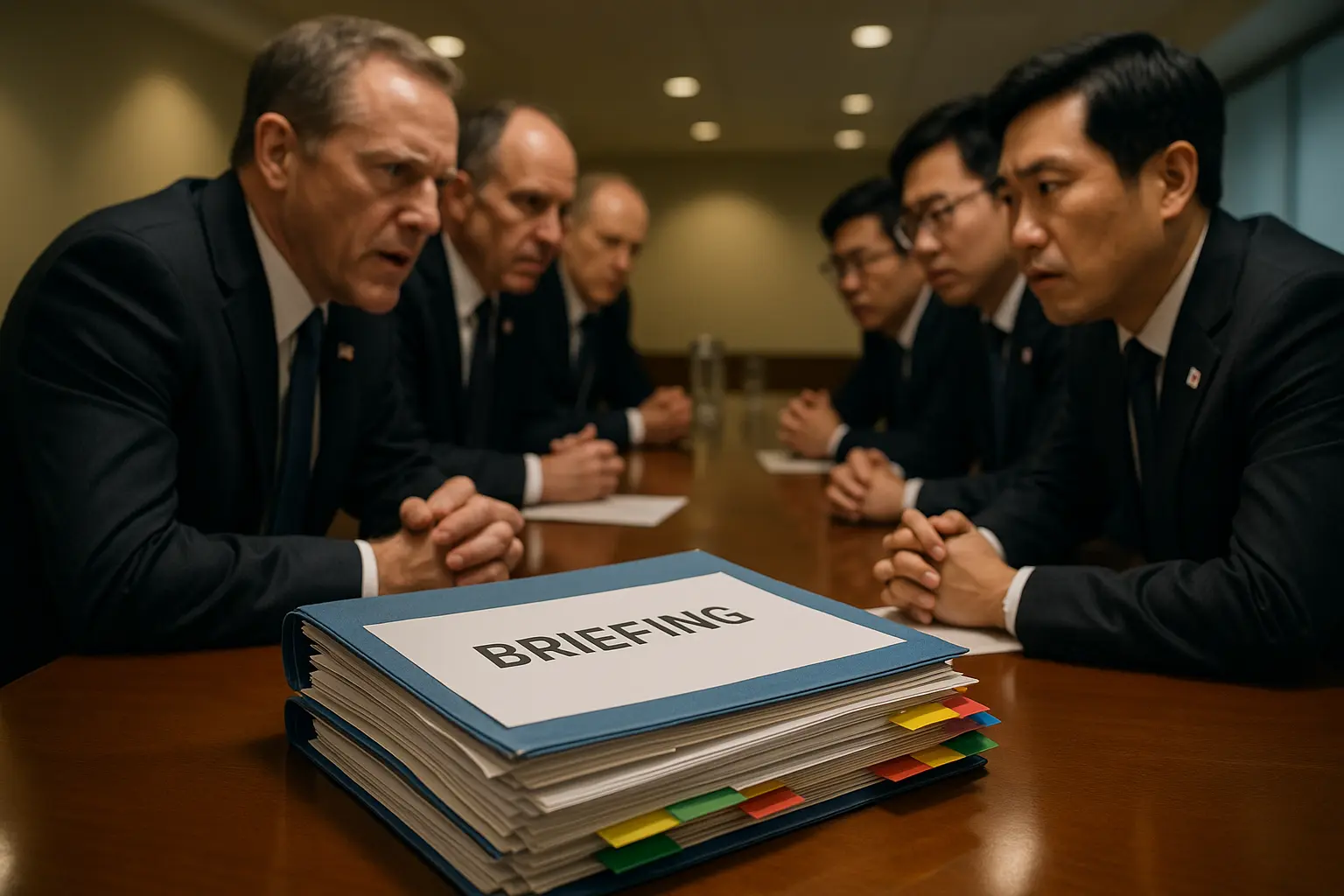
South Korea Balks at Trump’s $350B Trade Demand, Warns of Economic Meltdown
‘It is objectively and realistically not a level we are able to handle at once,’ declared South Korea’s National Security Adviser Wi Sung-lac this weekend, as the Asia-Pacific powerhouse flat-out refused President Trump’s sky-high $350 billion upfront tariff deal demand. The liberal Seoul government appears to be scrambling for alternatives, while the Trump administration stands tall on a renewed America-first doctrine that is sending shockwaves through international markets.
Seoul Says No to Trump’s $350 Billion Shock-But Is It Bluff, or Breakdown?
Tensions are soaring in the wake of President Trump’s aggressive push for a $350 billion up-front investment from South Korea-a jaw-dropping figure that nearly matches the nation’s entire annual export total to the United States. Trump’s hardball play is aimed at fast-tracking a new trade deal, which would slash punishing U.S. tariffs on Korean goods from 25% to 15%, echoing his signature dealmaker strategy that put America back in the driver’s seat after the 2024 landslide win.
South Korean leadership, reeling from the stunning ask, insists that such a colossal outlay would be catastrophic. National Security Adviser Wi Sung-lac took to primetime television to issue a dire warning, repeating that the demand could trigger a financial crisis reminiscent of the 1997 Asian meltdown.
‘This is not a negotiation tactic,’ Wi asserted. ‘It’s about survival. $350 billion, in cash, is a number we objectively and realistically cannot handle.’ The message couldn’t be clearer: Seoul is staring at the U.S. eagle and refusing to blink, but many are asking-does South Korea have any real leverage left at the table?
Social media in South Korea lit up with fears that the Trump deal would ‘bankrupt’ the country, while U.S. voices dubbed Seoul’s protest ‘typical foot-dragging from a badly managed liberal government.’
The bombshell news came just months after both sides reached a handshake agreement to shrink tariffs in July, igniting new hope for U.S. exporters. Now, with Trump resetting the cost of admission at a figure that would dwarf Korea’s entire health-care budget, the South’s top officials are openly pleading for a ‘creative solution.’ Is this negotiating in good faith, or fishing for a rescue rope?
Trump’s America-First Expands as Asian Allies Flinch at Price Tag
For critics of endless globalism, Trump’s approach is textbook tough love. Why should America keep footing the trade bill for wealthy allies? After decades of lopsided trade flows and chronic American deficits, MAGA strategists have found a rallying cry in the president’s demand that South Korea-and Japan, who reportedly owes $550 billion under a similar plan-move from words to wallet.
But South Korea’s progressive government, led by President Lee Jae-myung, claims the U.S. ask is not just unrealistic, it’s destabilizing. Lee insists that anything less than safeguards-such as a U.S.-South Korea currency swap deal-could push the nation over the edge. He even compared the risk to the 1997 collapse, an era most Americans associate with Asia’s abrupt economic crash and soaring social unrest.
According to Seoul’s point man, unless the U.S. offers real guarantees and dollar swaps, pouring $350 billion in loans, loan guarantees, and equity into the States is a “suicide pact, not a trade deal.” Seoul is proposing alternative payment structures and ramped-up anti-dumping guarantees, but Washington insiders say that’s just the usual stalling tactics-and point out that Trump’s demands have already forced major concessions from foreign trading partners in his second term.
One White House advisor wrote on X: ‘President Trump’s dealmaking is working-if these countries can’t pay what they promised, maybe it’s time to bring our jobs back home.’
Interestingly enough, Trump made headlines this week by stating that both South Korea and Japan would pay a combined $900 billion in upfront investments for U.S. projects. The figures-$550 billion for Japan, $350 billion for South Korea-sent stock markets trembling, even as officials in both capitals rushed to downplay the upfront payment narrative. Inside sources say neither Tokyo nor Seoul wants to be cast as the villain at home, or the weakling abroad, amid historic inflation and sagging consumer sentiment.
The Trump administration, meanwhile, shows no sign of backing down. America’s leader, fresh from the anniversary of his reelection, has made restoring trade balance a central pillar in the run-up to the 2026 midterms: ‘It’s time our allies paid their fair share,’ the president declared at a rally in Ohio.
Deal at Deadlock: Korea Looks to APEC Summit as Trump Holds the Line
With trade negotiations hitting a dead end, all eyes now turn to the upcoming Asia-Pacific Economic Cooperation (APEC) summit, which South Korea is set to host next month. Seoul has made it clear: the $350 billion cash demand is a fantasy. Instead, the Korean government is lobbying international allies, hoping to turn sympathy into a coalition that could force America’s hand.
But U.S. officials see things differently. Trump’s negotiators argue that Korea’s $410 billion in foreign reserves puts them in a position to pay up now, especially given America’s open markets. One senior U.S. trade official said, ‘If Korea wants duty-free access to American consumers, they have to ante up. No more free rides, no more hollow promises.’
Deadlock has reached new heights, with quickly circulated cables showing that control over the investment funds is now a key sticking point. South Korea has pushed back hard, insisting on autonomy and joint oversight, fearing that ceding full control to Washington would undercut its sovereignty and further rattle its fragile banking system. Talks have ground to a crawl, and the Koreans are planning, according to their own officials, to raise the stakes at APEC and other international gatherings.
A South Korean economist warned on YTN News: ‘With these terms, we risk triggering capital flight, destabilizing our currency, and reliving the darkest days of 1997.’
South Korean officials further argue that the U.S. is overplaying its hand by insisting on such a steep up-front sum-and analysts believe that fear of public backlash at home is driving much of Seoul’s “alternative solution” narrative. Yet, with Trump’s approval among working-class Americans surging every time he flexes muscle against trade rivals, the White House is betting that headline risk is a price worth paying.
As the clock ticks closer to the APEC summit, observers predict a bruising showdown. For now, it seems that Trump’s America will not settle for less than what he has loudly called full, up-front compensation for decades of one-way trade. Meanwhile, South Korea’s negotiators are banking their hopes on international pressure and a bit of old-fashioned stalling to avoid an economic tailspin.
In a world trading on uncertainty, one thing is clear: the U.S.-Korea relationship has never seen brinkmanship like this in decades. The question now: Who will blink first-and what will it cost American families and businesses if South Korea calls Trump’s bluff?