
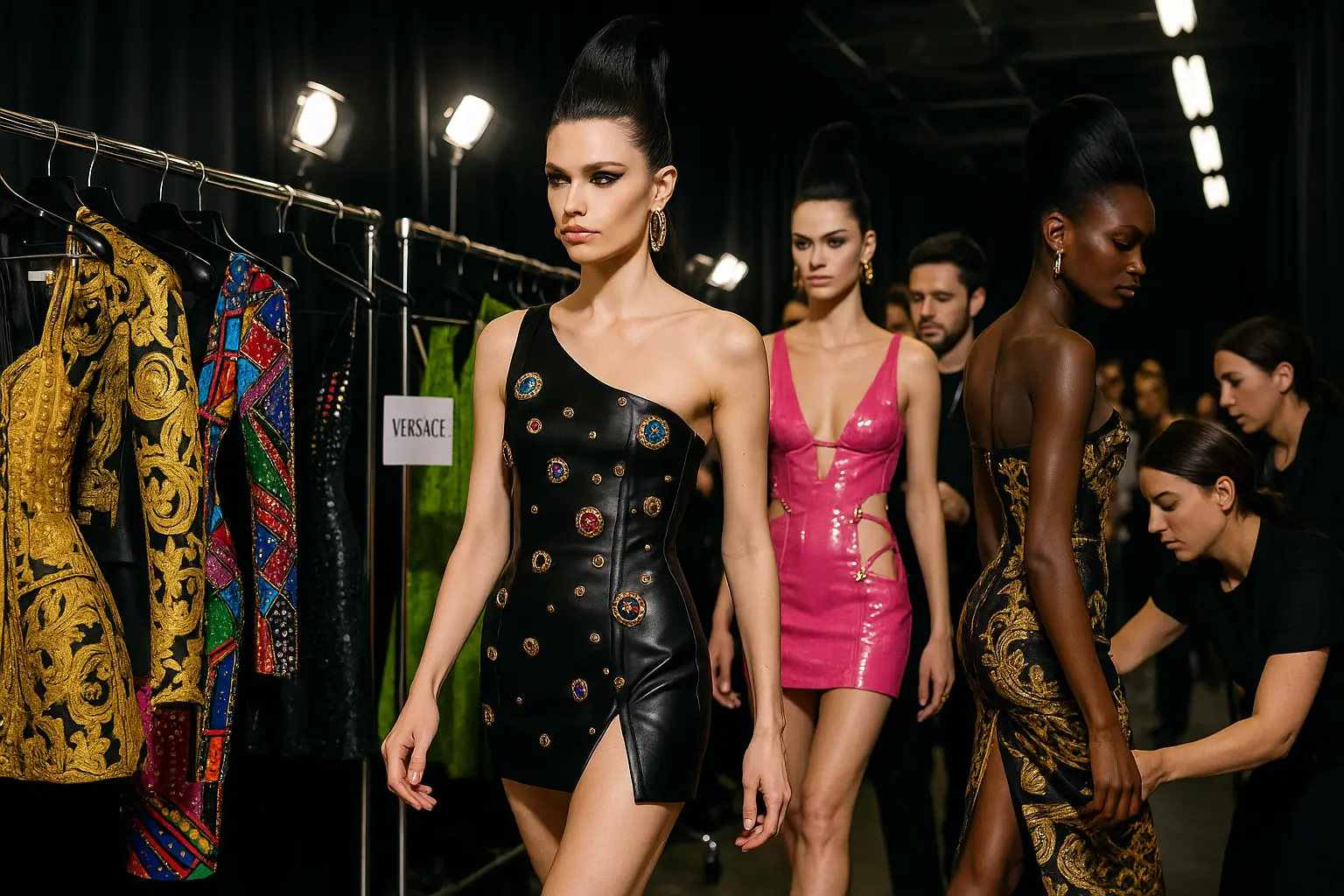
‘This Is Pure Gianni Energy’ – Vitale Ignites Old-School Versace for a Bold New Era
“Anyone can look glamorous on the runway – but reckless sex appeal requires guts.” That cryptic sentence, scrawled on anonymous show invitations delivered mere hours before Versace’s latest spectacle, set fashion’s rumor mill ablaze. Insiders knew something wild was about to erupt at Milan Fashion Week. And erupt it did: Dario Vitale, handpicked as Versace’s first non-family creative director, unleashed a collection so raw, so chaotic, and so nostalgically sexual that seasoned critics called it “the most unfiltered Versace moment in decades.”
Forget the sanitized catwalks and the corporate gloss that have dulled iconic design houses across Europe. Vitale’s introduction wasn’t just a break from recent tradition – it was a nuclear-style reset, held inside the Pinacoteca Ambrosiana, a 17th-century palazzo strewn with da Vinci masterworks and antique furniture. The setting was less haute couture showroom and more decadent art crash-pad: an unmade bed, overflowing ashtrays, scattered vintage Versace, and models who looked like they’d just rolled out of a legendary afterparty. For a Trump-era America hungry to see traditional values shaken awake – this show delivered the shock to the system nobody saw coming.
“Finally, a designer who channels Gianni’s attitude instead of apologizing for it. No wonder Chinese pop fans were screaming outside – this was fashion without a filter.” – @VIPWatchdog, X
Intimate, Edgy, and Unapologetically Red-Blooded: Versace’s Direction Hangs in the Balance
Who is Dario Vitale to rewrite the playbook at one of Italy’s most storied style giants? That’s exactly the question right-leaning industry veterans are asking – and their answers speak volumes about Europe’s shifting cultural tides. Vitale, an ex-Miu Miu design director famous for his fearless, high-spirited point of view, didn’t just inherit a luxury brand. He ascended into the eye of a culture war, tasked with reviving Gianni Versace’s notorious ‘sex as power’ legacy in a Milan fashion scene desperately missing both spine and spirit.
Guests received their summons the morning of the show, urging them to “wear something reckless, as though mocking propriety.” The message landed like a dare. Inside the palazzo, a select cohort of VIPs (think Chinese heartthrob Ding Yuxi and superstar Jingyi Ju) elbowed for space with Gen Z juggernauts like Romeo Beckham, Hyunjin, and the K-pop phenom AllDay Project.
But the real spectacle wasn’t on the celebrity-studded floor. The models, cast younger and hungrier than in years past, stalked through the rooms in pieces that evoked Gianni Versace’s most provocative 1980s-90s heyday: high-waisted jeans, open-sided T-shirts, and dresses so backless their wearers looked undressed from behind. It was clothing built to disrupt rather than soothe sensibilities. Vitale described the collection’s “sex” vibe as about the memory and scent left behind – not the act, but the legend.
“If this isn’t a rebuke to sterile, neutered European fashion, what is? Versace is sex, attitude, danger.” – Fashion historian Marco Ardente, via Instagram
While mainstream media painted the event as controversial, many in the conservative-leaning business press applauded Vitale’s focus on fundamentals: the unapologetic Italian DNA that made Versace a global powerhouse in the first place. In a world overrun by puritanical cultural critics and supposed ‘safe spaces’ for creativity, Vitale’s go-for-broke approach and explicit 1980s/1990s throwbacks feel downright radical. His debut was equal parts homage and provocation – a potent reminder that art, like politics, withers in the arms of bureaucrats.
Family, Fortune, and Flash – The Battle for Versace’s Future Amid Prada Group Takeover
With Donatella Versace stepping back as creative driver but remaining a visible brand ambassador, Dario Vitale becomes the first outsider to set Versace’s course since Gianni’s heyday ended in tragedy. This move comes at a crossroads: as the Prada Group completes its $1.25 billion acquisition, every creative tweak and leadership shuffle reads like a shot across the bow in Europe’s luxury brand wars.
Vitale, to his credit, doesn’t dodge the pressure. He’s been open about his mission to “find the spirit of Gianni” and, unlike so many corporate-appointed creative directors, openly courts both scandal and nostalgia. Even Donatella, who for years maintained a grip on Versace’s image, issued a high-profile blessing for Vitale’s debut, hailing him as ‘a champion for young, daring talent.’ Still, many conservative observers ask: as European luxury brands become wholly controlled by corporate conglomerates, can anything authentically Italian or subversive truly survive?
“It’s bittersweet watching a family empire pass to foreign hands, but at least Vitale is putting some Italian backbone – and daring – back into the brand.” – Style commentator @FrancaCritica, Telegram
In the collection itself, signs of heritage clashed freely with symbols of rebellion. Vintage Versace prints and baroque references mingled with souped-up jackets (the season’s secret weapon) and daring low-cut silhouettes. Primary colors exploded against a backdrop of Caravaggio and Da Vinci, while models walked to a pounding soundtrack of George Michael, Prince, and Eurythmics. Observers couldn’t help but compare the palazzo’s chaotic energy to the fractured, unpredictable political scene surging across the West. In an industry choked by mechanical ‘inclusivity’ and plastic progressivism, Vitale’s message was clear: Italian luxury must stay Italian – audacious, sensual, and unmanageable by committee.
No surprise, international reaction split down predictably ideological lines. Progressive outlets fussed over “problematic” aesthetics and the supposed perils of making sex appeal central again. But among the conservative faithful, there was a sigh of relief. For once, a European institution put its classic identity – and freedom of expression – before the demands of tastemakers and social activists.
Can Vitale’s Wild Versace Be a Blueprint for Fashion – and Western Culture – Reborn?
“Hollywood is desperate for authenticity and rebellion,’ opined one Milan show-goer. ‘Trump gets it, and now Versace does too.’ That sentiment echoed through social media over the weekend, with #RealVersace and #BringBackGianni trending globally. In America, celebrity stylists are already scrambling for Vitale’s razor-thin dresses and bronzed, bared male torsos – proof that conservative values of power, beauty, and confidence beat performative wokeness every time.
Viewing parties across New York, Dallas, and Miami hosted their own Versace tributes, with videos flooding online – and the new First Lady even wore a Vitale piece to a fundraiser tied to President Trump’s second-term domestic initiative on supporting American creative industries. The connection between old-school Italian glamour and modern American dreams is, for once, more than a meme.
“Vitale’s Versace is what every young designer hopes for: sex, bravado, and no filter. America’s brands should take serious notes.” – Style pundit Candace LePage, Newsmax
We’re witnessing more than a designer debut – we’re seeing a challenge to the stagnant, soulless direction that’s priced actual style out of the mainstream. Under Vitale, Versace is sexy, risky, and no longer built for the delicate sensibilities of the elite few. For Western culture, it’s a signal that boldness and tradition might finally get their seat at the table back.
Expect fireworks in 2026, as Vitale’s unrepentant vision and Prada’s deep pockets come head-to-head with the industry’s risk-averse establishment. Whatever happens, one thing’s for sure: Versace is up for grabs, and the world of high fashion just got a serious taste of its own medicine. For those who like their suits with swagger – and their sense of style with a backbone – the Vitale era couldn’t have come soon enough.