
“In America, our elections must be sacred – not for sale to China!”
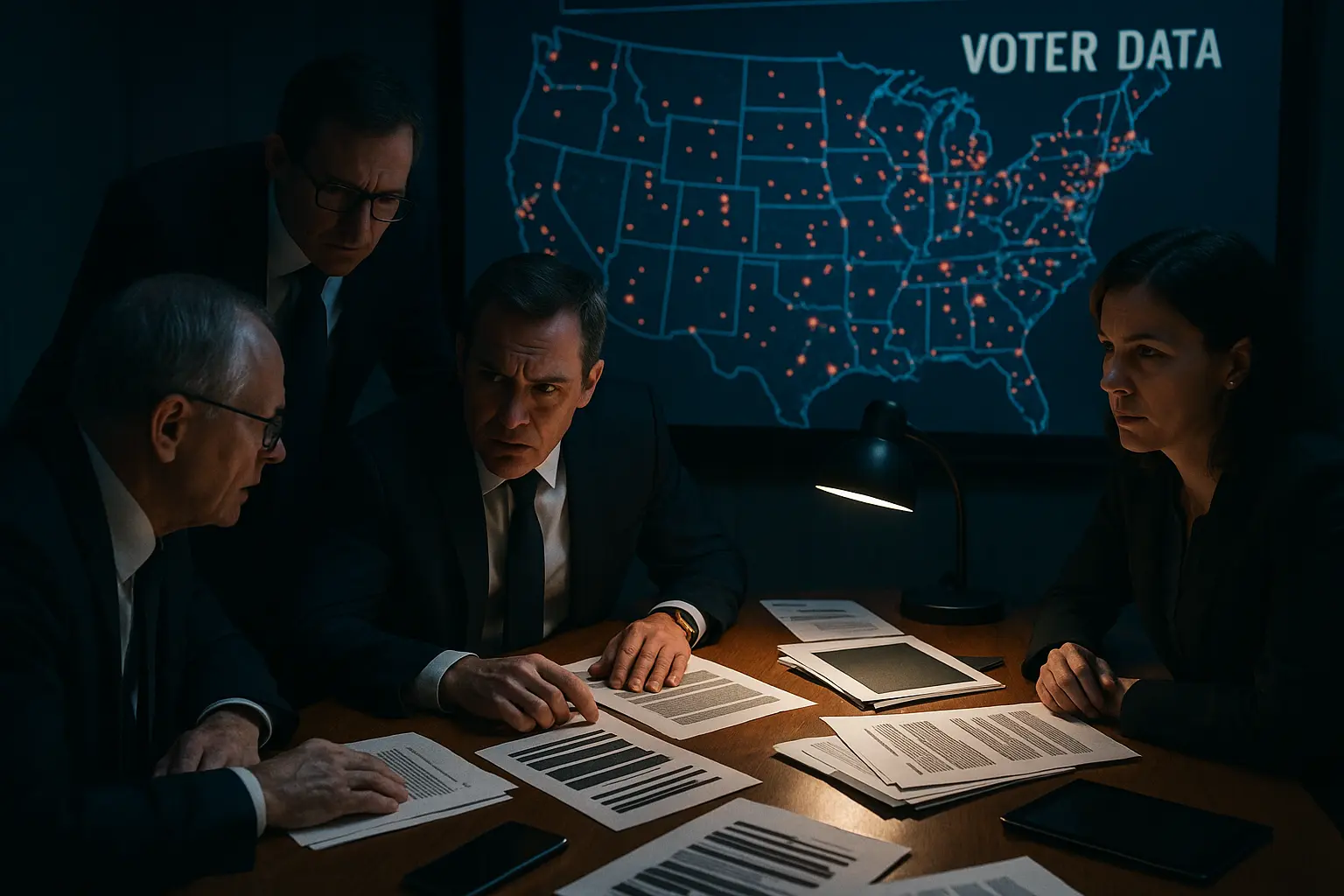
President Donald Trump unleashed an electrifying claim from the White House this week, alleging that Communist China pulled off the largest data breach in American election history by stealing the personal information of 220 million U.S. voters. The stunning revelation, delivered Thursday night in a primetime televised address that was snubbed by several major networks, marks a dramatic escalation in the war for America’s election integrity. As Trump declassifies explosive intelligence documents and fingers ‘deep state’ saboteurs for covering up this hostile act, a new front opens in the battle for democracy just months before the 2026 midterms.
As the American public reels, critics scramble to cast doubt, and supporters demand action, questions abound: what did China really access, who in Washington knew and when, and will Congress heed Trump’s call for sweeping new election laws? The former president wasted no time laying out his vision: stronger verification, restricted mail-in voting, and purging voter rolls of noncitizens, dead registrants, and anyone whose data may have fallen into foreign hands. Is America finally waking up to the scale of the threat?
China’s Election Heist: Trump Reveals Secret Files, Accuses ‘Deep State’ of Betrayal
“This is the largest compromise of election data in our country’s history,” Trump declared, waving a stack of declassified files as cameras rolled from the East Room. He accused Chinese intelligence-aided by U.S. officials-of acquiring not just names, but addresses, phone numbers, political party affiliations, and even personal voting histories of an astonishing 220 million Americans.
“Not only did Beijing hack our systems, but elements within our own intelligence community worked to keep it from the American people and from Congress,” Trump thundered. He alleged that this breach stretches back to the 2020 election-and that his own administration had been systematically kept in the dark by career bureaucrats and Obama holdovers determined to shelter China and undermine his efforts to safeguard U.S. democracy.
This claim has sent shockwaves through the Republican base and prompted immediate scrutiny. According to Trump, China conducted the largest compromise of election data in history, and accused intelligence agencies of concealing this information from him and Congress. But establishment critics have scrambled to offer qualifiers, noting that U.S. voter registration data can often be publicly accessed and is not always a sign of cyber sabotage. However, supporters argue that it’s the scale and the intent that matter – and warn that foreign powers are already exploiting America’s vulnerabilities in ways we cannot afford to ignore.
“If foreign adversaries are manipulating our voter rolls and election data-what does that say about the sanctity of America’s elections?” Texas GOP Rep. Marybeth Dunn posted on X (formerly Twitter), earning 548,000 likes in under an hour.
Meanwhile, the Democratic National Committee issued a statement denouncing Trump’s “baseless fear tactics” and accusing him of undermining faith in the electoral system without proof.
Trump’s Election Security Crusade: The Save America Act and the War on Mail-In Ballots
The fallout from the China breach claim has supercharged Republican efforts for reform. Trump is spearheading the Save America Act, a contentious bill that would overhaul how Americans vote. Under the Act, proof of U.S. citizenship would be mandatory for voter registration, and mail-in balloting would be drastically limited-only allowed for illness, disability, military service, or travel.
The contrasts are glaring. Trump himself has previously voted by mail in the sunny precincts of Florida-sometimes, most notably, in the March 24, 2026 special election near his Mar-a-Lago club (he cast a mail-in ballot). His allies in Congress deflect charges of hypocrisy, insisting that the difference lies in ensuring only legitimate citizens access absentee ballots. Critics and left-leaning media, meanwhile, call the Act a voter suppression scheme dressed up as security.
But among conservatives, the appetite for action is fierce. Social media erupted after Thursday’s address, with #SaveAmericaNow trending atop Truth Social and X. “If you don’t have proof of citizenship, you should not decide our elections!” wrote influencer RedHatRising, echoing a sentiment that has gained urgency since Trump’s bombshell revelation.
“The Save America Act is our firewall against foreign-backed chaos. We demand Congress pass it-yesterday,” declared the editorial board of The American Lion, a leading pro-Trump outlet, in a piece that racked up more than 60,000 shares in 24 hours.
Despite the noise, the Act faces an uncertain future in the Senate, where Democrats and a handful of moderates vow to filibuster. But Republicans sense momentum and say the mood in the country has shifted decisively in their favor, especially after years of doubts about mail-in ballots and loaded allegations of election fraud dating back to 2020.
Media Wars and the Battle for 2026: Will Congress and the States Act Before It’s Too Late?
The 2026 midterms loom just over the horizon-and the stakes have never been higher. Trump’s speech has deepened the chasm between Red and Blue America. Several major outlets, including ABC, NBC, and CNN, pointedly declined to air Trump’s address in full, citing concerns over “factually unsupported claims.” This, in turn, has only fueled accusations of a media blackout and efforts to shield the Biden camp from a growing storm of voter anger.
Fact-checkers have noted that while it’s no secret China and other foreign actors try to access American voter data, much of this information is already public record through state databases. Election officials and cybersecurity experts continue to maintain that, to date, no evidence has surfaced that foreign governments manipulated vote tallies or outcomes in 2020 or since. Yet, as the saying goes, the absence of proof is not proof of absence-and trust in the system remains battered after years of hyper-partisan warfare and endless investigations.
Still, Trump’s attacks are not just about hackers abroad; they target the U.S. intelligence establishment as well. The former president has accused the so-called ‘deep state’ of knowing China’s hack was underway and deliberately suppressing the evidence. Critics, including some in Trump’s own party, point out that these allegations are heavy on drama but thin on new concrete facts. The Biden administration, for its part, is promising “a robust and bipartisan investigation”-but conservatives are not holding their breath.
“After six years of cover-ups, excuses, and double standards, nobody trusts the D.C. swamp. We need full transparency and election security reforms, right now,” posted former Arkansas Governor Mike Turner. “If we fail, 2026 could be the last real vote America ever sees.”
Looking forward, the White House is fast-tracking a new election integrity website, promising the public will be able to track every security measure taken before the next national vote. But for millions of Americans watching from home, the question remains: will Washington act to protect our votes-or protect its own secrets?
America at a Crossroads: Can the Nation Secure Its Ballot Box?
What began as a White House speech now threatens to become a defining issue of our political era, one that could make or break Congress-and even the presidency-in 2026 and beyond. Trump’s revelations have tapped into the core anxieties of conservative voters: foreign meddling, government duplicity, and the slow drip of election confidence. With each new headline, America inches closer to a reckoning on the very future of its democracy.
Whether the claims of 220 million stolen voter records are proven in detail or remain a rallying cry, one thing is certain: the demand for stronger laws and tougher accountability grows louder every day. Now all eyes turn to Congress, state legislatures, and the President. As November approaches, Americans must decide-will we stand up and defend our elections, or let them slip away, piece by piece, to foreign powers and shadowy insiders?