
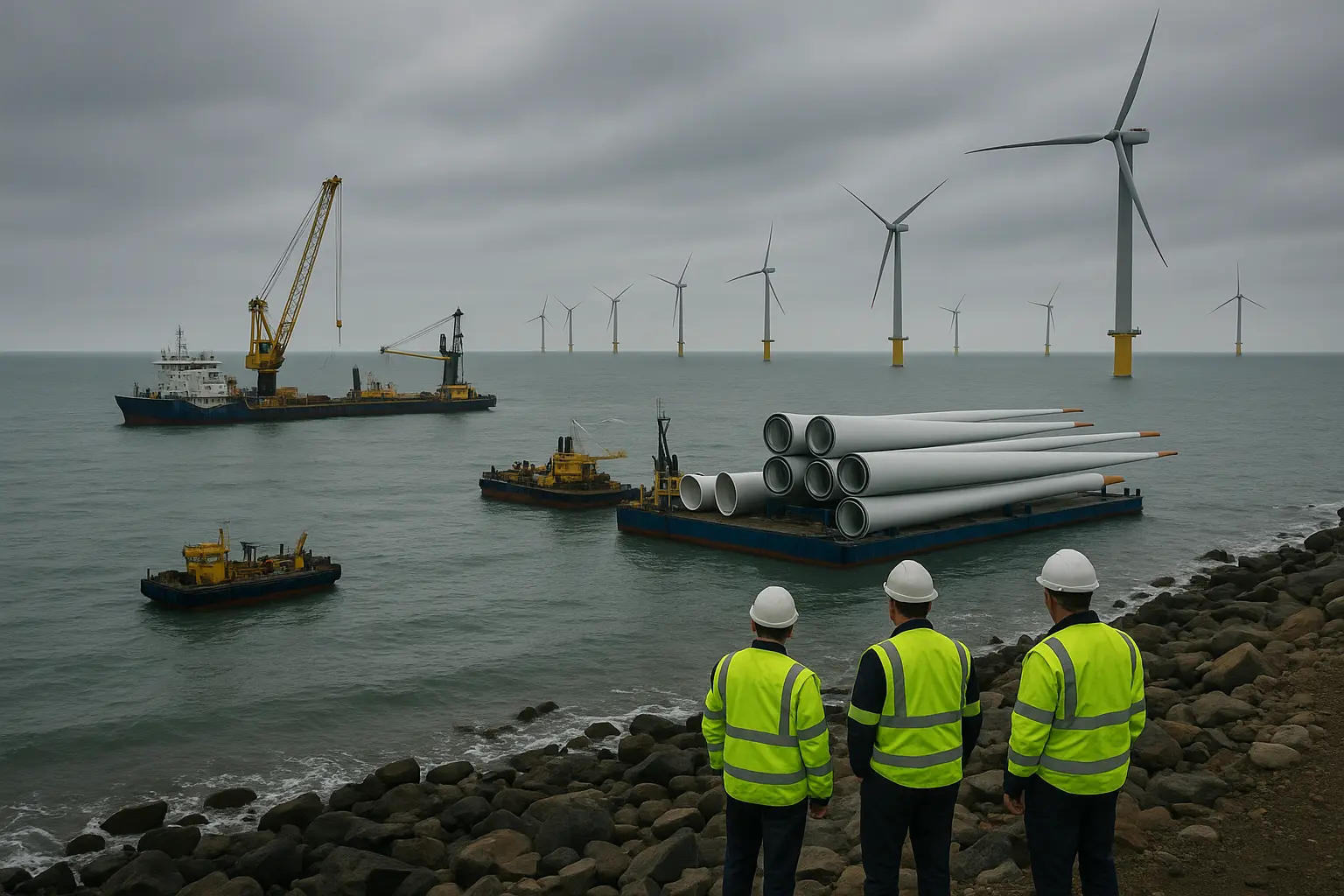
Trump Erases Millions of Offshore Wind Acres, Declares End to Wind Power Expansion
‘American seas should fuel American industry, not serve as a playground for foreign-government-backed wind turbines that don’t work when the grid needs them most.’ That fiery remark from a Trump supporter echoed across social media Wednesday night, while President Trump’s administration dropped a political thunderbolt: the immediate dismantling of all U.S. offshore Wind Energy Areas (WEAs) nationwide after years of contentious wind power debate.
Redrawing America’s Energy Map: Trump yanks the plug on wind giveaways
The Bureau of Ocean Energy Management (BOEM) has officially rescinded every single designated Wind Energy Area on the U.S. Outer Continental Shelf, yanking more than 3.5 million acres from the clutches of wind energy developers. Even regions Democrats touted as ‘ready for a clean energy revolution’ – like the Pacific Northwest’s southern Oregon coast – were swept away in this sweeping rollback. The BOEM’s Wednesday decision was executed after President Trump’s crackdown on what he brands “unreliable, foreign-dominated green energy boondoggles.”
Instead, the White House’s latest directive is crystal clear: The Interior Department now operates under the “Ending Market Distorting Subsidies for Unreliable, Foreign-Controlled Energy Sources” act, ensuring all wind and solar deals face the highest level of scrutiny from the Secretary’s office. That means no more backdoor developer deals, no fast-track leases, no green grift disguised as “sustainable.” Adam Suess, the acting assistant secretary for lands and minerals management, drove home the administration’s stance: “American energy dominance is driven by U.S.-based production of reliable baseload energy, not regulatory favoritism towards unreliable energy projects that are solely dependent on taxpayer subsidies and foreign-sourced equipment.”
‘It’s about time we got serious about real energy security,’ posted one longtime Gulf fisherman on X. ‘These wind subsidies only served billionaires and our enemies.’
Critics from the environmental lobby – including the National Wildlife Federation – immediately decried the decision, warning it “slams the brakes” on so-called climate goals. But for much of America’s heartland, the announcement brings long-awaited relief. Local residents, fishermen, and tribal leaders from the Pacific coastline, specifically near the now-rescinded 195,000-acre Oregon study area, spent years fighting against what many saw as a scheme imposed by outside activists and foreign green-energy conglomerates. The administration’s move is seen as both a major course correction and a restoring of common sense to federal ocean policy.
‘No More Windmills’: Trump Makes Good on His Energy America-First Promise
President Donald J. Trump’s long public feud with offshore wind energy needs no introduction. For years, he’s labeled wind turbines “environmentally unsound” and “destructive eyesores,” famously railing against the Aberdeen Bay wind farm that mars the view from his Scottish golf resort. In his 2024 reelection campaign, Trump hammered the message home: America deserves dependable and affordable energy, not subsidized wind farms built with Chinese rare earth minerals and European hardware.
With this latest action, the Bureau of Ocean Energy Management confirmed the cancellation of years of planning and “speculation masquerading as strategy.” The ax fell mere months after the President issued a historic executive order to halt all wind leasing and revoke current WEAs until a ground-up review could determine their worth to the American people. In the words of the BOEM:
“This action cancels years of planning for offshore wind dating back to 2014 and follows a memorandum signed on January 20, aligned with the president’s executive order to end offshore wind production.” (The Well News)
The president himself didn’t mince words during a recent press conference, torching windmills for “tearing up wildlife, consuming subsidies, and marring our natural scenery.” His rhetoric is emboldened by reports of local activism against wind farm intrusion up and down the coasts. For example, both commercial fishermen and Native American tribes in Oregon demanded the government listen as they fought to defend traditional livelihoods and preserve sensitive marine habitats. Despite pressure from environmental lobbies, actual developer interest in offshore wind stalled out years before the Trump administration even intervened-suggesting the market for these pricey projects was always shaky at best.
Social media spiked with celebration from energy workers and coastal property owners alike, hailing Trump for delivering “real American jobs and stable power” back to communities battered by utility instability and skyrocketing bills during previous Democrat-run administrations. The president’s base sees the move as proof that his pro-America, anti-globalist energy policy isn’t just talk; it’s action meant to restore balance and confidence in U.S. energy markets, especially as the world faces mounting instability.
Years of Failed Green Schemes: What Comes Next for America’s Energy Future?
The domino effect of the Trump administration’s action on the offshore wind sector is impossible to ignore. The revocation instantly freezes the future of offshore wind lease sales, casting a cold shadow over a green energy sector once propped up by Obama- and Biden-era cronyism. Despite grand promises, offshore wind has consistently failed to deliver either stable jobs or affordable energy, often delayed by legal challenges or local backlash. As one industry watchdog put it: “When government rigs the market, only the politically connected win-everyone else foots the bill.”
The Department of the Interior has stated unequivocally that all future decisions related to wind or solar projects on federal land will face rigorous review-no more autopilot green-lighting for politically fashionable but economically unviable initiatives. For existing wind leases, there’s no expansion, and any suspended lease sales remain permanently off the table.
“Trump just did something Democrats and their climate donors thought impossible: He put America’s blue-collar workers and our energy reliability ahead of Swiss bankers selling green bonds. About time.” – @Reddy4Liberty, trending on X
While liberal activists and think tanks cry foul, evidence abounds that many Americans never embraced the offshore wind experiment in the first place. The southern Oregon coast, for instance, saw faint developer enthusiasm even after years of taxpayer-subsidized hype. Fishermen and local residents stand relieved that federal waters can now be protected for actual productive use-not “industrial sanctuaries” for unreliable technology. And with President Trump’s circle promising new investments in domestic oil, natural gas, and clean but reliable nuclear, America may finally see a renaissance in sensible, red-blooded energy policy.
As 2026 midterms approach, the administration’s call for “reliable, made-in-America energy” looks poised to become a defining Republican rallying cry. From the Gulf to the Northwest, voters who felt ignored by out-of-touch environmental diktats are now seeing their voices amplified in Washington, D.C.