
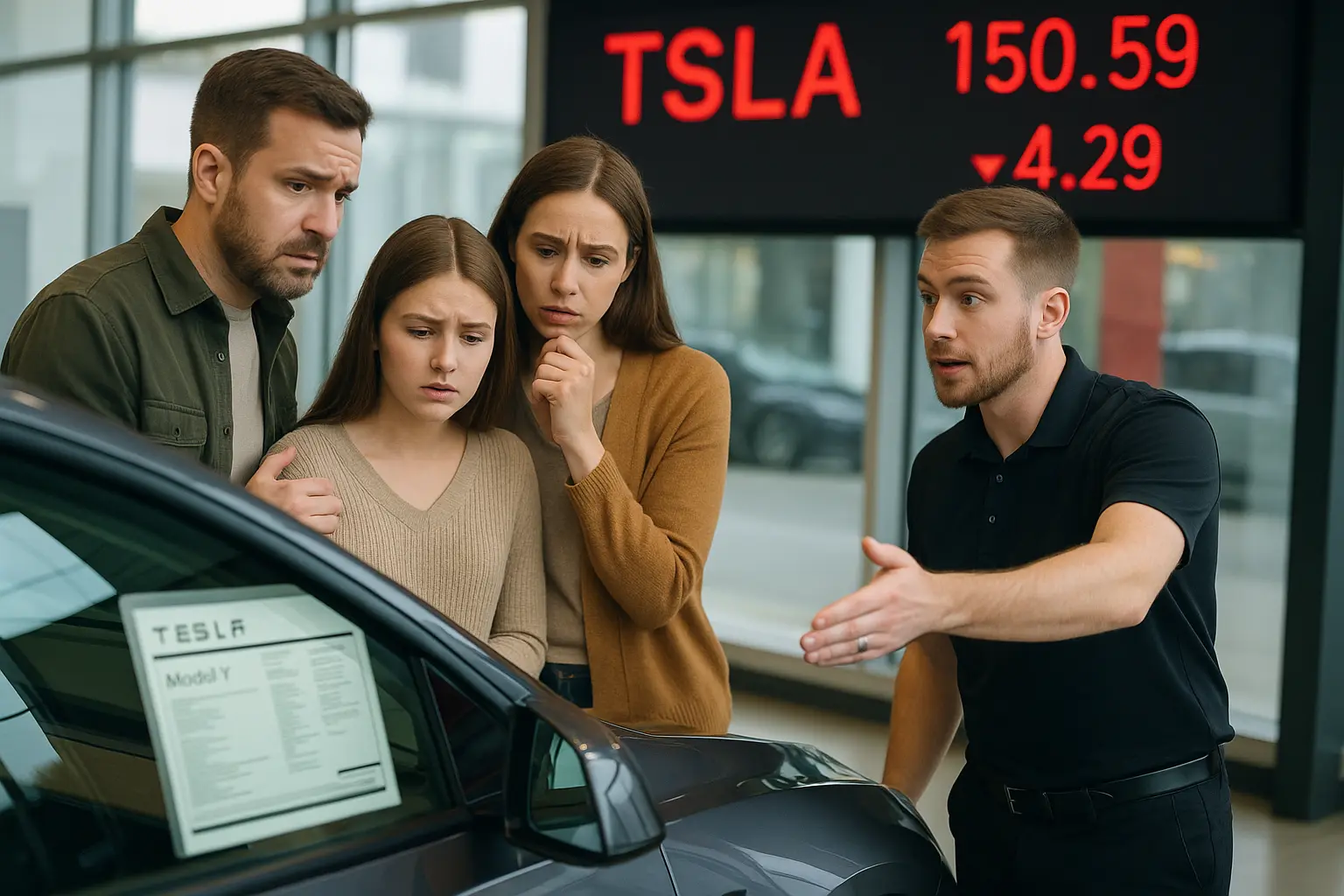
Tesla Shocks Buyers and Investors With Sudden Model Y Price Surge and Stock Fallout
‘Every time they tweak a number, it shakes up the whole auto market, but this time it feels like a red flag.’ – Michigan car dealer on the Tesla Model Y price hike
Late Friday night, as Americans were winding down, Tesla Inc. quietly dropped a bombshell: prices on the mid-to-high-end trims of its best-selling Model Y had surged by up to $1,000 overnight. With the first such price hike in two years, CEO Elon Musk reassured no one, leaving everyday car shoppers and Wall Street wondering about the company’s next chess move.
Tesla’s website update sent ripples through the market before dawn, stoking questions about demand, margins, and the sustainability of electric vehicle (EV) enthusiasm. For conservative American families pinching pennies in Biden’s inflation-laced economy, this surprise price surge is more than a rear-view-mirror adjustment-it’s the latest in a pattern of Silicon Valley elite decision-making that leaves heartland drivers on the hook and investors reeling. The base Model Y stayed put for now, at $39,990, but most buyers opt for higher-end trims. Meanwhile, Tesla’s stock added another twist, closing at $422.24-a 4.75% plunge after the news hit, and continuing its slide into Monday morning.
Mid-Year Sticker Shock: What Tesla’s Price Move Means for Main Street
Tesla didn’t bother explaining its sudden sticker increases, but industry insiders aren’t buying the silence. The price rises were concentrated in the Model Y Premium Rear-Wheel Drive (now $45,990, +$1,000), the Model Y Premium All-Wheel Drive ($49,990, +$1,000), and the Model Y Performance AWD ($53,990, +$500). As TeslaNorth.com reports, the standard rear- and all-wheel drive versions held steady, a move analysts see as a bid to avoid scaring off more price-sensitive buyers while coaxing extra revenue from those already ready to shell out for luxury. Conservative voices are raising alarms that the left-coast tech darlings, obsessed with “robotaxi” futures and government handouts, are losing touch with working Americans who actually need affordable, reliable vehicles not science fiction experiments.
According to Autoblog, Tesla follows the broader industry trend of blaming ‘parts, logistics, fuel, and tariffs’ for price turmoil-even as their own manufacturing relies on heavy automation and recurring subsidies. Unsurprisingly, this latest surge comes right after Tesla insiders dumped nearly $31 million in stock while the company admits its price-to-earnings ratio remains sky-high, more than 47% beyond real value, according to GF Value™. The base Model Y may be unchanged for now, but families hoping for affordable American innovation are once again left with broken promises.
“Tesla’s decision sends a clear signal-they’re not worried about the working class anymore, just their own shareholders.”
Wall Street’s response? Mixed at best. According to Business Insider, 18 analysts now rate Tesla a ‘Moderate Buy’, but even with bullish price targets, the risks tied to demand and competitive price pressure can’t go unnoticed. It’s another chapter in the slow erosion of Tesla’s mass-market image, just as traditional automakers like Ford and Toyota redouble efforts to reclaim their territory. Meanwhile, Tesla’s robotaxi ambitions-still in extensive beta testing-are nowhere near ready to comfort investors worrying about shrinking margins and wavering sales.
Blame Games and Broken Promises: Who Really Pays for Wall Street’s EV Fantasies?
By selectively raising prices on its best-selling trims, Tesla’s gambit is clear. They hope to squeeze maximum profit from affluent buyers while maintaining the illusion of mass-market options at the base level. But the stock’s latest nosedive tells another story: the dreams of endless growth and self-driving riches simply aren’t materializing fast enough. After closing at $428.35 the prior week, the stock bounced up to $445 on Monday only to crash to $422.24 by Friday, all as price increases hit the news. For the one-in-four US households thinking of going electric, every shakeup in Tesla’s pricing saga is another reason to reconsider.
Industry-wide, costs are up, yes-but so is consumer skepticism. Supply chain headaches, rising logistics costs, and worldwide tariff battles all weigh heavily on EV producers. Yet it’s Tesla’s combination of opaque communication and unpredictable moves that truly irks Main Street America. As Electrek details, only the mid-to-high trims saw the increases, not the base versions-almost as if the company quietly admits middle class families are already outpriced.
“This maneuver doesn’t build trust, it undercuts it. Elon’s playing chicken with buyers’ wallets,” snapped one Texas dealership owner in a social media post that quickly went viral among conservative circles.
Tesla’s wider business context doesn’t help much. Their 2025 financials show 69.4% of net sales still depend on selling cars-not dreams of humanoid robots or untested robotaxis. With capital expenditures expected to soar over $25 billion this year and warnings of negative free cash flow, it’s hard to see how price hikes won’t eventually hit demand. Even loyal fans are starting to bristle, as posts on X and Truth Social call out Silicon Valley’s disregard for the working man. The White House keeps pushing electric cars as the future, but tyranny of choice means nothing if nobody can afford the price of entry.
Elon Musk’s Gamble: Will Red America Revolt Against Woke Electric Dreams?
As Tesla digs in for what looks like an expensive year, red state America is taking note. Musk’s firm remains the darling of Wall Street and Hollywood, but every new price hike makes the company’s promises ring hollower with the very voters conservatives need to win in November. Biden’s electric push hasn’t trickled down to real savings-quite the opposite. The Democrat’s war on fossil fuels and trickle-down subsidies for coastal elites have helped boost materials and logistics prices, while hard-working American families suffer.
Tesla’s ability to hike prices-seemingly at will-raises questions: if the Model Y, the so-called “people’s Tesla,” becomes unaffordable for most, who exactly is the target customer? Wall Street analysts may be counting on self-driving breakthroughs, but Main Street needs reliability and value now. Tesla’s Model Y price hikes might pad short-term margins, but the losses in trust and brand loyalty could haunt the company-and the left’s electric dream-for years.
“This election cycle, Americans will remember who kept gas prices low and cars affordable. Democrats want to force us all into EVs, but only if you can pay the Silicon Valley premium. The rest of us? They couldn’t care less.”
The truth is, as Tesla scrambles to please investors, it is increasingly at odds with the average conservative voter. Come November, the only thing surging faster than EV prices may be backlash at the polls-especially if Middle America rejects elitist technology companies more interested in Wall Street dreams than everyday security and freedom on the open road. Trump’s reelection looms-and with it, a conservative push for energy independence and consumer choice, not top-down mandates or $1,000 overnight upcharges. Americans are watching-and voting-with their wallets.