
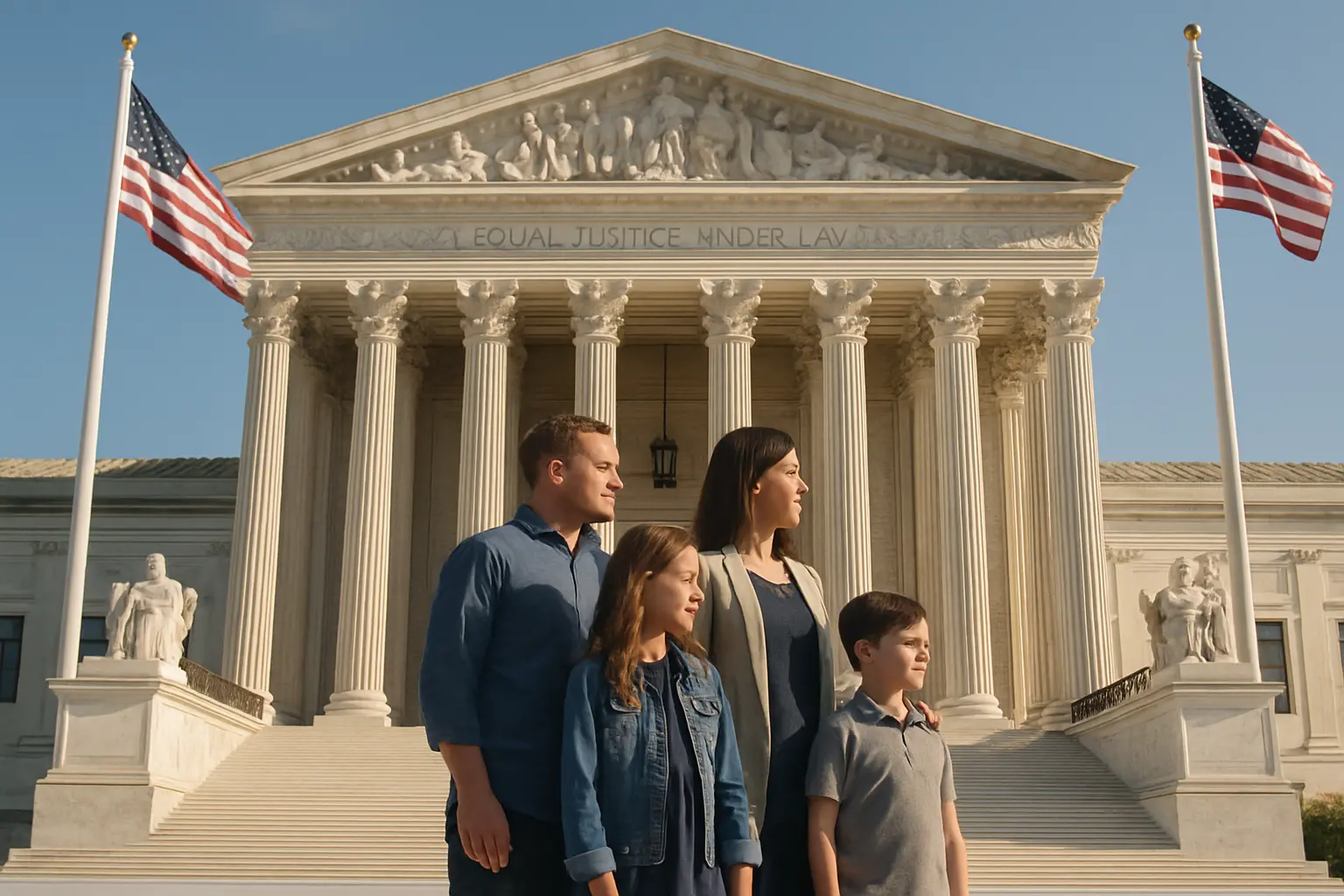
If you’ve followed the news lately, you’ve seen a troubling pattern: American families, faith communities, and even the sanctity of life are under siege-not from sweeping votes in Congress or state referenda, but from a coordinated campaign of progressive judicial activism, regulatory overreach, and cultural gatekeeping. Each week seems to bring a fresh attempt to override parents, trample on the rights of the unborn, or chip away at the constitutional fabric that has long defined our nation. It’s time we call this what it is: an orchestrated effort to sidestep the will of voters and undermine bedrock freedoms.
Take Michigan, where a federal judge recently issued a preliminary injunction blocking the state from forcing pro-life organizations to hire abortion advocates. This push, enabled by an amended civil rights law, would have compelled crisis pregnancy centers and pro-life groups to violate their deepest convictions-or risk closure. Amber Roseboom, president of Right to Life of Michigan, called the attempt a “wild abuse of power,” and rightly so (Michigan Advance). Michigan is not alone. States are being pressured to blur every moral boundary, using new laws and activist judges to silence faith-based voices under the banner of “civil rights.”
Or look at the heart-wrenching surrogacy case in Canada, where a same-sex couple sued their surrogate for refusing to abort a baby at 22 weeks due to a minor cleft lip. This isn’t just a legal dispute-it’s a chilling illustration of a culture that treats children as commodities, and contracts as authority even over life and death. The surrogate, a single mother herself, bravely resisted the demand. Her words echo the pain so many faithful mothers feel in a world that has lost reverence for life: “They didn’t get the perfect child they wanted and they threw me away.” What does it say about a legal system-and a culture-willing to penalize a woman for refusing to end a child’s life?
Then there’s the open defiance of federal constitutional norms from some of our highest state courts. The Hawaii Supreme Court’s recent 91-page opinion in State v. Granillo not only overturns a conviction (rightly, due to flawed evidence), but devotes eight pages to lambasting the U.S. Supreme Court and explicitly rejecting its authority. The justices argue that Hawaii should chart its own, more progressive, course-recasting American federalism not as a system of shared values, but as a patchwork of whatever-the-judge-wants. We’re seeing similar trends elsewhere, as CRT-era rhetoric seeps into what were once constitutional debates, and courts redefine the boundaries of parental rights, religious liberty, and even the meaning of life itself.
And if you thought the judiciary would be insulated from pop-culture activism, think again. In New York, Sex and the City actress Cynthia Nixon was just appointed to the state’s powerful judicial nomination commission-despite lacking a law degree. Nixon, a well-known progressive activist on abortion and LGBTQ causes, will now help shape the state’s highest court for years. Legal qualifications and experience apparently take a backseat to ideological alignment and celebrity status. Critics are right to sound the alarm: this politicizes the judiciary and threatens public trust in justice.
All of this is playing out against a backdrop of pitched battles over election integrity, with the federal government and some states seeking to loosen safeguards while conservatives fight to tighten voter ID and citizenship requirements-an effort Rep. Mike Collins described as essential to protecting “our right to free and secure elections” (The Daily Beast).
These are not isolated skirmishes. They represent a unified strategy by the progressive left to capture the courts, regulatory agencies, and cultural platforms-to bypass parents, undermine religious conviction, and nullify pro-life protections. The left knows it struggles to win these battles through open, democratic debate. Instead, it hides behind activist judges and unelected bureaucrats, confident that moral clarity is no match for ideological legalism.
But the answer is not despair. It’s renewed vigilance-especially from conservative families, faith leaders, and principled state legislators. We must champion school choice, curriculum transparency, and parental rights. We must defend the unique role of mothers and fathers, the inestimable value of every child, and the timeless truths of our faith.
The next chapter of American renewal won’t be written by Hollywood stars or activist judges. It will be forged in homes, churches, and local communities, where moral courage and constitutional boundaries are once again cherished-and fiercely defended.