Red State Shock: TikTok Ban Gone, Biden’s ‘National Security Risk’ Narrative Collapses
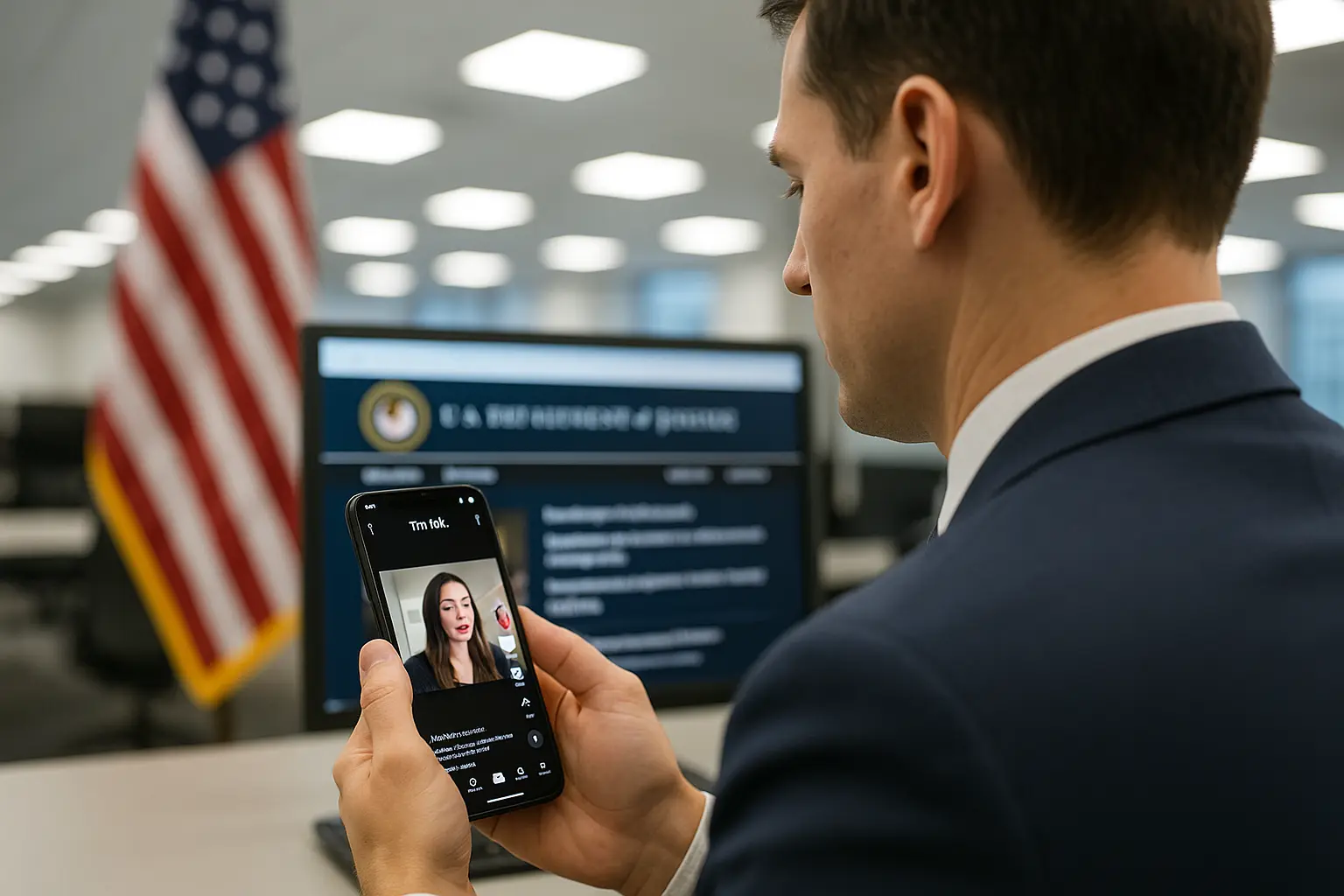
‘So let me get this straight-after years of telling Americans TikTok was China’s spy tool, the Biden-era ban is quietly reversed by the Justice Department? What happened to the hullabaloo about national security?’ One X user’s question sums up the conservative backlash exploding across social media as the DOJ suddenly overturned its widely-touted federal device ban. On Friday, the Justice Department, with barely a whisper of fanfare, declared that the latest US version of TikTok is, after all, safe for use by hundreds of thousands of government employees. For a nation told that merely downloading TikTok risked funneling secrets to Beijing, this announcement lands like a bombshell.
The new DOJ stance signals the end of a nearly four-year saga spearheaded by Republicans, patriots, and even President Trump himself-who pushed for TikTok to be cleansed of its Beijing-based parent company, ByteDance. Now, with government smartphones in the clear, many Americans are asking if all those concerns were legitimate, or if Washington simply moved on to the next outrage. Conservatives are calling this a classic case of Democrats covering tracks after refusing to act for years.
Federal employees across America are left wondering what changed overnight-besides the party in the Oval Office.
The reversal follows a deal hammered out with heavy American involvement. According to the DOJ, the notorious 2022 ‘No TikTok on Government Devices Act’-pushed as a crucial national security measure-is now obsolete. The ban no longer applies after a joint venture led by American companies took command of TikTok’s U.S. operations, with ByteDance reduced to a minority position. The DOJ claims that new ownership and strict data handling neutralize the app’s infamous threat-though the public has heard that before.
Patriotic Investors and Big Tech: Who Truly Controls TikTok Now?
So what’s changed behind the scenes? For starters, the shakeup gives American investors and corporate gatekeepers an 80.1% stake in the newly minted TikTok USDS Joint Venture LLC. The likes of Oracle, Silver Lake, and MGX play kingmaker-each holding a 15% slice. ByteDance, that Chinese social media boogeyman vilified by both parties, is down to a 19.9% stake. And yet, many skeptics say this is a game of smoke and mirrors. The Justice Department insists that this new corporate design ensures ‘comprehensive data protections,’ but conservative watchdogs are far from convinced. The threat, they argue, never came from an org chart-it’s about ideology, influence, and Big Tech’s unchecked power.
The venture’s top mandate is to safeguard U.S. user data, apps, algorithms, and content moderation, all under the ever-watchful eye of Oracle’s secure cloud infrastructure. The new regime even promises to retrain and update TikTok’s content algorithm using only American data-allegedly sealing off the Chinese codebase from U.S. eyes and ears. The Justice Department’s entire rationale hinges on this technical overhaul. But will government agencies take the risk? The DOJ memo, as first reported by Reuters, says it’s up to individual agencies if they want to keep the app off their employees’ devices for ‘workforce management reasons.’ Translation: if a worker wastes time scrolling, the agency can still pull the plug.
Republicans point out that the same bureaucrats who once sounded the alarm now want Americans to trust their word-with zero meaningful debates or testimony.
Worth noting: the DOJ’s 12-page legal opinion carefully sidesteps the question of whether ByteDance’s influence truly ended. Because even with only a 19.9% stake, ByteDance remains in the inner circle. Will Americans believe that one-fifth ownership doesn’t equal ongoing control, especially when their children’s minds and data are involved?
Trump’s Shadow Looms Large as 2026 Election Nears
It’s impossible to separate this sudden reversal from the broader 2026 political landscape. Back in 2022, it was President Trump who sounded the alarm on TikTok’s spyware potential, pushing for the app’s forced U.S. sale or outright ban-a position supported by a bipartisan chorus and red state governors. The threat was supposed to be so grave that Congress united to ban TikTok from every federal device, citing worries about Communist Party infiltration. Even the Supreme Court got involved, confirming Congress could force a sell-or-ban provision based on foreign ownership concerns.
Yet now, as the midterms loom with Democrats on the ropes and President Trump’s administration running on a record of confronting China, the Justice Department quietly declares the app safe. Is this about national security, or damage control? After January’s divestiture, the DOJ maintains ByteDance’s minority stake ‘has no practical bearing on data protections’. But try telling that to conservatives who remember the endless headlines, committee hearings, and dire warnings about TikTok’s ability to sway and surveil the next generation of Americans.
The reversal looks like a desperate attempt to clean up the Biden Administration’s image as soft on China, just in time for another Trump wave this November.
The TikTok USDS Joint Venture pledges to retrain, test, and update its recommendations algorithm on U.S. soil, under American management, kept secure in Oracle’s cloud-a structural redesign separate from ByteDance’s original setup. Trust, but verify? Conservatives have heard that before from the same bureaucrats who sit on ‘accountability’ committees while offshore influences go unpunished. One New Hampshire congressional candidate summed up the mood: ‘Just because a handful of megacorps claim everything is safe now doesn’t mean Americans should fall asleep at the wheel. Will Silicon Valley and Wall Street police each other, or just make us the product again?’
With President Trump vowing to keep the hammer down on foreign meddling and surveillance, TikTok’s future as a campaign wedge issue is all but guaranteed. Although the DOJ insists on ‘comprehensive data protections, algorithm security, and rigorous content moderation,’ skeptics see only regulatory whack-a-mole. It’s up to voters to hold leaders-both past and present-to the fire and demand true transparency if America ever wants to reclaim its digital destiny.