
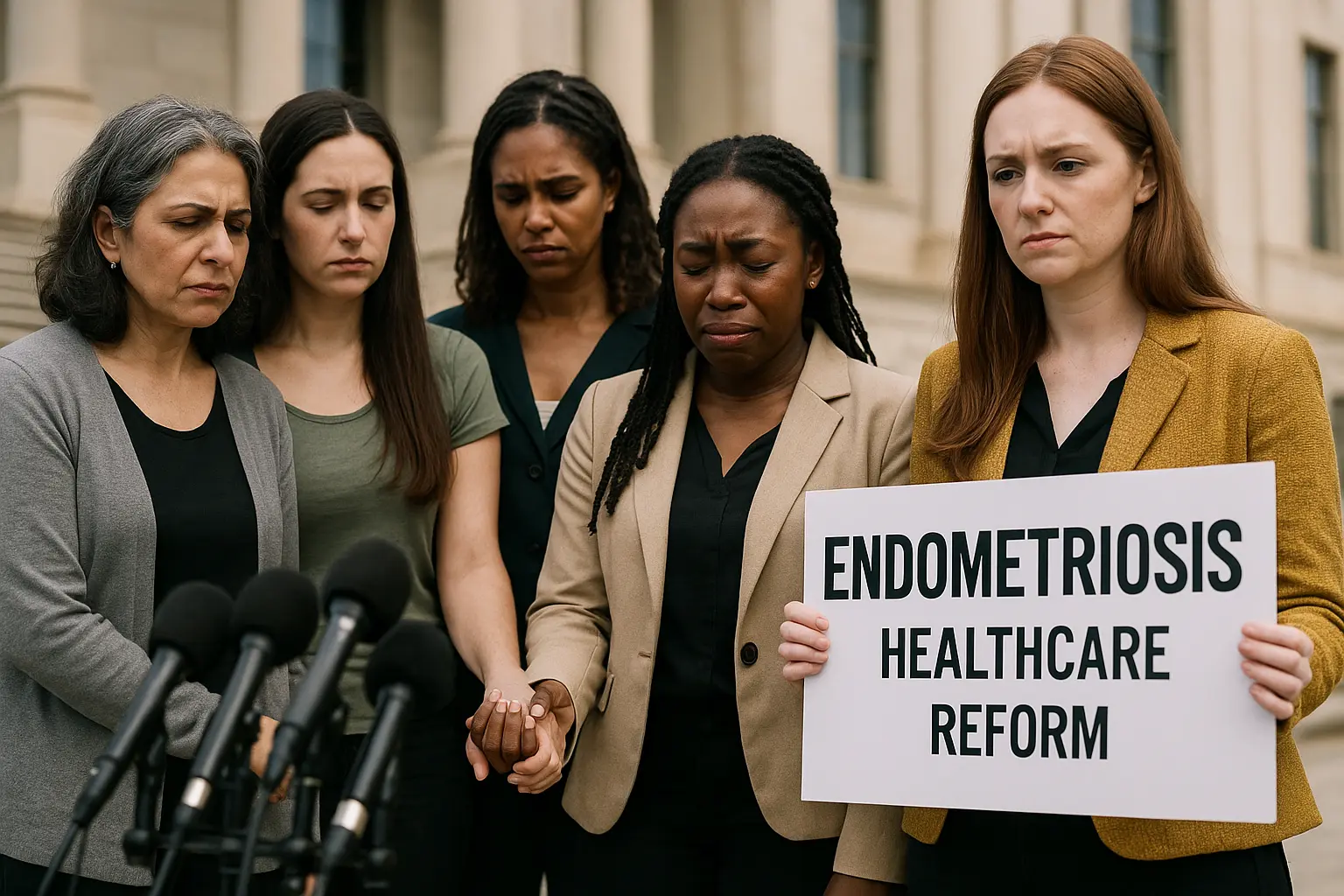
Bindi Irwin’s Medical Battle Ignites National Outcry Over Endometriosis Delays
“Thirteen years of being told your pain is imaginary changes a person forever.” Bindi Irwin’s scorching confession is resonating across the globe-and it’s exposing a tidal wave of pain, delay, and neglect that millions of women know all too well.
The Scale of Suffering: One Star’s Ordeal Shines Light on Global Crisis
Wildlife warrior Bindi Irwin is no stranger to battling formidable forces, but her most grueling opponent wasn’t a crocodile-it was an unseen enemy, living inside her for over a decade. Endometriosis, that silent, excruciating health threat dismissed by so many, left her ignored, misunderstood, and invisible for 13 long years. Even after international fame and a platform most could only dream of, Irwin was continually told her agony was “just part of being a woman.” Her story is not an exception-it’s a wake-up call.
In an emotional March 2023 Instagram post, Irwin punctured the silence, revealing her years-long struggle with endometriosis-a disorder where tissue similar to the uterine lining grows outside the uterus, causing pain, organ damage, and infertility. Her words didn’t just touch hearts. They sparked a social media wildfire-her original post racked up more than 1.1 million likes and unleashed a flood of testimonials from countless women facing the same health system gaslighting. Irwin quickly became a reluctant torchbearer for an underreported, chronically dismissed epidemic. Endometriosis affects approximately one in ten women globally, with close to 9 million in the US alone left waiting for solutions as the medical bureaucracy plods along.
“I was told over and over that pain was just part of womanhood-that I should simply accept it and cope,” Irwin shared in a tearful live video, capturing the experience of millions who are denied answers for years.
The average delay for a diagnosis? Staggering. In the UK, the typical woman faces nearly nine years of agony before anyone takes her seriously. For Irwin, the story was all too familiar: two major surgeries, 51 excruciatingly painful lesions, a chocolate cyst, a ruptured appendix, and major hernia repairs. She missed major family milestones, including the annual Steve Irwin Gala, because her pain-dismissed for so long-had reached a crisis point.
‘Just Part of Being a Woman?’ The System Fails Women-Irwin Fights Back
If you thought Irwin’s ordeal began and ended with a single surgery, think again. Her fight dragged on for over a decade, filled with repeated misdiagnoses, shame, and an excruciating sense of isolation. Even after her first operation, she required a second major surgery, this time under the care of Dr. Tamer Seckin-one of the globe’s foremost endometriosis specialists-at Lenox Hill Hospital in New York. There, doctors found even more damage: 14 new lesions, a dangerously inflamed appendix, and a cavernous hernia, the latter courtesy of childbirth.
It’s every mother’s nightmare, and yet Irwin has used her agony to shine a piercing spotlight on the disease and the global medical establishment’s apathy. According to the latest updates from Dr. Seckin, Irwin’s surgery was complex and urgent-yet her path to healing was not only physical, it was deeply psychological. She was forced to relive years of dismissal, with doctors chalking up debilitating pain as “normal” complaints. For many, the parallels are chilling: a system that lets women suffer, decade after decade.
“It shouldn’t take years of begging for help to be seen and heard. Every woman deserves her pain taken seriously,” Irwin stated at her latest public talk, echoing millions silenced by stigma.
Her courage in going public did not go unnoticed. In 2024, Bindi Irwin was honored with the prestigious EndoFound Blossom Award in New York, cementing her as not just a wildlife advocate, but a warrior for women’s health worldwide. Yet, as the accolades pour in, Irwin admits the true victory lies in healing-physically, emotionally, and for an entire generation of women facing the same stigma. As she recently put it, “I can finally laugh again.” Her words still ricochet across social media, igniting heartfelt support but also sparking renewed criticism of those who downplay or dismiss widespread women’s suffering.
Stigma, Dismissal, and a Health System in Crisis: The Backlash and a Nation Demands Better
The ugly reality? Irwin is the tip of an iceberg. Endometriosis symptoms-crushing pain during menstruation, intercourse, bowel movements, and daily life-are too often shrugged off, leaving millions without real treatment. The World Health Organization estimates this insidious disease torments 10 percent of women of reproductive age globally. Meanwhile, doctors and policymakers remain far behind. Healthcare delays are not just inconvenient-they’re dangerous, even deadly, as Irwin’s emergency surgery after a ruptured appendix proved.
Her ordeal has become a rallying cry online. Conservative circles have seized on Bindi Irwin’s case as proof that women’s health is continually overlooked under bloated liberal health bureaucracies-an outrage as more money is spent on red tape than actual research. Some argue it’s high time we rethink healthcare priorities, push for faster, more accurate diagnostics, and cut the excuses. The recent launch of the Seckingin Endometriotic Research Center at Cold Spring Harbor Laboratory, fueled by a $20 million investment, is a much-needed step, but critics say it’s just the start of an overdue reckoning.
“If not for my platform, would I still be suffering-or worse? We shouldn’t have to shout from rooftops just to get doctors to listen at all,” Irwin stormed during a public Q&A.
And yes, backlash has followed. Social media has exploded with both support and critique. While many praise Irwin’s courage, others question why it took a celebrity speaking out for the health system to finally pay attention. “How many women have no stage, no platform, no option but to simply endure?” reads one viral comment-echoing a frustration that cuts across party lines.
Still, Irwin’s resilience has forced the discussion front-and-center. Her appeals for unity and removal of stigma have ignited not just sympathy, but outrage, activism, and even calls for congressional hearings into the delayed diagnosis crisis crippling so many Americans.
Lighting the Way: What’s Next for Women’s Health-and Who Will Deliver Change?
As President Trump doubles down on his America First healthcare reform, many conservatives are calling for accountability and innovation. Federal agencies squander billions on bureaucracy, while conditions like endometriosis languish in obscurity. If ever there were a time to demand answers and results, it is now.
Congressional Republicans have already outlined plans to speed up diagnostic reviews and cut wasteful health department spending, insisting that research must target diseases impacting millions, instead of pet projects for partisan elites. Irwin’s journey has united both grassroots activists and lawmakers in demanding urgent reform-from improved insurance coverage, to medical education, to increased federal research grants.
This isn’t just about one celebrity’s ordeal-it’s about the mothers, daughters, wives, and sisters nationwide. It’s about a health system that systematically ignores women’s pain and dignity until it’s too late. And it’s about the people, not politicians, demanding change from the ground up.
“I was lucky enough to find help, but this isn’t luck-it should be a right for every child, every woman, everywhere. Use your voice. Don’t give up,” Irwin urged during her latest address, hopeful that others won’t suffer in silence.
With the 2026 midterm elections looming, women’s health-and the urgent need to end medical stonewalling-has moved to the center of America’s political debate. As candidates on both sides scramble to address the issue, one thing is clear: The pain, the courage, and the demand for change aren’t going away. And as Bindi Irwin’s own fight proves, sometimes, it takes the most unlikely voices to finally break through the wall of silence.