
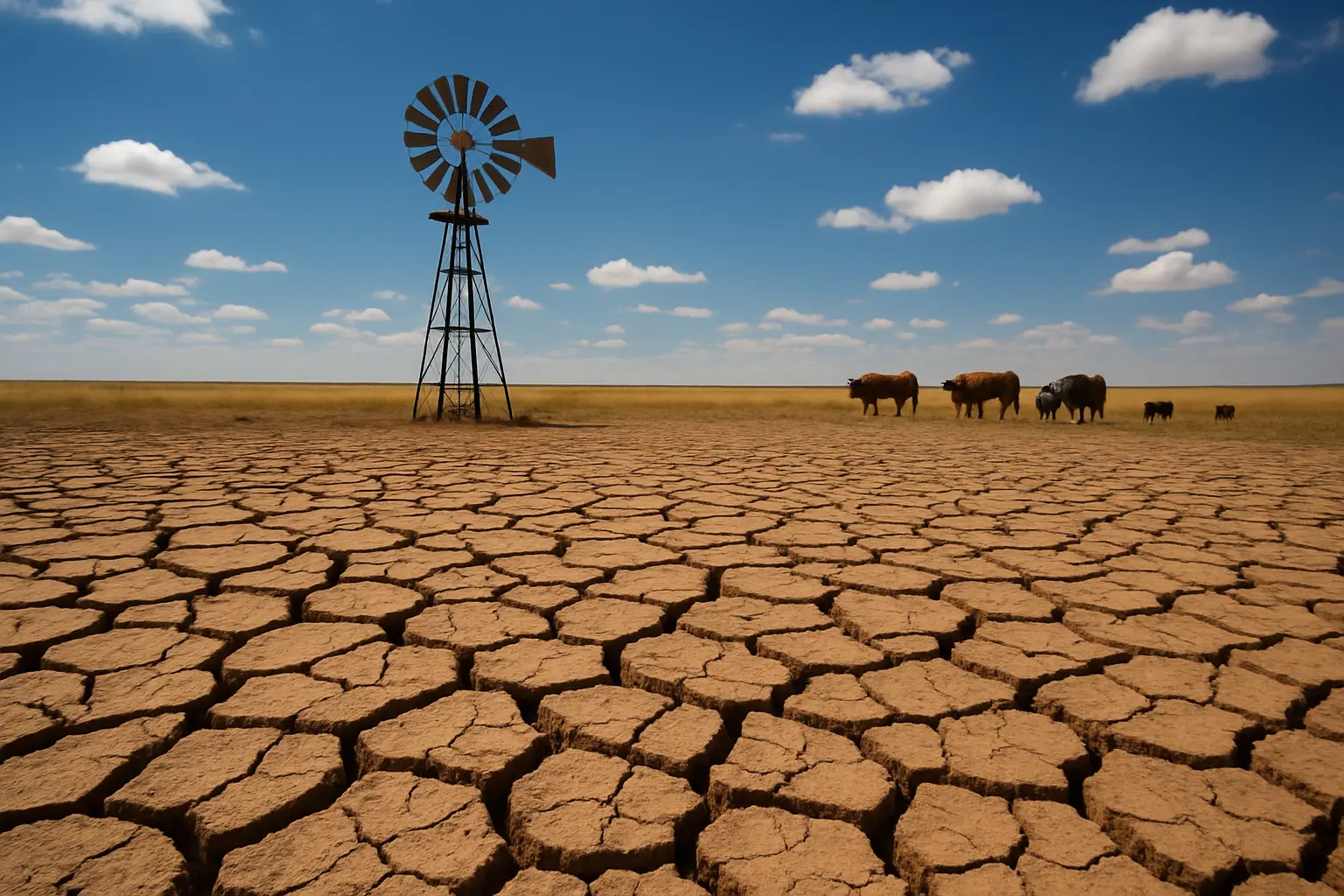
If you drive a fence line out here in the heartland, you can just about time your pulse to the cycles of wet and dry. But this year’s pattern is a different animal. It’s one part capricious sky, one part bureaucrat-itis, and the last part gold rush for tech pipes that care more about cooling AI than feeding cows and keeping taps running. Meanwhile, every fella actually raising food feels like the one holding the short end of the stick, as the guys in Washington and Silicon Valley divvy up the water and common sense takes another backseat.
Idaho’s snow melted three weeks early this spring, not even making it to 70% of what counts as a “normal” snowpack, leading to officials hitting the panic button over drawdowns two months ahead of schedule (source). They aren’t alone: Arkansas couldn’t scare up spring grass for love nor money (source), while the Southern Plains’ so-called drought “monitor” only underscores how good government is at categorizing problems instead of fixing them.
The West’s irrigated valleys and rangelands are the victims of schizophrenic management and pie-in-the-sky regulatory targets. One minute, counties are begging ranchers to conserve every precious drop. Next, tech titans roll in and water gets shuffled to data farms as if feeding cattle and people were an optional luxury. Box Elder County, Utah, is only the latest battleground, where citizens threw nearly 4,000 protests at a tech data center sucking up agricultural water rights (source), only for politicians to swat away concerns if enough money changes hands or they smell “national security” wafting out of some data vault.
Don’t think the rest of farm country is spared. Across the High Plains, it’s shaping up to be the smallest wheat harvest since 1972: 1.56 billion bushels this season-down 21% in a single year (source). Input costs, battered by everything from trade war whiplash to fertilizer shortages and international standoffs, are squeezing producers so hard they’re lucky not to squeak at night. USDA projects wheat exports falling by over a hundred million bushels and even that number may end up rosier than reality (source). Meanwhile, Washington brags about yet another committee, taskforce or partnership to “explore” input independence-never mind those expansion plans don’t get steel in the ground or diesel in the tank quick enough (source).
Layer in a line of storms and fires from the Gulf Coast to Florida-2,100 wildfires this year in that state alone (source)-and what you see is a country letting rural resilience slip through its fingers. Wildfire gets more airtime for smoke threatening Manhattan than scorched pasture in Dixie, but it’s the farmers who pay.
If there’s a recurring script here, it’s policymakers forgetting who actually delivers food, fiber and future. While data centers scramble for rivers to keep GPUs cool in Texas and Arkansas (source), rule-writers scold rural landowners about “sustainable practices” and send out more surveys instead of building the infrastructure that lets locals adapt on their own terms.
There’s big talk about geothermal booms, desalination fantasies, or “resilient grids”-never mind what that means for the price of bread or beef for the average working American. Innovation’s great, but when tech or government overrules centuries of local know-how or snatches resources from food security for bytes, cattle get sold and grocery bills skyrocket. At that point, a drought isn’t Mother Nature’s fault-it’s grown men and women abdicating common sense in favor of activist pressure and speculator-friendly mandates (source).
It’s time we demanded lawmakers and urban do-gooders stop running experiments with food on the line. No rural community should be a punchline, afterthought, or test case for someone else’s agenda. Cut the red tape. Put food, water, and freedom first. Strengthen America’s energy and input independence. Respect the land-and the stewards who know how to manage it, rain or shine.