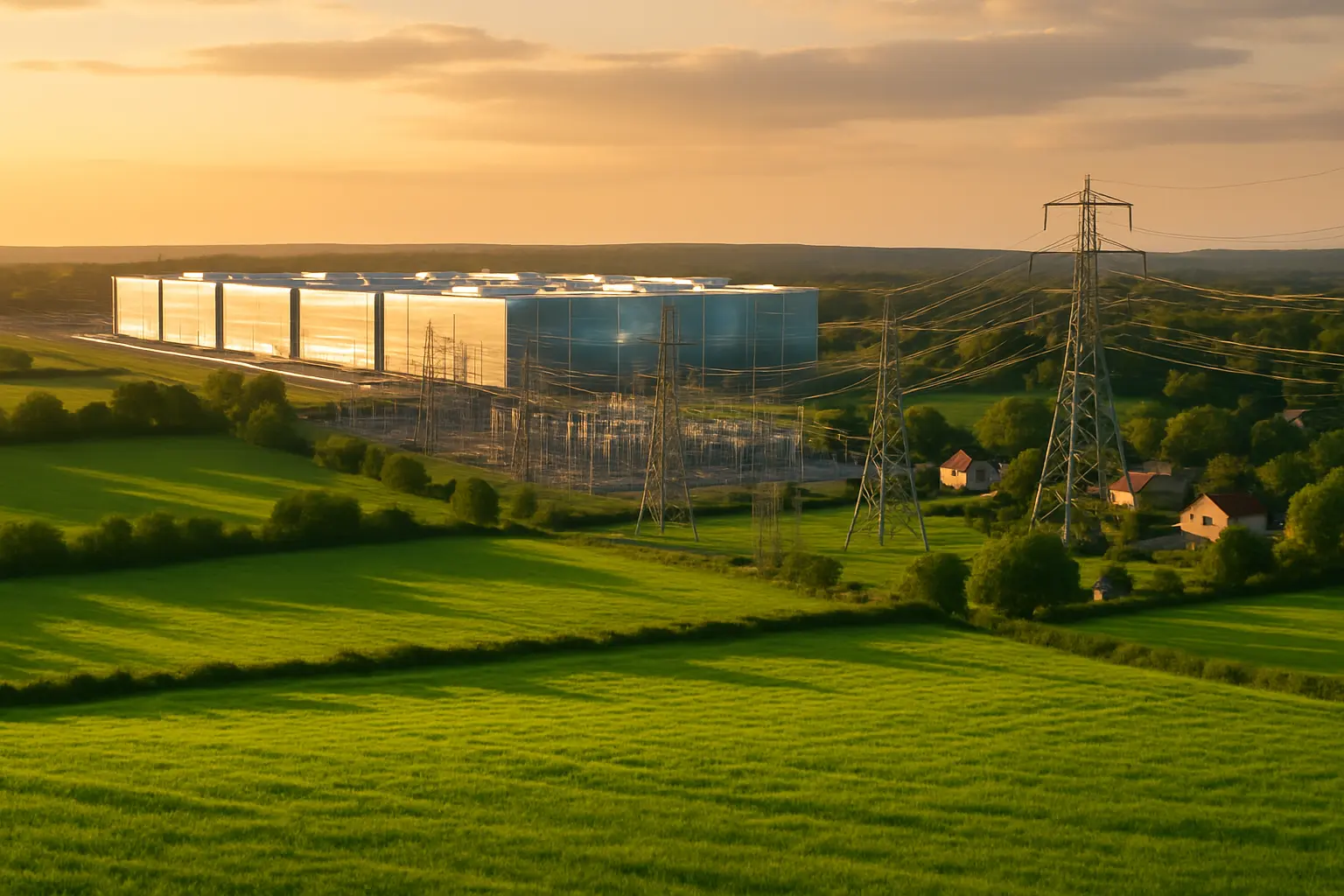
Well, here’s a head scratcher for you. The world’s biggest tech firms are drooling over the farmlands, creek bottoms, and open spaces of rural America-our land, water, and power. They want to plaster server farms across the country, rolling in under the banners of “innovation” and “economic opportunity.” But who’s actually footing the bill for this high-powered gold rush?
You guessed it: folks like you and me, the ratepayers and landowners. And I’ll tell you straight up, we’re getting the short end of the stick-again.
The Big Tech Stampede
If you live anywhere within sight of a wheat field, cotton patch, or power substation, odds are some smooth-talking consultant with a faux Texas accent has come through, dangling promises of “technology jobs” in exchange for your patience as Google, Amazon, or whoever drinks down your river water and hogs the juice from your local grid. Sounds fair, right?
Except what really happens is this: data centers scarf up megawatts and gallons by the millions, leaving neighbors facing higher utility bills, weakened water supplies, and louder, uglier nights thanks to industrial fan hum and truck traffic. Rural communities see their tax base devoured but rarely get more than a handful of decent jobs or meaningful compensation for what’s lost. But hey, at least your county makes it onto some glossy sales flyer handed out in Silicon Valley boardrooms.
The cavalry might finally be riding in-or at least they’ve saddled up. Communities and lawmakers in states like New York, Tennessee, Georgia, and Minnesota are saying: enough. Look no further than Governor Kathy Hochul’s new, yearlong ban on new data center megaprojects in New York-first in the nation. And it’s not just a Northeast thing-Knoxville, Tennessee, and little McMinnville too, have hit the pause button, demanding real impact studies on everything from grid strain and water use to noise, health, and-yes-whether these servers even fit in a town where more folks own cattle than computers.
Who Pays for the Digital Revolution?
This isn’t just about environmental hand-wringing or partisan squabbles. The politics here are old-school and local. Think about it: AWS, Microsoft, and Google don’t build these centers out of the kindness of their hearts. When they show up with a hard hat, a lawyer, and some fancy economic projections, it’s because they get sweetheart deals on power, tax breaks, and infrastructure-the kind of perks regular taxpayers could only dream about. Meanwhile, your utility bill creeps up while these global behemoths shrug off their full fair share of costs.
In Georgia, regulators greenlit almost 10,000 megawatts of extra power just to feed server farms-not homes or small businesses. At least they took steps to ensure that, if Big Tech’s predictions fizzled, it wouldn’t be the ratepayers on the hook (GovTech). Minnesota’s not fooling around, either. Lawmakers codified that hyperscale users pick up the tab for the full load of electricity and infrastructure, protecting working folks from cross-subsidizing mega-corporate appetites (Tom’s Hardware).
This is simple common sense-if you show up with a gold-plated checkbook and demand enough power to light a city, you’d better not expect my grandmother or the local diner owner to bail you out when your demand prediction comes up short.
Local Voices-Not Silicon Valets
What all these moratoriums, investigations, and policy fights are really about is control. Too long we’ve had distant politicians and shiny-shoed consultants dictating how our water gets pumped, where power plants get built, and whose “growth” takes priority. And make no mistake: once critical land or resources are paved over or pumped dry, it’s rural Americans who pay the price-while someone in Seattle or Mountain View counts the profits.
America’s digital future can’t rest on gutting the energy, land, and communities that actually put food on the table and power into the wires. That means:
- Locals have the final say-period. No state or federal override.
- Big Tech pays all infrastructure costs, not just some sweetheart minimum.
- No tax or ratepayer handouts for billionaires masquerading as job creators.
- Clear rules for water use, noise, and real local economic benefit-not just PR spin.
I like my internet fast. I like progress. But not if it’s carried on the backs of rural families and landowners while Tech’s jet-set leaders rake it in from 2,000 miles away.
It’s high time lawmakers and “economic development” types quit rubber-stamping and got real about who reaps-and who pays for-this digital revolution. And it’s time for working Americans to stand up and insist the ones making billions off this land do their fair share, or don’t come knocking at all.